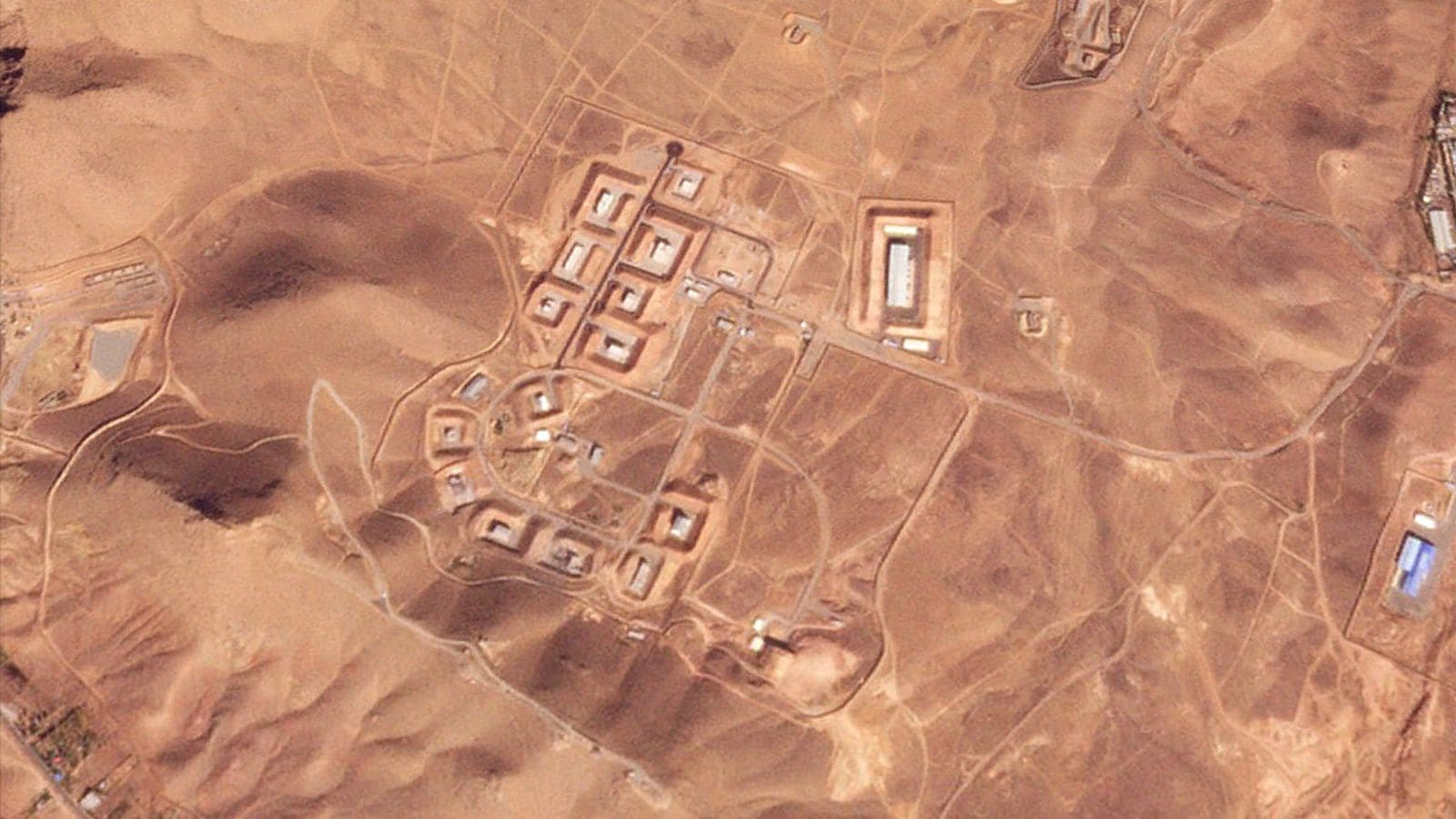
The collapse of international agreements rarely stems from a sudden loss of political will. Instead, it is driven by systemic flaws within the treaty structure itself, where the costs of compliance systematically outgrow the penalties for violation. The June 2026 kinetic escalations between the United States and Iran—marked by U.S. strikes on Iranian surveillance and minelayer infrastructure, followed immediately by Iranian Revolutionary Guard strikes against U.S. installations in Kuwait and Bahrain—expose the structural failure of the Islamabad Memorandum signed on June 17, 2026.
Rather than serving as a stable framework for de-escalation, the memorandum created a highly volatile tactical environment. By decoupling the core maritime security mechanisms from localized regional proxy conflicts, the agreement left both states exposed to a severe commitment problem. Under these conditions, defensive positioning by one actor is indistinguishable from offensive preparation by the other, making a return to open warfare highly probable. Meanwhile, you can explore similar stories here: The Anatomy of Seismic Cascades: A Brutal Breakdown of Japan's Off-Iwate Interplate Squalls.
The Three Pillars of Tactical Imbalance
The structural failure of the Islamabad Memorandum lies in three misaligned variables within its design: asymmetric enforcement costs, ambiguous verification parameters, and unhedged proxy vulnerability.
Asymmetric Enforcement Costs
The agreement lifted the U.S. naval blockade on Iranian ports on June 18, 2026, granting Tehran immediate economic relief and the ability to resume localized maritime trade. Conversely, the primary U.S. leverage—retaining or re-imposing large-scale economic sanctions—requires a slow, bureaucratic deployment process that cannot counter rapid, gray-zone tactical maneuvers. This mismatch creates an imbalance: Iran can extract immediate utility from the initial terms, while the United States must rely on high-cost kinetic strikes to police minor compliance infractions. To explore the complete picture, check out the recent article by Associated Press.
Ambiguous Verification Parameters
The memorandum mandated that the Strait of Hormuz remain "open, free, and clear," yet it failed to define the operational thresholds for maritime interdiction. When Iran attempts to collect transit fees or conduct boarding operations on commercial vessels under the guise of domestic customs enforcement, Washington views it as a direct violation of the maritime freedom clauses. The absence of a shared, precise definition for "permissible law enforcement" within the chokepoint converts every standard patrol into a potential casus belli.
Unhedged Proxy Vulnerability
The framework assumed that a bilateral agreement between Washington and Tehran could freeze hostilities across the broader region. This logic collapsed within 72 hours of signing. The framework agreement announced between Israel and Lebanon was explicitly rejected by Hezbollah leadership. Because the Islamabad Memorandum did not contain binding mechanisms to hold Tehran accountable for the autonomous actions of its regional partners, localized cross-border exchanges outside the primary theater rapidly degrade the core bilateral agreement.
The Strategic Cost Function of Chokepoint Interdiction
To evaluate why both states repeatedly choose kinetic escalation over diplomatic dispute resolution, one must analyze the strategic cost function governing the Strait of Hormuz. For Iran, the chokepoint represents its primary asymmetric asset. The closure of the strait disrupts roughly 20 percent of the global petroleum supply, generating an immediate inflationary shock in Western energy markets.
However, the operational execution of a blockade introduces a rapidly compounding penalty for Tehran. A sustained closure fills domestic oil storage facilities to maximum capacity within weeks, forcing Iran to shut down production fields and risk permanent geological damage to its extraction infrastructure. This reality limits Iran to a strategy of calculated, brief interdictions—such as drone harassment or localized mining—designed to maximize political leverage while minimizing domestic economic harm.
For the United States, the strategic calculation shifted following the large-scale military buildup initiated in early 2026. Washington has absorbed a direct military expenditure of approximately 40 billion dollars as of late June, with an additional 87 billion dollars tied up in ongoing theater operations. Because the upfront capital cost of the deployment has already been paid, the marginal cost of executing targeted strikes—such as the June 27 operations against Iranian drone storage and communication hubs—is exceptionally low compared to the political cost of allowing Iran to restrict global shipping.
The U.S. command structure operates under a doctrine of absolute maritime access. Any systemic delay in commercial shipping through the Persian Gulf threatens global supply chains, creating an environment where the U.S. executive branch faces intense pressure to use decisive military force rather than prolonged mediation through Pakistani or Qatari intermediaries.
[Iranian Maritime Interdiction]
       │
       ▼
[U.S. Kinetic Valuation: Marginal Cost of Strikes < Political Cost of Inaction]
       │
       ▼
[Targeted U.S. Degradation of Iranian Naval/Surveillance Assets]
       │
       ▼
[Iranian Asymmetric Retaliation: Short-Range Ballistic/Drone Volleys on Gulf Bases]
This structural dynamic triggers a predictable escalation cycle. When Iran executes a low-level maritime interdiction to test U.S. enforcement resolve, the U.S. metrics value the marginal cost of a kinetic response as less than the political cost of inaction. The resulting U.S. strikes degrade Iran’s coastal radar and minelaying capabilities. Backed into a corner and facing a rapid loss of its primary defensive leverage, the Iranian regime responds with short-range ballistic and drone volleys against U.S. installations in neighboring Gulf states. This pattern confirms that the interim ceasefire functions not as a path to peace, but as a period of tactical replenishment.
The Nuclear Inventory Bottleneck
The primary diplomatic barrier to transforming the 60-day ceasefire into a permanent treaty is the management of Iran's enriched uranium inventory. The United States maintains an absolute requirement that all material enriched beyond civilian power-generation thresholds be permanently transferred out of Iranian territory to a verified third party. From an external verification perspective, this is the only way to prevent a rapid breakout toward a nuclear weapon capability.
For Tehran, the physical custody of this material is its ultimate security guarantee, particularly following the February 28 strikes that disrupted its top leadership structure. Giving up the inventory prior to receiving comprehensive, legally binding sanctions relief and the verified unfreezing of its foreign bank assets exposes the regime to maximum vulnerability.
Because neither actor can trust the other to fulfill the second phase of a sequenced deal, negotiations remain stalled at this inventory bottleneck. The United States refuses to release liquid capital that could fund conventional military rebuilding, while Iran refuses to surrender its nuclear leverage while under threat of a resumed naval blockade.
Operational Limitations of the Strategic Framework
Any analytical model predicting the trajectory of this conflict must account for the strict operational boundaries constraining both participants. A permanent, full-scale U.S. land occupation of Iran remains logistically and politically unfeasible, meaning Washington's leverage is limited to standoff destruction of infrastructure or naval blockades. Conversely, Iran lacks the conventional projection capabilities to challenge U.S. naval groups directly, restricting its options to asymmetric gray-zone operations, cyber warfare, and regional proxy mobilization.
Furthermore, the diplomatic architecture relies heavily on third-party mediators like Pakistan and Qatar. While these channels are useful for exchanging terms during active hostilities, they add significant communication latency during fast-moving crises. A delay of even a few hours in conveying a clarification regarding naval movements can cause local commanders to mistake a defensive patrol for an impending strike, triggering a preemptive response that overrides the central political strategy.
The Immediate Strategic Trajectory
The current positioning of forces suggests that the 60-day negotiation window established by the Islamabad Memorandum will expire without a permanent diplomatic settlement. The structural flaws embedded in the text prevent either side from safely de-escalating their readiness postures.
The strategic choice for Washington has narrowed. It must either accept a highly unstable status quo where Iran enforces a partial, informal tax on transit through the Strait of Hormuz, or it must execute a broader, sustained air campaign designed to permanently neutralize Iran's conventional strike capabilities. Given the executive branch's recent declarations regarding "completing the job," the operational planning is likely shifting toward a comprehensive, multi-week campaign targeting western and southern Iranian command sectors.
Iran's counter-strategy will rely on demonstrating that the economic cost of such a campaign is unsupportable for the West. Tehran will likely pre-position automated asymmetric assets outside the primary conflict zone, ensuring that any major strike on its mainland triggers simultaneous disruptions across global shipping lanes and energy infrastructure.