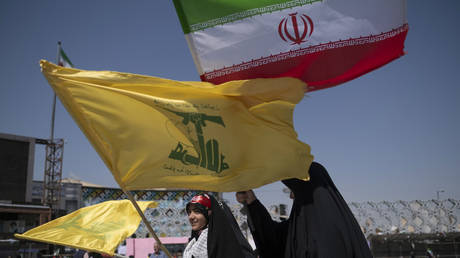
The suspension of indirect message exchanges between the United States and Iran on June 1, 2026, exposes a structural defect in current West Asian security architectures: the flawed assumption that regional proxies can be decoupled from core state conflicts during diplomatic negotiations. When Tehran’s negotiating team halted communications via intermediaries, it was not merely an emotional reaction to Israeli airstrikes in Lebanon or the imminent threat of an incursion into Beirut. It was a calculated application of the "indivisibility of fronts" doctrine.
By treating localized military friction in Lebanon as a direct breach of the nominal US-Iran truce established in April, Iranian Foreign Minister Abbas Araghchi underscored a strategic reality. Tehran views regional proxy networks and its own state apparatus as a single, unified cost function. The collapse of these talks provides a masterclass in how mismatched diplomatic scopes, economic leverage variables, and tactical miscalculations predictably break down backchannel diplomacy. In other updates, read about: The Realpolitik of Border Friction: Deconstructing India's Strategic Engagement with Myanmar.
The Structural Failure of De-linking Fronts
The primary catalyst for the diplomatic rupture is a fundamental disagreement over the geographic boundary of the ceasefire. The negotiation model used by the United States treated the theater as a series of isolated, independent variables. This approach attempted to resolve the maritime blockade of the Strait of Hormuz and the status of Iran's nuclear stockpile while treating Israeli actions against Hezbollah in Lebanon as a separate, local conflict.
This decoupling strategy failed due to two structural realities. The Washington Post has analyzed this critical topic in great detail.
The Indivisibility of Fronts Doctrine
For Iran, regional proxies are not independent chips to be bartered away sequentially; they are forward defense infrastructure. Araghchi’s declaration that a violation of the ceasefire on one front is a violation on all fronts establishes an explicit strategic dependency. If the United States cannot or will not constrain Israeli military actions in Lebanon, Iran's strategic calculus requires it to raise the costs for Washington elsewhere to re-establish deterrence.
Tactical Tit-for-Tat Escalation
The breakdown was accelerated by direct military friction over the weekend of May 30–31, 2026. US forces struck Iranian radar and drone infrastructure near the Strait of Hormuz. Iran responded on June 1 with missile and drone strikes targeting a military facility in Kuwait hosting US forces. This rapid transition from backchannel diplomacy to kinetic retaliation demonstrates that without a shared definition of the ceasefire's geographic limits, localized tactical engagements will inevitably trigger a broader systemic collapse.
The Mismatched Coercion Equation
The negotiations aimed to finalize a memorandum of understanding to extend the current nominal truce by 60 days. This extension was intended to create a stable window for deeper discussions regarding Iran's nuclear program and the reopening of the Strait of Hormuz. However, the talks stalled because both sides hold fundamentally incompatible views on their respective economic and military leverage.
[US Maritime Blockade & Sanctions] ---> Pressures ---> [Iran Internal Economy (53.9% Inflation)]
                                                                |
[Iran Proxies & Strait Closure]     <--- Retaliates <--- [Tehran Strategic Choice]
The United States operates under a maximum-leverage model. President Donald Trump and Treasury Secretary Scott Bessent have demanded structural concessions as preconditions for lifting the maritime blockade of Iranian ports. These demands include:
- The complete surrender of Iran's highly enriched uranium stockpile.
- A permanent, verifiable commitment to cease all nuclear weapons research.
- The immediate, unconditional reopening of the Strait of Hormuz to international shipping.
Washington views the blockade as a low-cost, high-yield mechanism—what President Trump described as a "piece of steel"—designed to exploit Iran's domestic economic vulnerabilities, including an annual inflation rate running at 53.9%.
Conversely, Tehran’s strategy relies on asymmetric cost imposition. Iranian chief negotiator Mohammad Bagher Ghalibaf and President Masoud Pezeshkian recognize the severe domestic strains caused by the blockade, but their strategy assumes the United States has a lower tolerance for prolonged regional instability and volatile global energy prices.
By threatening to completely close the Strait of Hormuz and the Bab el-Mandeb Strait through its allied networks in Yemen, Lebanon, and Iraq, Iran aims to signal that any attempt to maintain the blockade will incur global economic costs that outweigh Washington's strategic objectives. Tehran is betting that the United States will hesitate to launch a full-scale military campaign, allowing Iran to hold out for its own core demands, such as the release of billions of dollars in frozen assets.
The Communication Disconnect and Strategic Ambiguity
The vulnerability of indirect diplomacy is further aggravated by internal political signaling and inconsistent messaging from both leadership structures. This dynamic creates miscalculations on both sides.
While Iran's semi-official Tasnim news agency, which is closely aligned with the Islamic Revolutionary Guard Corps (IRGC), declared a formal halt to the talks, President Trump publicly minimized the shift. He initially stated that Washington had not been formally notified of a suspension, remarked that "going silent would be very good," and subsequently asserted on social media that talks were actually continuing at a "rapid pace."
This rhetorical divergence highlights a deeper challenge in asymmetric crisis management. Public statements intended for domestic political consumption frequently disrupt sensitive diplomatic channels. When US negotiators introduced late changes to the proposed terms over the weekend without prior notice, it reinforced the Iranian leadership's perception that Washington's negotiating positions are unstable.
With Iran's Foreign Ministry spokesperson, Esmail Baghaei, explicitly stating that Tehran will refuse any technical discussions on the nuclear file until the maritime blockade is lifted, the diplomatic process has reached an impasse. The priority has shifted entirely from long-term non-proliferation goals to immediate escalation management.
The Next Strategic Phase
The suspension of talks shifts the conflict from a diplomatic framework back to a test of endurance and leverage, dictated by three immediate operational realities.
First, the primary risk is no longer diplomatic disagreement, but a serious miscalculation in the Persian Gulf. With indirect communication channels severed, the buffer against unintended escalation has disappeared. Any tactical engagement near the Strait of Hormuz or a proxy strike on US installations in the Gulf will lack a diplomatic release valve, making a wider kinetic escalation significantly more likely.
Second, the economic pressure on Iran will intensify as the US blockade remains securely in place. President Pezeshkian must manage a highly volatile domestic economy with inflation exceeding 50%. If the regime cannot secure immediate sanctions relief or asset integration, it will face growing internal pressure, which could lead it to either return to the negotiating table or launch a high-risk external escalation to force a crisis.
Finally, European and regional mediators, including the European Union and Pakistan, will likely attempt to construct an alternative, narrow communication channel. However, any future diplomatic progress will remain stalled until both Washington and Tehran address the core flaw of the previous round: a ceasefire cannot endure on one front if it is actively collapsing on another. Future negotiations will require a synchronized framework that addresses regional proxy actions and core state security demands simultaneously, rather than trying to resolve them in isolation.