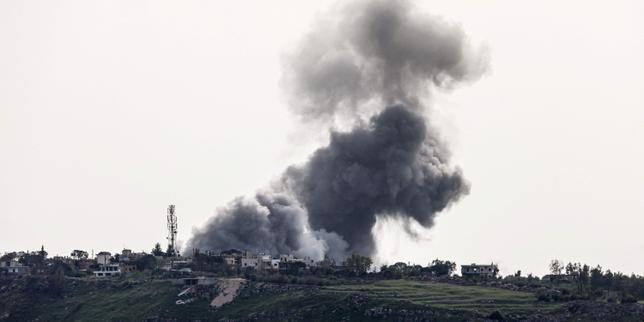
The ink on the Lebanon ceasefire agreement was barely dry before the accusations started flying. Within hours of the supposed cessation of hostilities, the border region between Israel and Hezbollah became a theater of "defensive actions" and "precautionary strikes" that threaten to collapse the entire diplomatic framework. While the official narrative frames these incidents as minor violations or teething problems, the reality on the ground suggests a fundamental mismatch in how both parties define the word peace. Israel continues to strike what it terms "suspicious movements," while Hezbollah remains entrenched in a civilian infrastructure that makes a clean withdrawal nearly impossible.
The ceasefire is not a resolution; it is a tactical pause. Meanwhile, you can explore similar stories here: The Geopolitical Cost Function of Citizenship Revocation Bahrain’s Legal Defense Against Iranian Proxy Projections.
To understand why this agreement is currently held together by little more than hope and paper, one must look at the specific mechanisms of the deal. Unlike previous arrangements, this sixty-day window is intended to facilitate a complete Hezbollah retreat north of the Litani River. However, the definition of "military presence" is being debated in real-time through gunfire. Israel claims the right to enforce the deal through immediate kinetic action. Hezbollah views these enforcement actions as unprovoked aggression. This circular logic ensures that every attempt to stabilize the border serves as a justification for the next round of violence.
The Litani Illusion and the Logistics of Retreat
The core of the deal hinges on the Litani River. Historically, this line has been more of a suggestion than a hard border. For Hezbollah, the region south of the Litani is not just a military zone; it is home. Their fighters are local residents, their depots are buried under private property, and their surveillance networks are woven into the social fabric of the villages. To understand the complete picture, check out the recent analysis by The Guardian.
Asking Hezbollah to leave the south is not like asking a conventional army to retreat. It involves dismantling a deeply integrated paramilitary state. When Israeli drones spot "activity" in these areas, they are often seeing the logistical reality of that presence. Is a truck moving supplies a violation or a move toward withdrawal? The ambiguity provides ample room for both sides to claim the moral high ground while pulling the trigger.
The Lebanese Armed Forces (LAF) are supposed to fill this vacuum. Yet, the LAF lacks the heavy weaponry, the political mandate, and the internal cohesion to challenge Hezbollah. If the Lebanese army moves in too aggressively, they risk a civil rift. If they move in too softly, Israel will continue to conduct its own "policing" of the zone. This creates a security gap that neither diplomacy nor international monitoring has yet been able to bridge.
Tactical Necessity vs. Diplomatic Posturing
Israel’s strategy is currently driven by a domestic requirement to return displaced citizens to the north. Prime Minister Netanyahu cannot afford a ceasefire that looks like a surrender or a simple return to the status quo of October 6. Consequently, the Israeli Defense Forces (IDF) are operating under a mandate of "active enforcement." This means striking any perceived threat before it can manifest.
From a military standpoint, this makes sense. From a diplomatic one, it is arson.
Every time an Israeli tank fires across the border to deter a "loitering group," it provides Hezbollah with the propaganda necessary to justify its own stay. Hezbollah’s leadership, though battered, understands that their relevance is tied to their role as the "defenders" of Lebanese sovereignty. If they simply disappear without a fight, they lose their domestic leverage. Therefore, the violations we are seeing are not accidents. They are calculated signals.
The Role of French and American Oversight
A five-nation monitoring committee, led by the United States and France, is tasked with adjudicating these disputes. The problem is the speed of modern warfare. By the time a complaint is filed, reviewed, and discussed in a committee room in Beirut or Washington, the tactical situation on the ground has changed three times over.
There is also the matter of trust. Israel fundamentally distrusts any international body’s ability to detect tunnels or hidden caches. They remember the failure of UN Resolution 1701, which was supposed to do exactly what this current deal aims to achieve. This skepticism leads to a "do it ourselves" mentality that bypasses the oversight committee entirely.
The Human Cost of Strategic Ambiguity
For the civilians caught in this "gray zone" ceasefire, the situation is agonizing. Thousands of Lebanese families attempted to return to their homes in the south immediately after the announcement, only to be met with warning shots or closed roads. In northern Israel, the residents of Kiryat Shmona and surrounding kibbutzim are watching the news with profound cynicism. They are being told it is safe, but they still hear the explosions.
The ceasefire has created a bizarre state of "violent peace."
In a typical conflict, a ceasefire leads to a cooling of tensions. Here, the tension has actually tightened. Because both sides are testing the limits of the agreement, the border has become a high-stakes game of chicken. If Hezbollah moves a rocket launcher, Israel strikes. If Israel strikes, Hezbollah fires a mortar. Each side then points to the other and says, "They started it."
Why the Sixty-Day Window is a Trap
The sixty-day timeline was designed to be a cooling-off period, but it is functioning more like a countdown clock. Both sides are trying to maximize their position before a permanent arrangement is supposedly reached.
- Hezbollah is focused on caching weapons and maintaining "sleeper" infrastructure that can be reactivated once the international community's attention shifts elsewhere.
- Israel is focused on creating a "scorched earth" buffer zone that makes the south uninhabitable for any military force, regardless of what the treaty says.
- Iran is watching from the sidelines, recalibrating how much it can use Hezbollah as a shield without losing the asset entirely.
This isn't about peace; it's about re-indexing the terms of the next war. The "violations" being reported are simply the friction points of two machines that haven't stopped running.
The Intelligence Gap
One of the most significant under-reported factors is the current state of Israeli intelligence within Lebanon. After the high-profile operations involving pagers and the elimination of Hezbollah's top tier, the group has gone completely dark. They have reverted to low-tech communication and decentralized command structures.
This makes "enforcing" the ceasefire nearly impossible for the IDF without constant surveillance and frequent strikes. When you can’t see what the enemy is doing, you tend to shoot at anything that moves. This lack of visibility is the primary driver of the current "violations." Israel is operating on a hair-trigger because they can no longer rely on the deep penetration of Hezbollah’s communications they once enjoyed.
A Systemic Failure of Definition
The fundamental flaw in the current truce is the lack of a shared dictionary. To the U.S. and France, "ceasefire" means an end to all shooting. To Israel, it means an end to being shot at, while maintaining the right to shoot at "threats." To Hezbollah, it means an end to Israeli air raids, while maintaining the right to "resist" occupation.
Without a unified definition of what constitutes a violation, the monitoring committee is essentially trying to referee a game where each team is playing by a different set of rules. The Lebanese government, trapped between its sovereign duties and the reality of Hezbollah’s power, is unable to act as a definitive arbiter.
The focus on individual violations—a drone strike here, a sniper shot there—is a distraction from the larger systemic failure. The deal assumes that both parties want to move toward a permanent settlement. In reality, both parties are simply looking for a way to regroup. The IDF needs to rest its reservists and replenish its munitions. Hezbollah needs to reorganize its shattered command structure.
The current skirmishes are not the death of the ceasefire. They are the ceasefire. This is what it looks like when two entities that are ideologically committed to each other's destruction are forced into a room together. There is no warmth, no trust, and no actual plan for what happens on day sixty-one.
The international community is patting itself on the back for stopping a full-scale ground invasion, but they have ignored the fact that they've created a permanent low-boil conflict zone. This "truce" has merely shifted the violence from the headlines to the shadows. As long as the enforcement of the deal remains a unilateral military action rather than a collective political one, the border will continue to bleed.
The next few weeks will not be about diplomacy. They will be about whether the "defensive" strikes of one side eventually cross the threshold of the other's "patience." We are not witnessing the beginning of peace, but the recalibration of a long-term war of attrition.
Watch the movement of the Lebanese Army. If they do not deploy in significant numbers with actual authority to disarm the locals, the Israeli Air Force will remain the de facto police of Southern Lebanon. And as long as foreign jets are in the sky, the war isn't over; it’s just on a leash.