The mud in Henan province does not wash out of clothes easily. It is a thick, clay-heavy earth that, when dried by a sudden, punishing heatwave, turns into something resembling concrete. For generations, farmers in China’s central plains knew exactly how this soil would behave. They knew the rhythms of the rains. They knew when the yellow river would swell and when it would recede.
That predictability is gone.
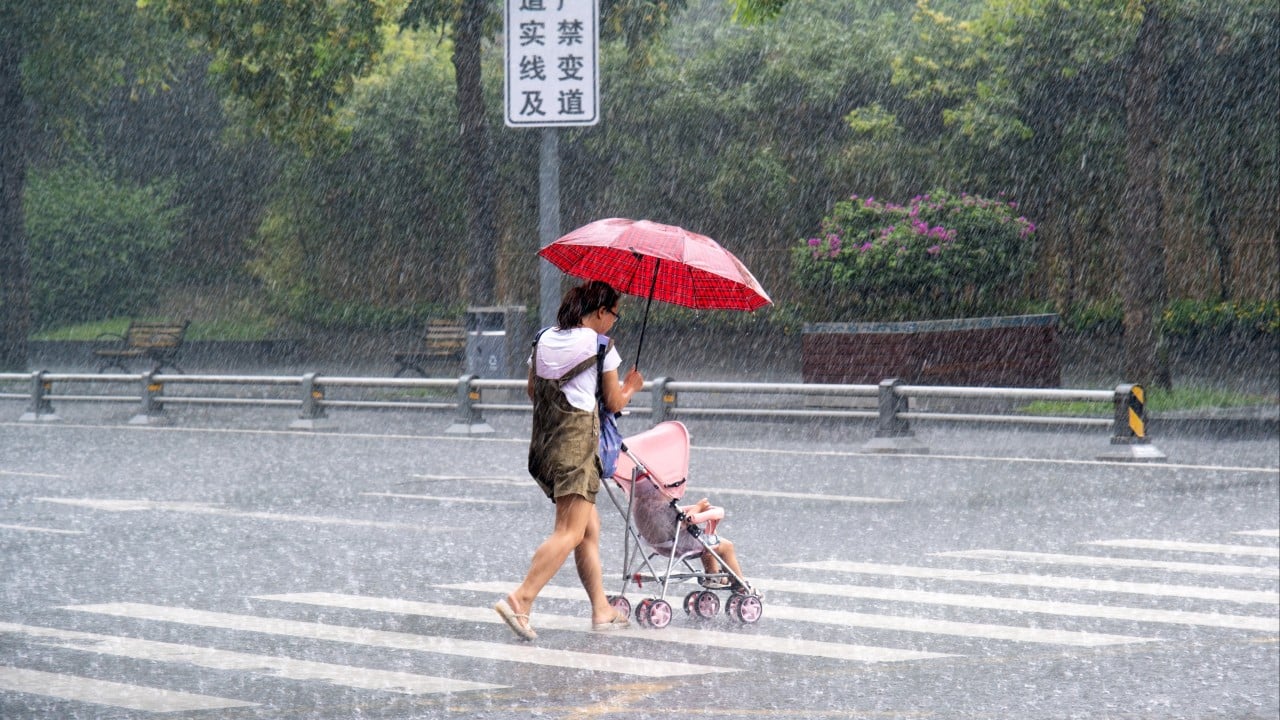
To understand what is happening to the world's most populous food supply, we have to look past the bureaucratic language of "strategic reserves" and "agricultural resilience." We have to look at the hands of people like a hypothetical farmer we will call Lao Chen. He is sixty-two years old, with skin cured by decades of sun, living in a small village outside Zhengzhou. Last summer, Chen stood in waist-deep water, watching his nearly mature wheat crop rot beneath a torrential downpour that dropped a year’s worth of rain in a matter of days. A month later, the region was baked by a drought so intense the ground cracked open like broken porcelain.
This is the reality behind the dry headlines. The security of a nation's dinner plate is no longer a question of policy papers and grain silos. It is a daily war against an atmosphere that has lost its mind.
The Weight of Fourteen Billion Chopsticks
China has a historical obsession with food security, and for good reason. The country must feed nearly twenty percent of the global population with less than ten percent of the world’s arable land. It is a mathematical tightrope walk that leaves absolutely zero margin for error. For decades, the system worked through sheer, brute-force engineering and the tireless labor of millions of smallholders.
But the climate is rewriting the math.
When extreme weather events transition from once-in-a-generation anomalies to annual expectations, the infrastructure begins to fracture. In the past, a bad harvest in the south meant the north could pick up the slack. Today, meteorologists are witnessing simultaneous crises. While the Yangtze River basin suffocates under record-breaking heat, drying up vital irrigation channels, the northeastern breadbasket faces unprecedented flooding.
Consider the domino effect on a single crop: corn. Imagine a vast field in Heilongjiang province. The soil here is legendary—"black earth" so rich it practically guarantees a high yield. But corn requires a specific window of moderate temperature to pollinate. If a heatwave hits during those crucial seventy-two hours, the pollen dies. The stalks will still grow tall and green, looking healthy from a distance. But inside the husks, the cobs will be barren.
The data backs up this invisible devastation. National statistics hide the localized tragedies, but the aggregate numbers are flashing red. China’s total grain output has hovered around 650 million metric tons annually, a triumph of modern agriculture. Yet, maintaining that number now requires astronomical costs. It demands more chemical fertilizers, more intensive groundwater pumping, and massive state interventions. It is a system running on adrenaline and borrowed time.
The High-Tech Mirage
Walk into a government monitoring center in Beijing, and the crisis looks entirely different. Here, the struggle is translated into shimmering blue code. Giant LED screens track soil moisture levels via satellite. Algorithms predict pest migrations, and automated drones buzz over experimental rice paddies in Hainan, dropping precisely measured drops of water and nutrients.
There is a comforting narrative that technology will save us. If the weather becomes erratic, we will simply build smarter greenhouses, engineer drought-resistant seeds, and outsmart nature.
But talk to the scientists running these programs, and the confidence begins to blur into anxiety. Gene-editing can create a rice strain that survives with less water, yes. But that same strain might be highly vulnerable to a new fungus that thrives in unexpected humidity. Nature is not a static puzzle to be solved; it is a shifting, reactive adversary.
The real problem lies elsewhere. High-tech solutions require immense capital. A wealthy cooperative in a coastal province can afford automated vertical farms. Lao Chen cannot. For the hundreds of millions of aging farmers who form the actual backbone of Chinese agriculture, a smartphone app that predicts a flash flood does not give them the power to move tons of saturated soil by hand before the crops drown.
The divide is growing. On one side is the idealized, automated future of food production. On the other is the muddy, chaotic present where a single afternoon of hail can wipe out a family’s entire annual income.
The Global Ripples of a Local Storm
It is easy for someone sitting in Chicago, London, or Tokyo to view China’s agricultural struggles as a localized domestic issue. That is a dangerous mistake.
The global food market is an intricately connected web. When China experiences a shortfall in its domestic grain production, it does not simply accept a shortage. It buys. The state uses its massive foreign currency reserves to purchase wheat, soy, and corn from Brazil, the United States, and Australia.
Picture a giant vacuum suddenly turned on in the global commodities market. When China enters the international market to fill its reserves, global prices skyrocket. The billionaire in Manhattan will barely notice if the price of a loaf of bread goes up fifty cents. But for a family in Cairo or Nairobi, that same price hike means choosing between dinner and medicine.
The true stakes of China's weather crisis are international. A typhoon hitting the coast of Guangdong can trigger a political crisis in North Africa. We are no longer living in a world where geographic distance offers protection from ecological failure.
The Silent Reservoirs
To truly understand how deep the anxiety runs, one must look at what is hidden beneath the earth. China has built the largest grain storage system in human history. Giant, temperature-controlled silos dot the country, holding enough wheat and rice to feed the entire population for over a year.
These reserves are treated with the same secrecy as nuclear launch codes. They are the ultimate insurance policy against chaos.
But an insurance policy only works if you don't have to cash it in every single year. The frequency of these climate shocks means the state is constantly balancing on a knife-edge, deciding whether to release grain to keep consumer prices stable or hoard it against the certainty of an even worse summer next year.
And then there is the water. The North China Plain, which produces half of the nation's wheat, is running out of groundwater. For decades, farmers have dug deeper and deeper wells to compensate for erratic rainfall. In some areas, the water table has dropped by hundreds of feet. You can pump your way out of a drought for a decade, maybe two. But eventually, the straw hits the bottom of the glass.
The Final Chord
As twilight falls over Henan, the heat finally begins to lift from the cracked earth. Lao Chen sits on a low stool outside his brick home, smoking a cheap cigarette. His hands are stained with the dark soil that has defined his entire existence.
Behind him, a small television screen crackles with the evening news. An anchor speaks in crisp, measured tones about new agricultural subsidies, record-setting infrastructure investments, and the unwavering stability of the nation’s food supply.
Chen does not look at the screen. He looks at the western sky, watching the heavy, purple clouds massing on the horizon. They look like rain. But these days, rain is no longer a blessing. It is a question mark. He knows that by tomorrow morning, those clouds could bring the gentle moisture his fields desperately need, or they could unleash a torrential fury that will wash his life's work down the river.
He tosses the cigarette butt into the dust, stands up, and walks inside to prepare for a night of watching the sky.