Politics and sports don't mix. It's the oldest lie in the book. If you needed any more proof that the "beautiful game" is deeply tangled in the world's ugliest conflicts, look no further than the 76th FIFA Congress in Vancouver.
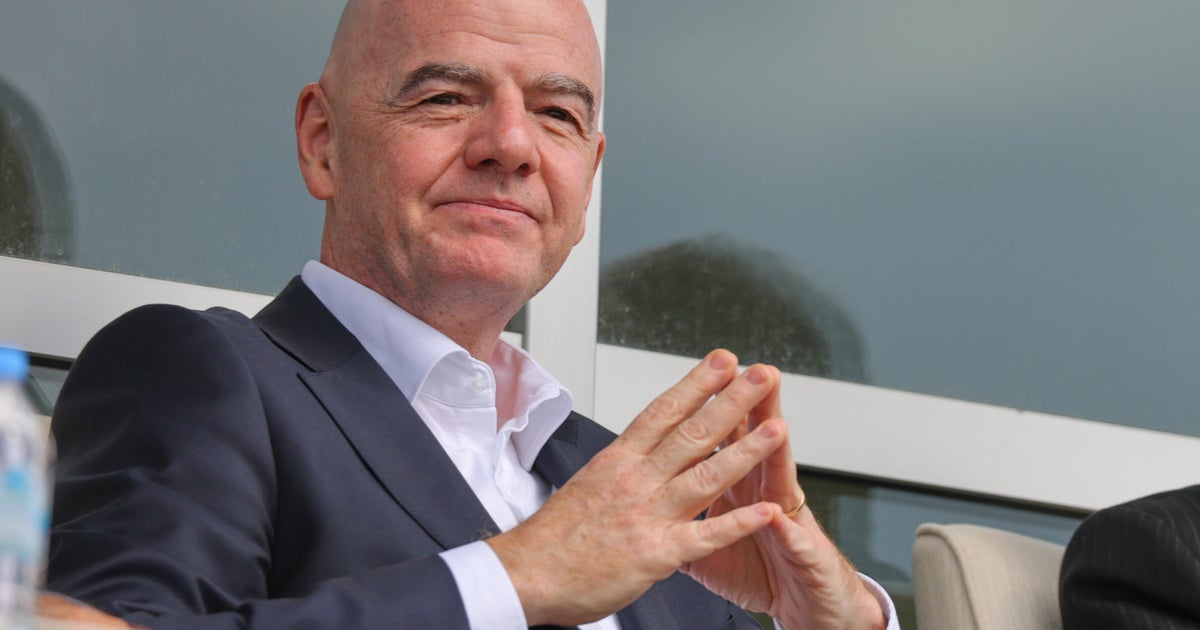
In a moment that felt more like a diplomatic standoff than a sports convention, Palestinian Football Association (PFA) President Jibril Rajoub flatly refused to shake the hand of Israeli FA Vice-President Basim Sheikh Suliman. FIFA President Gianni Infantino stood between them, playing the role of the hopeful peacemaker, but the tension was thick enough to choke the room. This wasn't just a personal grudge. It was a boiling point for a conflict that FIFA has tried to kick down the road for years.
The Handshake That Never Happened
Infantino called both men to the stage, likely hoping for a PR-friendly image of unity. He didn't get it. Rajoub didn't just decline; he made it clear that a photo op wasn't going to erase the reality on the ground. Susan Shalabi, the PFA Vice-President, was blunt about the refusal. She told reporters that shaking hands with someone brought in to "whitewash" the current situation was out of the question.
From the back of the hall, you could see the frustration. Rajoub walked away, leaving the staged moment in tatters. It's easy to call this "unsportsmanlike" if you're watching from a comfortable sofa. But for the Palestinian delegation, it's about the fact that their stadiums are rubble and their players are often unable to travel.
FIFA’s Long Game of Avoiding Decisions
You have to wonder how much longer FIFA can play the "neutral" card. Just last month, the FIFA Disciplinary Committee finally slapped the Israel Football Association (IFA) with a fine of 150,000 Swiss francs. Why? Breaches related to discrimination and offensive behavior. They even ordered the IFA to display "No to Discrimination" banners at their next three home matches.
But for the PFA, a fine is basically a parking ticket when the core issues remain untouched. The big point of contention is the presence of Israeli clubs based in West Bank settlements. The PFA argues these clubs shouldn't be playing in the Israeli league because they're on Palestinian territory.
FIFA’s response? They’ve essentially said the legal status of the West Bank is "too complex" for them to handle. That’s a convenient shield. While Amnesty International and other human rights groups argue that FIFA is flouting its own statutes, the governing body continues to hide behind "legal assessments" that take months—and sometimes years—to produce.
The Court of Arbitration for Sport is the New Pitch
Since Rajoub and his team feel they’ve hit a brick wall in Zurich, they’re taking the fight to Lausanne. The PFA has officially appealed to the Court of Arbitration for Sport (CAS). They’re challenging FIFA's refusal to sanction Israel over those settlement-based clubs.
It’s a bold move, but honestly, what choice do they have? If the internal FIFA mechanisms are designed to stall, you go to the highest court in sports. The PFA has been raising this issue for over fifteen years. Think about that. That’s nearly four World Cup cycles of "we’re looking into it."
What the PFA is Actually Asking For
- Suspension of membership: They want the IFA out of international play until they comply with FIFA statutes regarding territory.
- Freedom of movement: Consistent access for Palestinian players and coaches to travel for matches without being blocked at checkpoints.
- Protection of infrastructure: Recognition of the damage done to soccer facilities in Gaza, which have been almost entirely destroyed.
Why You Should Care Even if You Hate Politics
You might think, "I just want to watch the World Cup." That's fair. But the precedent being set here affects the entire sport. If FIFA can pick and choose when to enforce its rules about territorial integrity—like they did with Russia and Ukraine—but ignores them here, the rules don't actually exist. They’re just suggestions.
The Vancouver Congress wasn't just about a missed handshake. It was a signal that the era of FIFA pretending to be a non-political entity is over. The "Board of Peace" initiatives and stadium-building promises in Gaza are nice for the brochures, but they don't address the systemic inequality that Rajoub is screaming about.
If you're following this, don't look at the scoreboard. Look at the legal filings. The next big "match" isn't on grass; it’s in a courtroom in Switzerland. Until CAS makes a definitive ruling, expect more awkward podium moments and more "No to Discrimination" banners that feel more like irony than progress. Keep an eye on the CAS docket for the appeal filed on April 20—that’s where the real result will be decided.