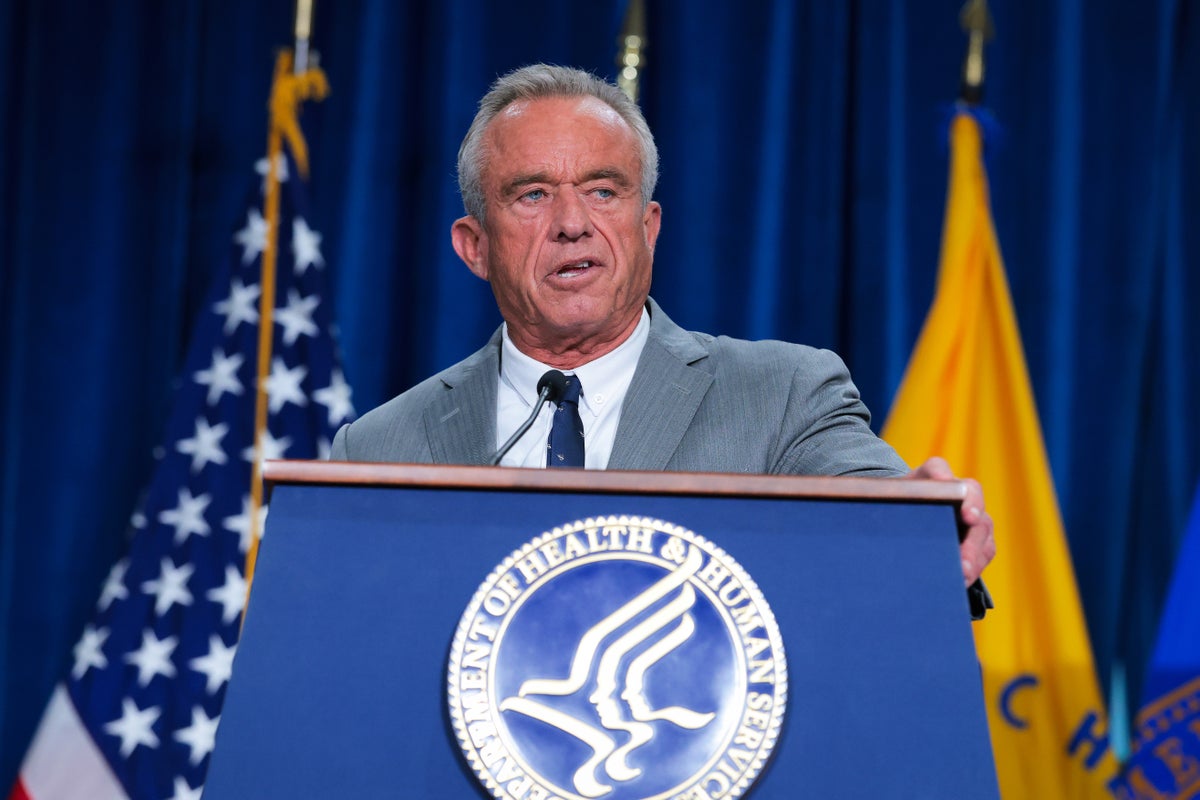
The Department of Health and Human Services (HHS) under Secretary Robert F. Kennedy Jr. has initiated a formal inquiry into 13 states, signaling a fundamental shift in the application of federal civil rights law within the clinical environment. This investigation is not merely a political maneuver; it is a structural challenge to the state-level mandates that compel medical providers to perform procedures—specifically abortions—against their professional or institutional judgment. At the heart of this friction lies the intersection of the Emergency Medical Treatment and Labor Act (EMTALA) and the First Amendment’s protection of conscience. The following analysis deconstructs the legal logic, the operational risks for healthcare systems, and the underlying tension between federal funding and state-mandated medical protocols.
The Dual-Incentive Framework of Federal Investigation
The HHS strategy operates through two primary levers: the enforcement of the Church Amendments and the reassessment of Section 1557 of the Affordable Care Act. To understand why 13 states are currently targeted, one must examine the specific mechanisms of "coercion" as defined by the current administration.
1. The Church Amendments as a Funding Lever
The Church Amendments (42 U.S.C. 300a-7) prohibit entities receiving federal funds (such as grants or contracts under the Public Health Service Act) from discriminating against healthcare personnel who refuse to perform or assist in abortions based on religious or moral convictions. The HHS investigation posits that state-level executive orders or legislative mandates that require physicians to provide abortion services as a condition of licensure or employment constitute a violation of these federal protections.
2. State-Federal Preemption Conflict
The states under investigation typically argue that EMTALA requires "stabilizing treatment" for patients in emergency medical conditions, which they interpret as a mandate for abortion services in specific obstetric crises. The HHS counter-thesis is that EMTALA does not override individual conscience rights. This creates a regulatory bottleneck:
- Federal Position: Civil rights and conscience protections are absolute and tied to the receipt of federal healthcare dollars.
- Targeted State Position: Patient safety and emergency standards of care necessitate a uniform mandate for all licensed providers.
The Three Pillars of Medical Coercion
The investigation categorizes state actions into three distinct tiers of perceived coercion. Quantifying these tiers allows for a better understanding of the legal risk profiles for the states involved.
Tier I: Licensure and Certification Pressure
States that link the maintenance of a medical license to the willingness to perform the full spectrum of reproductive care are the primary targets. When a state medical board introduces "competency" requirements that include abortion procedures without opt-out clauses, it effectively creates a barrier to entry for a significant portion of the medical workforce.
Tier II: Institutional Funding Vulnerability
Hospital systems often exist in a state of financial dependency on both state subsidies and federal Medicare/Medicaid reimbursements. If a state mandates that any hospital receiving state funds must provide abortions, that hospital is forced into a paradox where complying with state law may result in the loss of federal funding due to Church Amendment violations.
Tier III: The "Stabilization" Mandate
The most granular level of the investigation focuses on how states define "emergency stabilization." If a state legal framework defines a failure to provide an abortion as medical malpractice or "patient abandonment," it exerts a heavy psychological and legal weight on individual clinicians. HHS is examining whether these definitions are being used as a pretext to circumvent federal conscience protections.
The Operational Cost Function of Regulatory Uncertainty
For healthcare administrators, this investigation introduces a massive volatility variable into hospital operations. The cost of non-compliance with either federal or state directives is not just financial; it is systemic.
Workforce Attrition and Recruitment
The threat of state-level prosecution versus federal-level de-funding creates a "gray zone" that repels high-value specialists. In states with aggressive mandates, OB-GYN residency applications have shown measurable shifts. When physicians feel they are being "coerced" into a specific clinical path, the recruitment cost for health systems increases as they must offer higher indemnity insurance or specialized legal protections to attract talent.
The Indemnity Gap
Most malpractice insurance policies are predicated on following "standard of care." If federal investigations determine that state-mandated "standards" are actually violations of civil rights, insurance providers may reassess the risk profiles of hospitals in those 13 states. This creates a liability vacuum where neither the state nor the federal government provides a safety net for the individual practitioner.
Measuring the Impact on Institutional Autonomy
The HHS investigation challenges the "General Welfare" clause by asserting that the federal government's interest in protecting the conscience of its citizens outweighs the state’s interest in regulating the practice of medicine. This is a reversal of the traditional "police power" doctrine, which historically grants states the authority to oversee public health.
The 13 states are being evaluated on a "Coercion Index" that tracks:
- Direct Mandates: Explicit laws requiring the procedure.
- Indirect Sanctions: Threat of license loss or disciplinary action.
- Educational Requirements: Mandated training modules for residents without conscience exemptions.
The Logic of Systematic De-funding
If the HHS investigation concludes that coercion is taking place, the next phase is the issuance of "Notices of Violation." Unlike traditional litigation, which can take years, the federal government can move to withhold specific tranches of HHS funding relatively quickly.
The mechanism for this is found in the administrative process of the Office for Civil Rights (OCR). Once a violation is found, the OCR can initiate proceedings to terminate federal financial assistance. For a state-run university hospital or a public health clinic, this could represent a 20% to 40% reduction in operating budget. The investigation is designed to force states to choose between their legislative mandates and their fiscal solvency.
Strategic Realignment of Medical Governance
The investigation by RFK Jr.’s HHS signifies the end of the "collaborative ambiguity" that previously existed between state health departments and federal regulators. By framing abortion mandates as a violation of physician civil rights, the federal government is attempting to decouple the clinical act from the state’s regulatory apparatus.
The immediate strategic move for healthcare entities in the affected states is a comprehensive audit of their "Conscience Compliance" protocols. Systems must document every instance where a physician's refusal was accommodated versus instances where it was overridden by state-mandated emergency protocols. The goal is to build a defensive evidentiary record that demonstrates the institution is not an agent of state coercion, even if the state laws themselves are being challenged.
Physicians should anticipate a shift in employment contracts that explicitly reference federal conscience protections as a superior clause to state-level mandates. This creates a legal firewall, allowing the practitioner to cite federal civil rights law as a defense against state board disciplinary actions. The friction between these two layers of government is unlikely to resolve without a Supreme Court ruling on the hierarchy of EMTALA versus the Church Amendments, but in the interim, the federal investigation serves as a potent deterrent against further state-level medical mandates.
State legislatures in the crosshairs will likely pivot toward "Safe Harbor" clauses to avoid the total loss of federal subsidies. These clauses would allow physicians to opt out of certain procedures while still maintaining the state's broader mandate for the facilities themselves. This compromise, however, remains a precarious solution in an environment where federal oversight is now being used as an aggressive tool for clinical deregulation.
Health systems must now treat conscience protection not as a human resources policy, but as a core component of their risk management and federal compliance strategy. The 13 states currently under the microscope represent the first phase of a broader realignment where federal civil rights law is being deployed to neutralize state-level healthcare policy. Success in this new environment requires a departure from traditional "standard of care" models toward a "federal rights-first" operational framework.