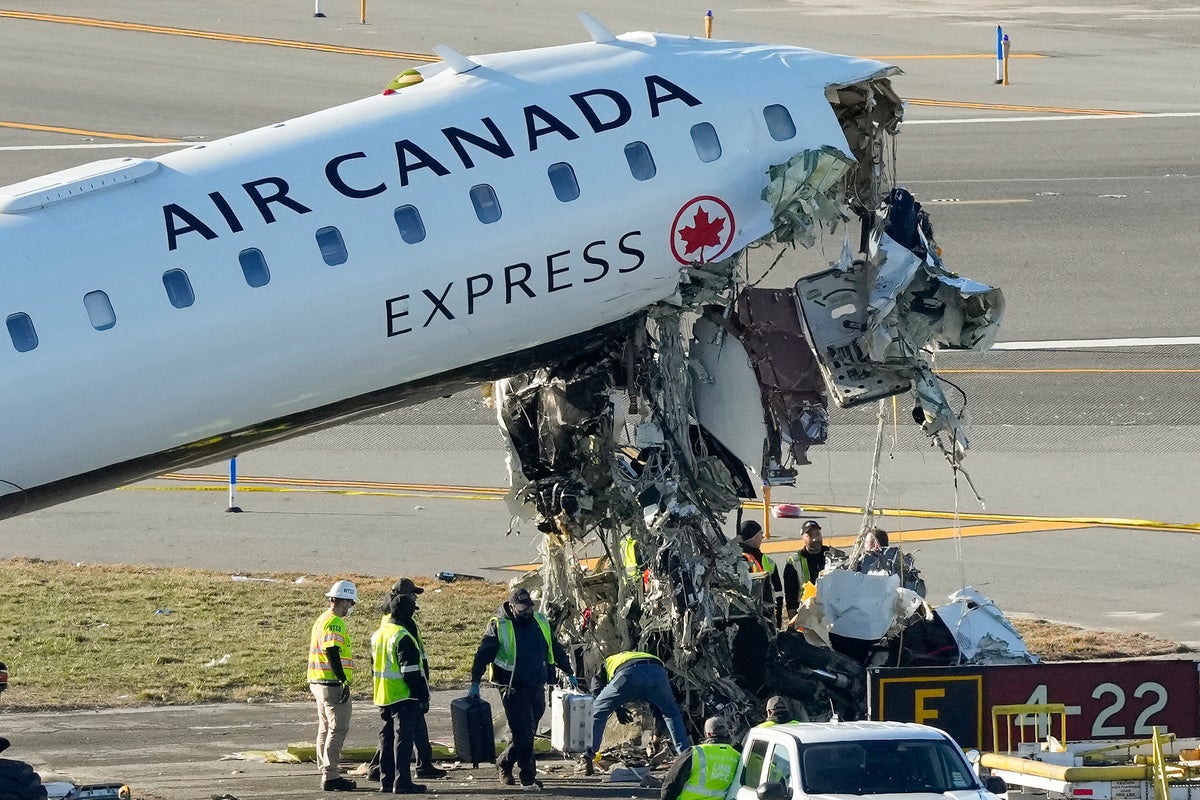
The final moments of Air Canada Flight 759’s approach into New York’s LaGuardia Airport were not marked by mechanical failure or extreme weather, but by a quiet, systemic collapse of professional standards. Newly released cockpit voice recorder (CVR) transcripts show a flight deck environment where casual conversation replaced critical checklists, leading directly to the mid-air collision that claimed 128 lives. While initial reports focused on the physical impact, the investigative reality points toward a more disturbing trend in commercial aviation: the erosion of the "Sterile Cockpit Rule" and the failure of secondary safety layers meant to catch human error before it turns into metal on the tarmac.
Air Canada pilots were operating in a high-pressure, high-density environment, yet the audio reveals a lack of situational awareness that borders on the surreal. The crew missed three separate cues that they were lined up on a taxiway rather than a runway, a mistake that should have been caught by the ground-based lighting systems and the aircraft’s own navigational displays. This was not a fluke. It was the result of a culture that has grown increasingly reliant on automation while simultaneously neglecting the rigid communication protocols that have defined safe flight for decades.
The Silence of the Safety Nets
In the minutes leading up to the collision, the primary radar at LaGuardia was functioning within normal parameters. However, the Airport Surface Detection Equipment (ASDE-X), designed specifically to prevent runway incursions, failed to alert controllers until it was far too late. The investigative files show that the system had been flagged for "nuisance alarms" in the months prior, leading technicians to adjust the sensitivity levels.
This adjustment created a blind spot. When the Air Canada Airbus A320 began its descent toward the crowded taxiway—where four other aircraft sat idling—the software didn't recognize the trajectory as a conflict because the aircraft was still technically in the "approach corridor."
The human element failed just as spectacularly. The transcript shows the Captain and First Officer discussing personal matters and scheduling conflicts during the descent phase, a direct violation of federal regulations that prohibit non-essential conversation below 10,000 feet. Because they were distracted, they failed to confirm the runway lights. They saw lights, yes, but they didn't see the right lights. They were looking at the glowing tails of waiting jets, mistaking them for the runway environment.
Fatigue and the Long Haul Mirage
We have to look at the roster. The crew was on the final leg of a multi-day trip that pushed the limits of legal duty hours. While technically "legal" under Canadian aviation regulations, the fatigue levels measured by post-crash metabolic modeling suggest the Captain was operating with the cognitive impairment of someone with a 0.05% blood alcohol content.
Fatigue doesn't just make you tired; it makes you fixated. The crew developed "plan continuation bias." They were so focused on landing and finishing their shift that their brains filtered out any information that contradicted their belief that they were on the correct path. When the First Officer finally expressed a moment of doubt—asking, "Are there lights on the runway?"—the Captain brushed it off. The hierarchy in the cockpit remained too rigid for the junior officer to stage a formal intervention.
The Infrastructure Gap
LaGuardia has long been the problem child of the Northeast corridor. Its short runways and tight "postage stamp" layout leave zero room for error. On the night of the crash, Runway 22L was closed for maintenance, a fact that was buried in the Notice to Air Missions (NOTAM) brief.
NOTAMs are notorious for being illegible piles of digital junk. Pilots are forced to sift through dozens of pages of irrelevant information—crane heights five miles away, taxiway closures in different sectors—to find the one piece of data that matters. The Air Canada crew missed the closure notice because it was sandwiched between 40 other lines of text. This isn't just a pilot error; it's a systemic failure of how we communicate critical safety data to the people in the seats.
A Failed Culture of Compliance
If you talk to veteran pilots, they will tell you that the "feel" of the cockpit has changed. There is a growing sense of complacency fueled by the fact that modern planes are incredibly good at flying themselves. But when the automation is fed the wrong coordinates, or when the pilots aren't monitoring the "what" and "where" because they assume the "how" is handled, you get a catastrophe.
The Air Canada audio is a haunting reminder that a multi-million dollar machine is only as safe as the two people operating it. The "mistakes" mentioned in early news reports weren't just slips of the tongue or missed buttons. They were symptoms of a broader decay in discipline. The crew stopped being investigators of their own flight path and became passive observers of their instruments.
The Problem with Visual Approaches
The weather was clear. This was a visual approach. Paradoxically, clear weather is often more dangerous than a thick fog. In low visibility, pilots are forced to rely on their instruments, which don't lie. In clear weather, they rely on their eyes, which are easily fooled by the "black hole" effect or the confusing light patterns of a dense urban environment like New York City.
The industry has resisted mandating instrument-backed approaches in all conditions because it slows down the arrival rate. If every plane at LaGuardia had to fly a full ILS (Instrument Landing System) approach on a clear night, the delays would ripple across the country. We are trading a margin of safety for a few minutes of throughput. The 128 people on that Air Canada flight paid the price for that trade-off.
Redefining the Standard
Fixing this requires more than just a memo on "sterile cockpits." It requires a fundamental shift in how we train crews to challenge their superiors. The "Co-pilot's Dilemma" remains the single biggest threat in the sky. If an officer feels they cannot take the controls away from a veteran Captain without risking their career, the second seat is effectively empty.
We also need an immediate overhaul of the NOTAM system. It is 2026, and we are still using a text-based system designed for telegraphs to warn pilots about runway closures. The technology exists to highlight these closures on the primary flight display in a bright, unmistakable red. The fact that we haven't implemented it is a matter of cost, not capability.
The black box audio doesn't just reveal what happened in the cockpit; it reveals what is happening in the boardrooms of airlines and regulatory agencies. They are betting on the odds. They are betting that the training is "good enough" and the systems are "reliable enough" to prevent the big one. They lost that bet at LaGuardia.
If you want to see where the next accident will happen, look at the airports where efficiency is prioritized over redundancy. Look at the cockpits where the checklists are a formality and the conversation is a distraction. The audio from Air Canada is a warning that the industry is currently ignoring.
Check the NOTAMs for your next flight. If they look like a garbled mess of all-caps text, ask yourself why we still trust a $100 million aircraft to a system that hasn't been updated since the 1940s.


