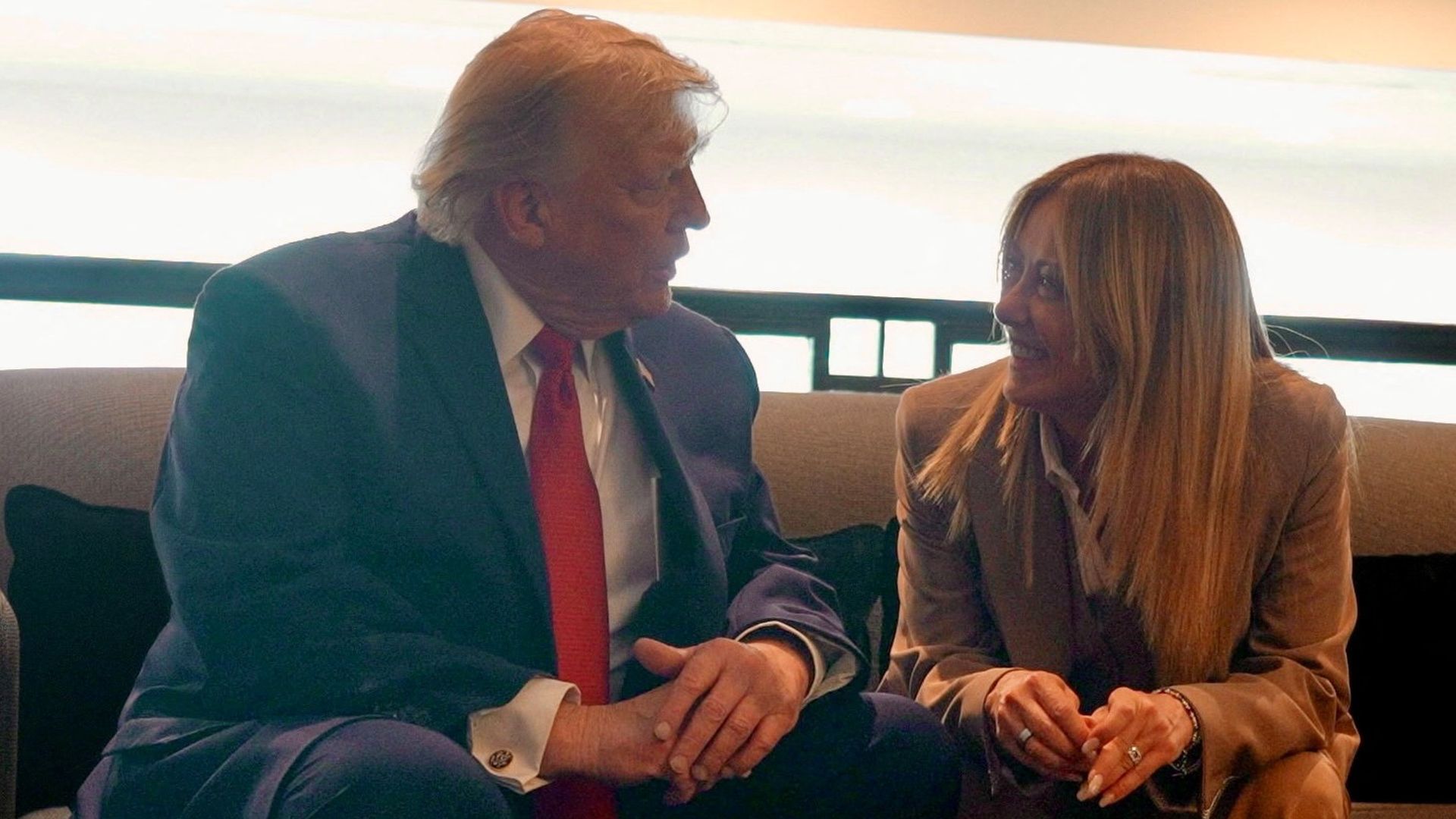
The global media is collectively hyperventilating over what they call a devastating fracture in Western unity. Headlines scream about a "row" between Donald Trump and Italian Prime Minister Giorgia Meloni. Pundits are frantically spinning a narrative of ideological warfare, trading barbs, and a crumbling transatlantic alliance.
They are missing the entire point. Read more on a related subject: this related article.
What the mainstream press diagnoses as a volatile diplomatic crisis is actually a highly calculated, mutually beneficial political theater. This is not a breakdown of relations. It is a masterclass in strategic posturing designed for domestic consumption, and both leaders are winning the game while the establishment chases its tail.
The Myth of the Right-Wing Monolith
The lazy consensus among political commentators relies on a flawed premise: that populist, right-leaning leaders must operate as a monolith. Analysts assume that because Trump and Meloni share nationalist rhetoric, any public disagreement signals a catastrophic systemic failure. More analysis by NBC News delves into comparable views on this issue.
This view ignores the core mechanism of sovereign nationalism. By definition, a nationalist leader prioritizes their own country's immediate economic and electoral interests over international solidarity. When Trump critiques European defense spending or trade imbalances, he is not launching a personal vendetta against Rome. He is playing to his base in Ohio and Pennsylvania. When Meloni fires back, asserting European autonomy and defending Italy’s industrial sectors, she is securing her coalition in Rome, not declaring diplomatic war on Washington.
Political analysts look at these exchanges and see a fire. In reality, it is a controlled burn. I have spent years tracking how international friction is manufactured to score domestic points, and this playbook is ancient. The friction is the point. It allows both figures to project strength to their respective voters without altering the underlying, unshakeable structural realities of the US-Italy security apparatus.
The Structural Reality the Press Ignores
While talking heads dissect the optics of every social media post and press conference quote, the actual machinery of statecraft remains completely untouched.
Let us look at the hard data that the sensationalized reports conveniently omit:
- NATO Architecture: Despite the public posturing, Italy’s commitment to the Atlantic alliance's core mission remains firm. Intelligence sharing, joint Mediterranean naval operations, and logistical coordination at critical bases like Sigonella have not degraded by a fraction of a percent.
- Defense Procurement: Rome continues to invest heavily in American defense technology, including the F-35 Lightning II program. True diplomatic ruptures halt multi-billion-dollar military contracts. They do not accelerate them.
- Trade Volume: Bilateral trade between the US and Italy sits at historic highs. Neither side is drafting aggressive, targeted sanctions or punitive tariffs against the other, because the corporate interests backing both administrations would block them instantly.
The mainstream media focuses on the surface foam while completely ignoring the deep ocean currents. They analyze the relationship as if it were a high school drama, rather than a cold calculation of state survival and economic utility.
Why Both Leaders Need the Friction
To understand why this public spat is being sustained, you have to look at the specific electoral pressures facing both leaders.
Meloni faces a constant balancing act. She must maintain her outsider, nationalist credentials while proving to the European Union establishment in Brussels that she is a responsible, steady custodian of the eurozone’s third-largest economy. Getting into a public shouting match with Trump is the perfect tactical shield for her. It allows her to say to mainstream European leaders, "Look, I am standing up for European interests against American pressure." It buys her immense political capital within the EU, which she can then spend on leniency regarding Italy's massive sovereign debt and budget deficits.
Trump, conversely, thrives on having a foreign foil. Criticizing European leaders allows him to reinforce his core message to his electorate: that foreign nations have been exploiting American generosity for decades, and only he is willing to call them out. By targeting a prominent, successful European conservative like Meloni, he proves to his base that his "America First" doctrine applies universally, showing no favoritism based on shared ideological labels.
It is a symbiotic performance. Each leader uses the other to validate their own political brand back home.
The Real Danger of the Media Obsession
The obsession with this choreographed drama creates a massive blind spot in global intelligence and foreign policy analysis. While the public is distracted by the spectacle of Western leaders trading barbs, actual geopolitical threats are being ignored.
Advancing adversarial powers do not care about the rhetoric exchanged between Washington and Rome. They care about capabilities, supply chains, and resource dominance. While the West debates the tone of a press conference, real strategic vulnerabilities are expanding:
- Critical Infrastructure Disruption: Subsea communication cables in the Mediterranean and Atlantic remain highly vulnerable to gray-zone sabotage.
- Supply Chain Chokepoints: Access to rare earth elements and advanced semiconductor manufacturing components is being monopolized by state-directed capital elsewhere.
- Industrial Capacity Erosion: Western nations are failing to match the sheer industrial output required to sustain long-term conventional deterrence capabilities.
By treating a standard domestic political theater as an existential geopolitical crisis, the foreign policy establishment proves it is entirely unequipped to handle actual, systemic threats. They are playing checkers while the rest of the world is re-engineering the board.
Dismantling the Premise of the Collapse
The most frequent question asked by panicked observers is, "Can the US-Italy alliance survive this escalation?"
The question itself is fundamentally flawed. It presupposes that an alliance is built on mutual affection or polite rhetoric. It is not. Alliances are built on shared geography, mutual defense requirements, and economic interdependence.
Imagine a scenario where two corporate CEOs publicly insult each other's management styles to please their respective board members, while their companies sign a massive, exclusive cross-licensing agreement behind closed doors. You would not predict the bankruptcy of those firms; you would recognize it as corporate theater. The same logic applies here.
The downside of this contrarian view is obvious: it lacks the easy excitement of a scandal. It requires discarding the immediate dopamine hit of a dramatic headline in favor of analyzing dry defense spending sheets, trade balances, and legislative realities. But it has the distinct advantage of being accurate.
Stop waiting for a dramatic rupture in the Western alliance. Stop parsing the adjectives used in diplomatic readouts for signs of an impending divorce. The public bickering will continue because it works for both campaigns, but the deep structural ties will remain completely intact. The row is not a crisis; it is the system functioning exactly as intended.