We live in a culture obsessed with speed. Fast food, fast internet, fast career progression. If you aren't moving at a breakneck pace, you feel like you're falling behind. But that constant rush ruins lives, burns people out, and leads to terrible decisions.
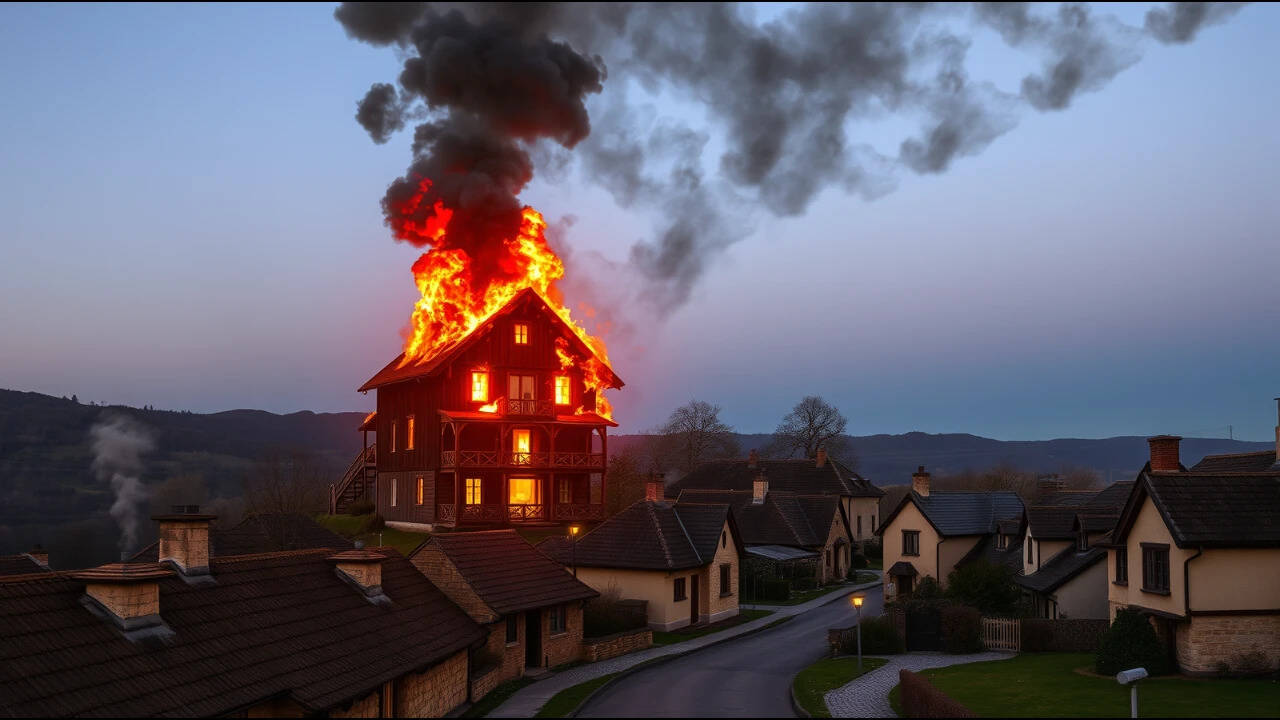
A brilliant piece of Scandinavian wisdom cuts right through this chaos. The traditional Norwegian proverb states, "Haste is good... when the house is on fire." If you found value in this article, you should look at: this related article.
It sounds simple. It isn't. Most people quote this idiom to justify their packed schedules or frantic work habits. They assume it means you should run fast when things matter. They're entirely wrong.
The real lesson here is about selective urgency. It means almost nothing is an actual emergency. Unless your physical or metaphorical house is actively turning to ash, you need to slow down. For another perspective on this event, see the latest coverage from ELLE.
The Tyranny of False Urgencies
Look at your inbox. Every email has a little red flag. Every ping on Slack demands an immediate reply. Your boss acts like a minor drop in weekly website metrics is a national tragedy.
We treat every daily task like an inferno.
When everything is a crisis, nothing is. Psychologists at the University of Michigan have studied how constant cognitive overload destroys executive function. When you operate in perpetual panic mode, your brain floods with cortisol. You can't think clearly. You make sloppy mistakes. You treat your colleagues like obstacles instead of humans.
The Norwegian proverb forces a hard boundary. It creates a binary choice. Is the house on fire? Yes or no?
If the answer is no, speed is your enemy.
Consider the aviation industry. When a commercial cockpit fills with warning lights, pilots don't instantly yank the controls. They're trained to do the exact opposite. They take a breath. They run through a checklist. Aviators know that frantic reactions kill people faster than the initial mechanical failure. They wait to evaluate before they move.
Real Fires Versus Loud Noises
To apply this wisdom, you have to separate a true crisis from a minor inconvenience.
A real fire threatens core survival. In a business context, that might mean your main servers went dark, or a legal threat just landed on the CEO's desk. In your personal life, it's a medical emergency or a sudden financial shock. Those situations require immediate, focused, high-speed action. Haste is good there.
Everything else? It's just noise.
A missed deadline isn't a fire. A critical comment from a client isn't a fire. An awkward conversation with your partner isn't a fire.
Treating these events with frantic haste usually worsens the outcome. You fire off an angry, unhinged email response. You patch a software bug with messy code that breaks three other systems. You say something hurtful during an argument because you didn't pause to breathe.
The Art of the Strategic Pause
Daniel Kahneman, the Nobel Prize-winning economist, wrote extensively about two modes of thought in his landmark research. System 1 is fast, instinctive, and emotional. System 2 is slower, more deliberative, and more logical.
Haste relies entirely on System 1. It's great for dodging a speeding car. It's awful for managing a project budget or resolving a complex relationship issue.
When you step back, you activate System 2. You give your brain the space to see the bigger picture. Norwegians call this mindset friluftsliv in a broader cultural context—a deep connection to nature and a slower pace of living that fosters mental clarity. They understand that a life lived in a hurry is a life half-lived.
To implement this, start practicing the ten-minute rule. When a situation feels urgent, force yourself to wait ten minutes before taking action or responding.
During those ten minutes, ask yourself what happens if you do nothing for an hour. Usually, the answer is absolutely nothing. The world keeps spinning. The panic subsides. Your brain clears, and you see the rational path forward rather than the reactive one.
Stop treating your daily routine like a series of structural fires. Put down the extinguisher, sit back, and let the false emergencies burn themselves out while you focus on what actually matters.