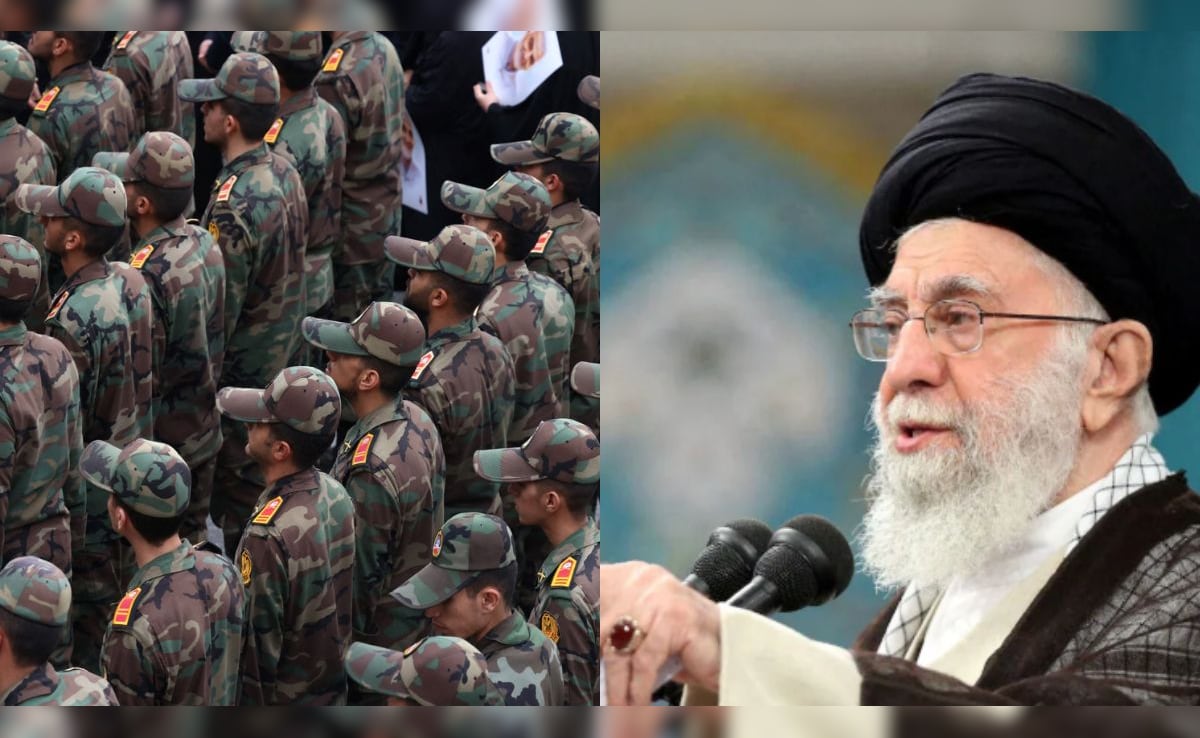
The headlines are breathless. An Iranian minister speaks, a vague statement regarding the "independence" of the Islamic Revolutionary Guard Corps surfaces, and suddenly, the global intelligence community acts as if the tectonic plates of the Middle East have shifted. They frame it as a fracture. They whisper about loss of control. They imply that the clerical establishment has finally been outmaneuvered by its own attack dog.
They are wrong.
This interpretation is the hallmark of a lazy analyst class—the same people who have been misreading Tehran for decades. They project Western models of civil-military relations onto a system that does not operate by those rules. They want to see a coup in the making, or a failing state struggling to contain its militancy. What is actually happening is far more calculated. This is not a divorce. It is the evolution of a hybrid state.
The Myth Of The Rogue Actor
The standard narrative suggests that the IRGC is a rogue entity that the Iranian government occasionally struggles to leash. This is a fairy tale for domestic consumption. In reality, the IRGC is the state. There is no separation between the ideology of the Islamic Republic and the operations of the Guard. They are two sides of the same counterfeit coin.
When a minister announces that the Guard is "independent," he is not admitting defeat. He is performing a sophisticated bit of political theater designed to insulate the civil government from the direct, messy, and violent consequences of the Guard's regional activities.
Think of it as a corporate structure where the parent company creates a shell subsidiary. The parent company—the Supreme Leader and the clerical apparatus—enjoys the profits of the subsidiary’s actions without appearing on the liability ledger. If the Guard blows up a tanker, targets a dissident, or funds a proxy militia in the Levant, the civil government can shrug, point to the "independent" nature of the force, and engage in diplomatic theater with the West. It is a brilliant, albeit transparent, maneuver of deniability.
The Western Mirroring Trap
Why do analysts keep falling for this? Because they suffer from the delusion of the mirror. They believe that Iran wants to look like a modern, Westphalian nation-state. They assume that Iran’s leaders aspire to have a military that answers to a parliament or a president in a clean, bureaucratic flow chart.
That is never the goal. The goal of the Iranian system is the preservation of clerical rule, and that rule is best served by chaos, not order.
When you study the internal dynamics of the Iranian power structure, you realize that duplication of command is not an error; it is a design feature. You have the regular army (the Artesh) and you have the IRGC. You have the Ministry of Intelligence and you have the IRGC Intelligence Organization. This creates a state of constant, controlled competition. No single person, other than the Supreme Leader, can ever feel entirely secure in their position. By creating competing centers of power, the regime ensures that no rival entity can ever build enough internal support to threaten the throne.
Calling the Guard "independent" is simply the next step in this institutional hardening. It solidifies their status as a parallel government, one that functions in the shadows, while the "civil" government functions in the light.
The Economics Of The Shadow State
Follow the money. That is the only metric that matters. The IRGC controls massive swathes of the Iranian economy—construction, telecommunications, port operations, and illicit energy smuggling. They are not an army that needs to beg the government for a budget. They generate their own revenue.
When a minister claims they are independent, he is describing a reality that has existed for twenty years. He is merely formalizing the balance sheet.
I have watched companies and governments miscalculate the risk of Iranian business operations because they assume the Ministry of Foreign Affairs can guarantee safety or compliance. It cannot. The IRGC operates in a different lane. If you are doing business in the region, dealing with the state-sanctioned entities while ignoring the Guard is like trying to negotiate with a homeowner while the bank holds the deed. You are talking to the wrong person.
The Strategy Of Compartmentalization
Let us map out the tactical reality here. By designating the Guard as independent, the regime effectively creates a black box.
- Political Insulation: When the Guard engages in regional aggression, the Foreign Ministry can maintain its "diplomatic" facade. It claims ignorance or lack of control over the "independent" security branch.
- Operational Velocity: Decisions do not need to go through the civilian bureaucracy. The Guard acts at the speed of its own chain of command, which terminates at the office of the Supreme Leader.
- Sanctions Evasion: By fracturing the perceived unity of the Iranian state, the regime complicates the imposition of sanctions. It forces the West to decide: do we sanction the "state" entity or the "independent" security actor? This friction gives the regime time to move money, resources, and personnel.
This is not a sign of a regime coming apart. It is a regime that has realized that transparency is a liability.
Examining The Ministerial Shift
Why is the minister saying this now? The timing is never accidental. Iran is facing internal demographic pressures, economic stagnation, and a shifting regional alliance structure following the normalization efforts between Arab states and Israel.
The regime is hunkering down. By separating the Guard’s public identity from the state’s political identity, they are preparing for a long-term siege mentality. They want to be able to project hard power without the civilian face of the government bearing the brunt of the global reaction.
Consider the "bad cop, good cop" routine. The Foreign Minister plays the diplomat, shaking hands, signing documents, talking about regional stability. Meanwhile, the IRGC plays the executioner. By declaring the executioner "independent," the diplomat suddenly has a plausible excuse for why the executioner continues to operate. "We tried to stop them," they say, "but they are beyond our reach."
It is a lie. But it is a functional lie.
The Failure Of The Opposition
The obsession with these minor announcements highlights a deeper intellectual bankruptcy among regional observers. They are looking for the moment the regime cracks. They are searching for the internal dissent that will topple the clerical system.
They should be looking at how the system adapts.
The Iranian regime is not a rigid monolith that will shatter under pressure. It is a biological organism that grows extra limbs when threatened. It absorbs, it clones, it duplicates. If you attack one part, it cuts that part off, calls it "independent," and continues to move forward.
We see this in their cyber operations, their militia networks in Iraq and Lebanon, and now in their internal administrative reshuffling. The "independence" of the Guard is an admission that the Iranian state has succeeded in building a structure that can survive the failure of its civilian bureaucracy.
The Danger Of Miscalculation
If Western policymakers continue to believe that this statement implies internal strife, they will make disastrous tactical errors. They will try to engage the civilian government, hoping to empower the "moderates" against the "radical" Guard.
This is a category error. There are no moderates in a system that allows for this level of compartmentalized power.
Believing in a schism between the IRGC and the state is like believing that a man’s left hand is fighting his right hand. They are connected to the same brain. They are working toward the same objective. Any policy based on the hope that these entities will eventually consume each other is doomed to failure.
Looking Past The Noise
If you want to know what the regime is actually doing, stop listening to the ministerial press releases. They are designed for the headlines. They are written for the people who want to hear that the regime is fracturing.
Instead, look at where they are moving their assets. Look at who is being appointed to the regional command councils. Look at which proxy groups are receiving fresh shipments of drone components.
The "independence" claim is the smoke in the room. The fire is the continued, systematic integration of the Guard into every aspect of Iranian life, both domestic and foreign. The regime is not loosening its grip; it is camouflaging its reach.
The next time an official makes a claim that sounds like the regime is decentralizing, assume the exact opposite. Assume they are centralizing power under a new, less visible name. Assume they are building a new layer of shielding.
The game is not changing. The rules of the game are being rewritten to make the state invisible.
Stop checking the headlines for signs of a collapse. Start checking your assumptions. If you think the IRGC is a problem that the Iranian government needs to solve, you have already lost the argument. The IRGC is the solution the regime built to ensure its own survival.
The independence of the Guard is not a cry for help. It is a declaration of permanence.
When you strip away the diplomatic posturing and the performative rhetoric, you are left with a simple, brutal reality: the state has successfully laundered its own militancy. It has created a firewall that protects the clerical leadership from the direct consequences of its own violent foreign policy.
This is not a sign of instability. It is a masterclass in autocratic survival. The regime has learned that the best way to maintain power in the 21st century is to become so fragmented and compartmentalized that your enemies never know which part of the organization to hold accountable.
They aren't losing control. They are refining the art of being everywhere and nowhere at the same time.
So, stop looking for the fracture. There is no fracture. There is only a fortress. And the people outside the walls are still standing there, waiting for the gate to open, failing to realize that the gatekeeper has already abandoned the gate and is standing right behind them, holding the key.
The narrative that Iran is fracturing is the greatest psychological operation of the decade. Do not buy into it. Do not repeat it. And for heaven’s sake, stop basing your analysis on it.
The IRGC isn't going anywhere. And neither is the regime. They have simply redefined the terms of their own existence, and while we were busy debating the semantics of "independence," they were busy cementing their control over the region.
The debate is over. The reality is far more rigid than you want to believe. They have achieved the one thing every authoritarian regime craves: a state that acts with impunity, shielded by a bureaucratic structure that is designed to be incomprehensible to the outside world.
Welcome to the new era of the Iranian state. It is exactly the same as the old one, only better at hiding. And that is the only takeaway that matters.
Do not let the rhetoric fool you. Watch the behavior. The behavior is consistent, calculated, and, most of all, completely unified. The myth of the independent Guard is just that—a myth. And myths are for the people who don't want to face the truth.
The truth is much darker, and much more permanent.