A Thai criminal court just handed down death sentences to two ethnic Uyghur men for the devastating 2015 Erawan Shrine bombing in Bangkok. It took nearly eleven years of legal gridlock, broken translation pipelines, and intense political pressure to reach this point. Justice served? Maybe on paper. But if you look closely at how this trial unfolded, the verdict raises as many messy questions as it answers.
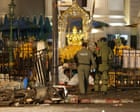
The August 17, 2015 blast killed 20 people and injured more than 120 others in the commercial heart of Bangkok. It remains the deadliest bombing in Thailand's history. The capital was shattered, tourism tanked, and the hunt for the culprits took on an frantic, desperate energy. On June 11, 2026, the Bangkok South Criminal Court finally wrapped up the saga by convicting Yusufu Mieraili and Bilal Mohammed (also known as Adem Karadag) of premeditated murder, attempted murder, and illegal bomb possession.
Shouting from the Courtroom Dock
The scene inside the courtroom immediately after the four-judge panel delivered the ruling was pure chaos. Mieraili, who actually learned to speak Thai during his eleven years behind bars, shouted his rejection of the verdict in a mix of broken Thai and English.
"I mourn for Thailand," Mieraili yelled as the judges exited. "I did not receive justice. I ask Thai people to help me."
The court was so short on resources that Mieraili was forced to translate the legal proceedings into the Uyghur language for his co-defendant, Bilal Mohammed, because the court only managed to secure an English interpreter. Think about that for a second. A man facing execution had to act as the official court translator for his own co-defendant because the state couldn't find a reliable interpreter.
That bizarre scenario isn't an isolated quirk. It highlights the systemic administrative failures that dragged this case out for over a decade. The trial originally kicked off in 2016 under a strict military junta court before getting kicked over to a civilian court in 2019. Along the way, hearings ground to a halt for months at a time. In one wild twist, a previous translator for the defense was arrested on drug charges, completely resetting the schedule.
The Overwhelming Evidence vs the Torture Claims
The prosecution's case rested heavily on security camera footage, fingerprint matching, and a mountain of forensic data linking the two men to the bomb materials. Investigators argued Bilal was the man in the infamous yellow T-shirt caught on CCTV leaving a heavy backpack at the crowded shrine minutes before the blast. They pegged Mieraili as the handler who detonated the device via a remote signal.
The defense lawyers, Chuchart Kanpai and Chamroen Panompakakorn, argued the court ignored gaping holes in the state's narrative. Both defendants initially confessed during their intense initial interrogations back in 2015, but they quickly recanted those confessions once the formal trial began. They claimed they were blindfolded, beaten, and tortured into signing confessions by military personnel.
The judges explicitly dismissed those allegations during the sentencing, stating there was zero credible evidence of torture or coercion. Under Thai law, the defense has exactly one month to lodge an appeal. Chuchart Kanpai has already signaled they will fight for an extension to file, insisting that three higher courts still offer a path to clear their names.
Human Rights Groups Blast the Process
International observers aren't buying the official narrative. The International Federation for Human Rights (FIDH) immediately condemned the death penalties, calling the entire decade-long proceeding a flawed trial that violated basic international standards.
The problems began on day one. Human rights organizations point to the lack of transparent legal representation early on, prolonged arbitrary detention without a clear trial timeline, and the highly political atmosphere surrounding the case. Keeping suspects locked up for eleven years before a primary verdict is reached violates the right to a speedy trial under the International Covenant on Civil and Political Rights, which Thailand ratified.
The Elephant in the Room
The most glaring issue with this verdict is the official motive. Thai police have consistently maintained that the bombing was simple revenge by a transnational human smuggling syndicate. The theory goes that the gang was angry because Thai authorities cracked down on human trafficking networks along the Malaysian border earlier in 2015.
It's a neat explanation that lets the Thai government off the hook geopolitically, but geopolitical analysts don't buy it. The real trigger appears to be much more sensitive. Just a month before the bombing, in July 2015, the Thai government forcibly repatriated over 100 Uyghur asylum seekers back to China, where the Muslim minority faces severe state persecution in the Xinjiang region.
The forced deportation triggered international outrage and massive protests, including an attack on the Thai consulate in Istanbul. The Erawan Shrine is heavily frequented by mainland Chinese tourists. Five of the dead were from mainland China and two were from Hong Kong. You don't have to be a seasoned detective to connect those dots. It looks like a targeted act of political terrorism by Uyghur militants striking back at Thai concessions to Beijing.
Unsurprisingly, Beijing welcomed the death sentences with open arms. Chinese Foreign Ministry spokesperson Lin Jian stated that the perpetrators were "utterly inhumane" and that China fully supports Thailand punishing them to the fullest extent of the law.
What Happens Next
If you're following this case, don't expect an execution anytime soon. The legal road is still incredibly long.
- The Appeal Window: Defense lawyers have 30 days to file their initial appeal, though they'll likely secure a standard extension given the 10,000-page trial transcript.
- The Higher Courts: The case must wind its way through the Thai Appeals Court and then the Supreme Court. That process easily takes several more years.
- The Royal Pardon Route: Even if the Supreme Court upholds the death sentences, the final step involves a petition for a royal pardon from the Thai King, which can commute the sentence to life imprisonment.
Thailand rarely carries out executions anymore. The last judicial execution occurred in 2018, which was the first one in nine years at the time. The chances of these two men heading to the execution chamber quickly are slim, but the political fallout remains highly active.
Just last year, Thailand quietly deported another 40 Uyghur asylum seekers back to China, proving that the diplomatic tightrope between Bangkok and Beijing is just as tense now as it was when the bomb went off in 2015. This verdict closes a legal chapter, but it leaves the deeper, darker currents of international diplomacy and human rights violations completely unresolved.