Western economies are currently grappling with an energy crisis that is no longer a matter of simple supply and demand. While the geopolitical friction involving the United States and Iran has certainly served as the match, the structural weaknesses of G7 energy policies are the fuel. This fuel shock is hitting the United States with a particular ferocity, outstripping its peers in the G7 due to a combination of high domestic consumption habits and a refining infrastructure that is increasingly brittle. The fundamental reality is that the U.S. has traded long-term stability for short-term market agility, and the bill has finally come due.
The current escalation in the Middle East has effectively neutralized the "shale cushion" that American policymakers relied upon for the better part of a decade. For years, the narrative was simple: domestic fracking would insulate the American consumer from the whims of foreign cartels. That narrative has failed. Global oil is a fungible commodity, and while the U.S. pumps record amounts of crude, it remains tied to a global price set by the most volatile regions on earth. When tensions with Tehran spike, the price of a gallon in Ohio moves just as fast as the price of a liter in London, but the American driver feels the sting more because of the sheer distances required to navigate American life.
The Friction Point of Refining Capacity
The core of this fuel shock isn't just the price of a barrel of crude. It is the cost of turning that crude into something usable. For decades, the G7 has neglected its downstream infrastructure. Environmental regulations, while necessary for long-term health, have combined with a lack of capital investment to create a bottleneck in the refining sector. We are trying to push a record amount of demand through a narrowing straw.
When a conflict threatens the Strait of Hormuz, the risk premium doesn't just apply to the oil in the tankers. It applies to the entire insurance and logistics chain. Because the U.S. has optimized its refineries to process specific types of heavy sour crude—much of which is imported—it cannot easily pivot to the light sweet crude coming out of Permian Basin fields. This mismatch is a strategic failure. It means that even in a moment of domestic abundance, the U.S. is still shackled to the stability of the Persian Gulf.
The Divergence of G7 Responses
While the G7 presents a unified front in diplomatic circles, the economic reality on the ground is fractured. Europe has spent the last three years aggressively decoupling from volatile energy sources, spurred by the conflict in Ukraine. Japan has doubled down on nuclear restarts and strategic reserves. The United States, conversely, has leaned into a policy of "drill and hope."
This reliance on market forces alone has left the American consumer more exposed to price swings than their counterparts in France or Germany, where high fuel taxes actually act as a stabilizer. In those countries, a $10 increase in the price of crude represents a smaller percentage of the total price at the pump. In the U.S., where taxes are low, that same $10 increase translates into a massive, immediate shock to the household budget.
The Hidden Cost of Strategic Reserves
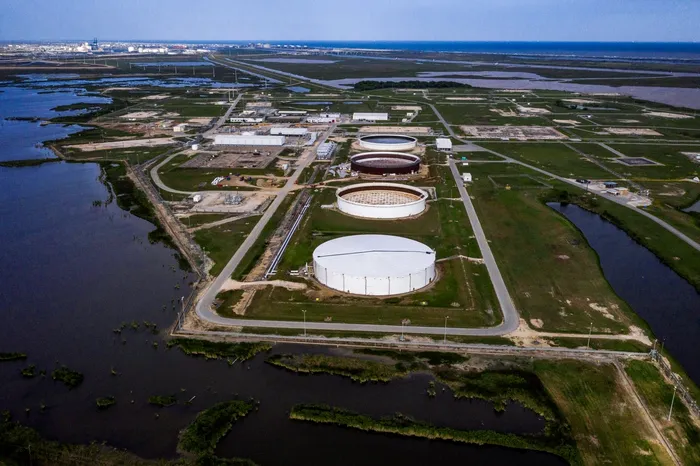
The Strategic Petroleum Reserve (SPR) was once the ultimate deterrent against energy blackmail. Today, it is a shadow of its former self. Repeated drawdowns intended to blunt inflation have left the reserve at levels not seen since the early 1980s. This isn't just a logistical problem; it is a loss of psychological leverage.
When the U.S. enters a period of heightened tension with a major producer like Iran, the markets look to the SPR as a backstop. If the backstop is perceived as empty, the speculative premium on oil futures skyrockets. Traders are no longer betting on the current supply; they are betting on the fear of a total outage. This speculative activity is currently responsible for an estimated $15 to $20 of the price of every barrel. We are paying a "fear tax" because our safety net has been shredded.
Infrastructure Decay and the Logistics Gap
Even if we had all the oil in the world, the G7 faces a massive logistics gap. The tankers, the pipelines, and the storage facilities are aging. In the U.S., the Jones Act complicates the movement of fuel between domestic ports, often making it cheaper to export gasoline to South America than to ship it from the Gulf Coast to New England.
This internal friction means that "fuel shocks" are often localized. One region might have a surplus while another sees gas lines forming. This fragmentation is a gift to adversaries who understand that they don't need to stop all oil flow to cause an economic crisis; they only need to disrupt the most sensitive nodes of the network.
The Iranian Factor and the Strait of Hormuz
Tehran’s primary weapon is not its military might, but its geography. The Strait of Hormuz is the world's most important oil transit chokepoint. Roughly one-fifth of the world’s liquid petroleum passes through this narrow waterway.
If Iran even hints at a blockade, the insurance rates for tankers jump by 500% overnight. These costs are immediately passed down to the consumer. The G7's attempt to use sanctions and diplomatic pressure to contain this threat has, in many ways, backfired. It has pushed Iranian oil into a "shadow fleet" of tankers that operate outside of Western oversight, primarily serving markets in Asia. This creates a two-tier global energy market where the G7 pays the "sanctions premium" while other nations buy discounted crude.
The Myth of Energy Independence
Politicians love the phrase "energy independence." It is a powerful campaign slogan that bears almost no relation to how the global economy actually functions. As long as the U.S. is part of the global financial system, its energy prices will be dictated by global events. True independence would require a complete decoupling from the global oil market, something that is neither feasible nor particularly desirable in a globalized world.
The real goal should be energy resilience. Resilience is the ability to absorb a shock without the entire system grinding to a halt. The G7, and the United States in particular, has sacrificed resilience for the sake of efficiency and low prices during "peace time." Now that the geopolitical climate has turned hostile, that lack of resilience is being exposed.
The Corporate Stance on Capital Discipline
There is another factor that often goes unmentioned in the halls of government: the behavior of the oil majors themselves. After a decade of poor returns, investors in the energy sector are demanding "capital discipline." Instead of spending every cent on new drilling, companies are returning cash to shareholders through buybacks and dividends.
They are no longer interested in bailing out the consumer by oversupplying the market. From their perspective, a tight market with high prices is an ideal environment. This creates a disconnect between the national interest and the corporate interest. When the government asks for more production to lower prices, the industry asks, "Why should we?" This tension ensures that the supply side of the equation remains tight, regardless of who is in the White House.
The Role of Speculative Capital
Wall Street plays a massive role in how these fuel shocks manifest. Commodities are no longer just physical goods; they are asset classes. In times of high inflation and geopolitical uncertainty, hedge funds and institutional investors pour money into oil futures as a hedge.
This influx of "paper money" pushes the price far beyond what the physical supply would dictate. We are seeing a feedback loop where political tension leads to speculative buying, which leads to higher prices, which leads to more political tension. Breaking this cycle requires more than just diplomacy; it requires a fundamental shift in how commodity markets are regulated.
The Real Cost of the Status Quo
The current fuel shock is more than an inconvenience. It is a massive transfer of wealth from the consuming public to the producing entities and the financial institutions that trade between them. In the G7, this acts as a regressive tax, hitting the lowest earners the hardest.
When transport costs rise, food prices follow. When energy costs for manufacturing rise, the price of every consumer good follows. We are looking at a sustained period of "energy-push inflation" that central banks are poorly equipped to handle. Raising interest rates doesn't produce more oil, and it certainly doesn't make the Strait of Hormuz any safer.
Strategic Reorientation
If the G7 is to escape this cycle, it must move beyond reactive measures. The focus needs to shift toward massive investments in domestic refining that can handle local crude types and a total overhaul of the logistics networks that move fuel.
Relying on the hope that the Middle East will remain stable is not a strategy; it is a gamble. For decades, the West has won that gamble. But the streak has ended. The current price spikes are a warning that the old energy order is dead, and the new one is significantly more expensive.
The policy of using the SPR as an atmospheric thermostat must end. The reserve must be rebuilt and reserved only for true physical disruptions, not for political price-fixing. Without a credible reserve, the G7 remains a hostage to any actor with a few fast boats in a narrow waterway.
We have entered an era where energy is the primary theater of geopolitical conflict. The G7 is currently losing that conflict because it is playing by the rules of the 1990s in a world that has moved on. The sharpest shock is the realization that the era of cheap, reliable energy is over, and the transition to whatever comes next will be defined by volatility and high costs. There is no easy way out, only a long, expensive way through.