Oil prices just reminded the world that geography is destiny. Following a direct rejection of Iranian diplomatic overtures by the Trump administration, West Texas Intermediate (WTI) and Brent crude futures surged by 7%, a violent reaction that reflects more than just a single failed meeting. This is the sound of the risk premium returning to the energy sector with a vengeance. For months, traders had toyed with the idea of a "normalization" path that might keep Iranian barrels flowing steadily. Those hopes evaporated the moment the White House signaled that maximum pressure is back on the menu.
The market isn't just reacting to a headline. It is pricing in the high probability of disrupted supply chains and the potential for a renewed "tanker war" in the Strait of Hormuz. When the United States signals that it will no longer entertain a compromise with Tehran, the immediate assumption is that secondary sanctions will be enforced with renewed ferocity. This means Chinese "teapots"—the small, independent refineries that have been the primary destination for sanctioned Iranian crude—will soon face a choice between cheap oil and access to the U.S. financial system.
The Crude Reality of Sanctions Enforced
The 7% jump in prices is a mathematical reflection of lost volume. If the U.S. successfully tightens the noose on Iranian exports, the market stands to lose between 1 million and 1.5 million barrels per day. In a global market where the margin between surplus and deficit is often razor-thin, that volume is the difference between $70 oil and $90 oil.
Brent crude, the global benchmark, led the charge as European buyers realized that the Mediterranean supply balance is about to get much tighter. While the U.S. is largely energy independent thanks to the Permian Basin, the global price is set by the most vulnerable link in the chain. Right now, that link is the Middle East.
Why the Iran Proposal Failed
The rejected proposal likely hinged on a freeze of nuclear enrichment in exchange for immediate sanctions relief. For an administration focused on "America First" and a hardline stance against regional adversaries, this was a non-starter. The rejection serves a dual purpose: it reaffirms loyalty to regional allies like Israel and Saudi Arabia, and it forces Iran into a corner where its only options are total capitulation or dangerous escalation.
Investors often forget that oil is a political weapon as much as it is a fuel. By rejecting the proposal, the U.S. is effectively betting that domestic production can offset any global price spikes. It is a high-stakes gamble. U.S. shale producers are no longer in the "growth at all costs" phase. They are answering to shareholders who demand dividends and buybacks, not expensive new drilling campaigns. We cannot simply flip a switch and replace a million Iranian barrels overnight.
Natural Gas Feels the Heat
While oil grabbed the headlines, natural gas prices followed suit, though for slightly different reasons. Natural gas isn't just about heating homes anymore; it is the backbone of global industrial power and the primary feedstock for the world’s transition away from coal.
When geopolitical tensions rise in the Middle East, the risk to Liquefied Natural Gas (LNG) shipments through the Strait of Hormuz becomes a primary concern. Qatar, one of the world’s largest LNG exporters, shares the North Dome/South Pars field with Iran. Any kinetic conflict in the region doesn't just stop oil tankers; it halts the super-chilled gas carriers that keep the lights on in Tokyo and Berlin.
The European Vulnerability
Europe remains the "swing consumer" for LNG. Since the decoupling from Russian pipeline gas, the continent has become almost entirely dependent on the seaborne market. A 7% spike in oil often acts as a leading indicator for gas futures. If the Middle East remains a powder keg, European industry will continue to pay a "security premium" that makes their manufacturing sector less competitive against U.S. and Chinese rivals.
The Ghost of 2018
We have seen this script before. In 2018, the withdrawal from the JCPOA led to a similar period of volatility. However, the world is different now. In 2018, global spare capacity was higher. Today, OPEC+ is already cutting production to keep prices floor-boarded, and the Strategic Petroleum Reserve (SPR) in the U.S. is at historically low levels following the releases of 2022.
The cushion is gone.
If the U.S. follows through with aggressive seizure of Iranian tankers, we should expect a symmetrical response. This is the "why" behind the sudden surge. Markets are not just looking at the supply-demand balance on a spreadsheet; they are looking at the potential for a physical blockade.
Analyzing the WTI Technical Breakout
From an analyst’s perspective, the price action in WTI broke through several key resistance levels in a single session. The $75 mark was decimated, and we are now looking at the 200-day moving average as the next psychological battleground.
Technical indicators like the Relative Strength Index (RSI) are screaming "overbought" in the short term, but technicals often fail in the face of raw geopolitics. A market driven by the fear of a closed strait doesn't care about a chart pattern. It cares about the number of destroyers the U.S. Navy has in the Persian Gulf.
The Role of Speculative Capital
Hedge funds and algorithmic traders were caught "short" going into this week. Many had bet that the global economic slowdown—particularly the sluggish recovery in China—would keep oil prices depressed. The rejection of the Iran proposal forced a massive "short squeeze." This is a process where traders who bet on falling prices are forced to buy back contracts at a loss to exit their positions, adding even more fuel to the upward price move.
This isn't organic demand. It is a structural repositioning.
The China Factor
The biggest wildcard remains Beijing. If the U.S. enforces sanctions, China has two choices: comply and pay more for oil from the Saudis or Russians, or ignore the U.S. and continue buying Iranian crude through "dark fleet" tankers.
If China chooses the latter, the U.S. must then decide whether to sanction Chinese banks. That is the "nuclear option" of financial warfare. If we reach that point, a 7% jump in oil will look like a minor rounding error. We are talking about a fundamental fracturing of the global trade system.
Domestic Pressure on the Administration
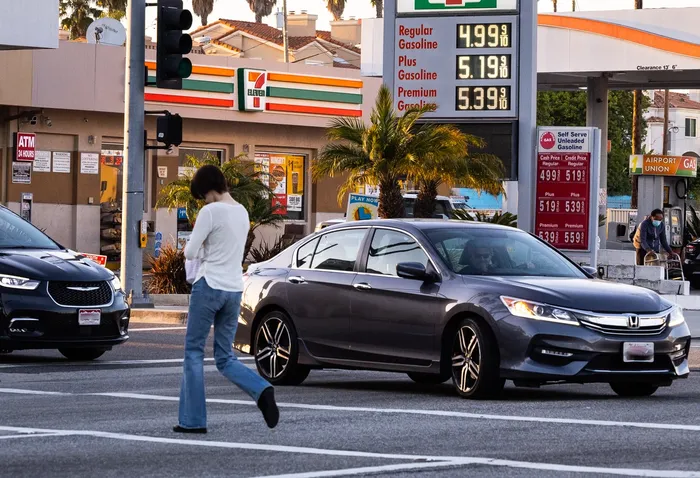
High oil prices are a political liability at home. While the administration wants to look tough on Iran, it cannot afford $4.00 a gallon at the pump during an election cycle or a period of economic sensitivity. This creates a paradox. The "Maximum Pressure" campaign requires high prices to hurt the Iranian economy, but those same high prices hurt the American consumer.
The only way out of this trap is a massive increase in domestic production or a sudden peace treaty that currently looks impossible.
Behind the Numbers of the 7% Surge
To understand the scale, a 7% move in a single day is an outlier that usually only happens during wars, pandemics, or major OPEC shifts.
- WTI Crude: Gained nearly $5.00 a barrel in hours.
- Brent: Surpassed the $80 mark, a critical level for airline profitability and global logistics.
- Gasoline RBOB Futures: Spiked in tandem, ensuring that the "tax at the pump" will be felt by consumers within the next ten days.
This isn't just about speculators making a quick buck. It is about the cost of everything. From the plastic in your phone to the fertilizer used for industrial farming, petroleum products are the hidden cost in every transaction.
The Strategy of Tension
The rejection of the proposal suggests that the U.S. is comfortable with a higher-price environment if it achieves the strategic goal of bankrupting the Iranian regime. This is a return to a Cold War-style containment strategy. It assumes that the U.S. economy is resilient enough to handle $90 or $100 oil while the Iranian economy collapses under the weight of an embargo.
But the world isn't unipolar anymore. Iran has spent the last decade building "sanction-busting" infrastructure. They have a fleet of aging tankers that turn off their transponders, transfer oil at sea, and rename themselves every three months. They have built a shadow banking system that operates in Yuan and Rubles.
Moving Toward a New Price Floor
We are likely entering a period where the "floor" for oil has shifted higher. The days of $60 WTI are likely over as long as the diplomatic channels remain closed.
For investors and industry analysts, the focus must now shift to the weekly inventory reports and the rhetoric coming out of the Department of Justice regarding tanker seizures. If the U.S. begins physically stopping Iranian ships, the 7% move we just saw will be the first step in a much longer ladder.
The energy market is no longer trading on the basis of barrels in the ground. It is trading on the basis of ships in the water and the willingness of a single office in Washington to say "no" to a deal. Those who ignore the geopolitical reality in favor of pure supply-demand metrics will find themselves on the wrong side of the next 7% move.
The immediate action for any entity exposed to energy costs is to hedge now, because the diplomatic window hasn't just closed; it has been boarded up. The era of cheap, quiet energy is a memory, replaced by a volatile reality where a single "tweet" or a rejected memo can reset the global economy in an afternoon.
Monitor the spread between Brent and WTI closely. If Brent begins to pull away at a faster rate, it signals that the rest of the world is panicking more than the U.S., which usually precedes a rush into the U.S. Dollar. This creates a double-whammy for emerging markets: expensive oil paid for with an even more expensive dollar. The ripples of this 7% surge are only beginning to reach the shore.