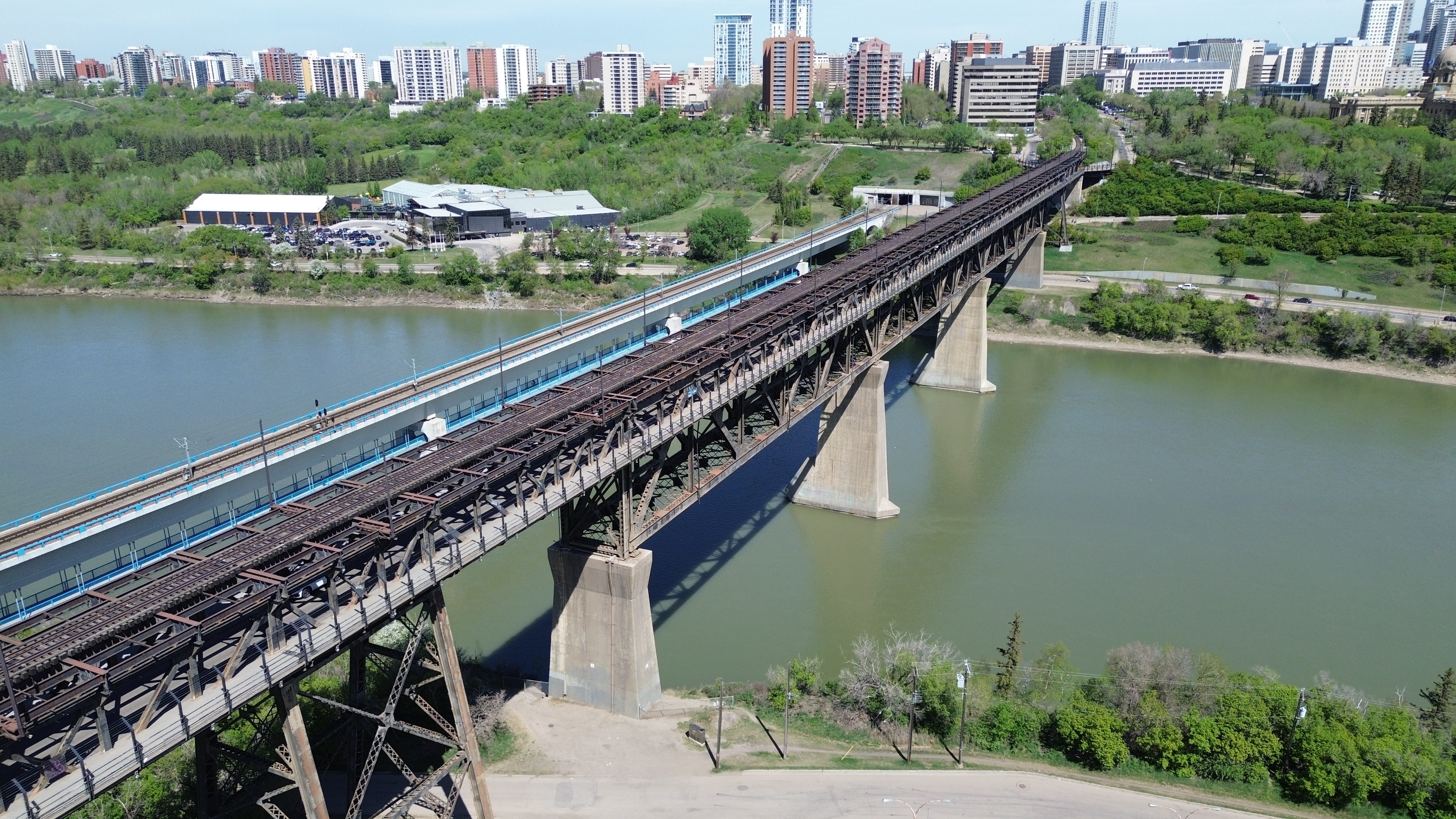
Edmonton just cannot catch a break from the sky. If you rely on the High Level Bridge to commute, walk your dog, or get some evening fresh air, your routine just took a massive hit.
The City of Edmonton shut down the bridge’s east sidewalk indefinitely. It’s not a minor maintenance issue or a quick cleanup job. Torrential rain completely undermined the riverbank slope on the southeast side of the structure right above Kinsmen Park. A massive chunk of the earth supporting the approach failed.
The ground basically gave out next to the wooden guardrail, rendering the area completely unsafe for pedestrians and cyclists.
If you are trying to cross, you need to know exactly how this impacts your commute, why our infrastructure is failing under the weight of this unprecedented summer, and what needs to happen next.
The Immediate Commute Impact
Let's clear up the immediate logistics so you don't get stranded on your way across the North Saskatchewan River.
The east sidewalk is completely blocked off. Do not try to bypass the barriers. The city has set up detours, but your primary alternative is right on the other side of the structure. The west sidewalk remains fully open to active commuters. Expect it to be twice as crowded as usual, so pack some extra patience if you are riding a bike or running during peak hours.
It isn't just foot traffic feeling the squeeze either. The unstable slope sits precariously close to the 109 Street hill climb. As a strict safety precaution, crews closed a portion of the far-left turning lane on the hill right after you exit the bridge.
You can still execute your left turns onto Saskatchewan Drive and down Walterdale Hill, but the bottleneck is going to back up traffic heavily during the morning and evening rush. Give yourself an extra 15 to 20 minutes if you drive this route.
Edmonton Wettest June in Over a Century
A lot of people are asking how a simple rainstorm can take down a chunk of a massive riverbank. The reality is that this wasn't just a simple rainstorm. It is the culmination of a historic, brutal month of precipitation.
To put things into perspective, Edmonton averages roughly 70 mm of rain for the entire month of June. By the time the city inspectors went out to look at the High Level Bridge slope, a staggering 203 mm of rain had already fallen this month.
We are currently living through the second-wettest June in recorded Edmonton history. We are rapidly approaching the all-time absolute record set way back in 1914, when the city registered 216.5 mm.
The ground isn't just wet; it is totally oversaturated. When soil absorbs that much volume, it loses its structural integrity. It turns into heavy, fluid mud. The weight of the water pushes the soil particles apart, and gravity does the rest. That is exactly what caused the slope failure near the wooden guardrail.
The worst part is that the sky isn't done with us yet. Environment Canada issued a wide-reaching special weather statement tracking another major system. Forecasters warn that an additional 30 mm to 60 mm of rain will pelt central Alberta.
With the soil already at maximum capacity, this fresh downpour drastically raises the risk of further overland flooding, severe washouts, and major infrastructure damage across the region.
The Age Problem Facing the High Level Bridge
This incident shines a very bright, uncomfortable light on a conversation the city has been trying to navigate for years. The High Level Bridge is an iconic piece of our skyline, but it is also 113 years old.
An aging steel giant sitting on top of a shifting, soft-rock river valley is a recipe for long-term engineering headaches. The city has openly debated the long-term viability of the bridge, balancing the astronomical costs of total replacement against the ever-increasing price tag of constant rehabilitation.
When heavy rain events hit an aging infrastructure footprint, the weaknesses show up fast. Riverbank erosion isn't something you can fix with a patch of asphalt or a few sandbags. Remediating a failed slope requires intensive engineering, retaining structures, proper drainage redirection, and weeks of stability monitoring.
Because the upcoming weekend forecast is looking incredibly grim, city crews won't even be able to start real stabilization efforts until the water stops falling and the ground begins to dry out. This means "closed until further notice" truly means indefinite.
Steps to Take Right Now
You can't fix the riverbank yourself, but you can absolutely adapt your routine to avoid getting caught in the mess.
First, pivot your route early. If you are a pedestrian or cyclist who normally uses the east side to catch specific views or access particular trails in Kinsmen Park, plan your crossover to the west sidewalk before you even reach the bridge approach.
Second, if you commute via 109 Street, download a live traffic app to monitor the left-lane bottleneck in real-time. Consider using the Groat Road Bridge or the James MacDonald Bridge as alternative crossing points to bypass the south-side hill entirely.
Third, prepare your own property. The city’s stormwater systems are under immense pressure. Clear your residential gutters, ensure your sump pump is plugged in and functioning, and extend your downspouts at least two meters away from your home foundation to prevent localized basement flooding as the next wave of storms hits.
Keep an eye on official city channels for structural updates, but don't expect the east walkway to open anytime soon. The battle against the elements in the North Saskatchewan River valley is going to be a long one.