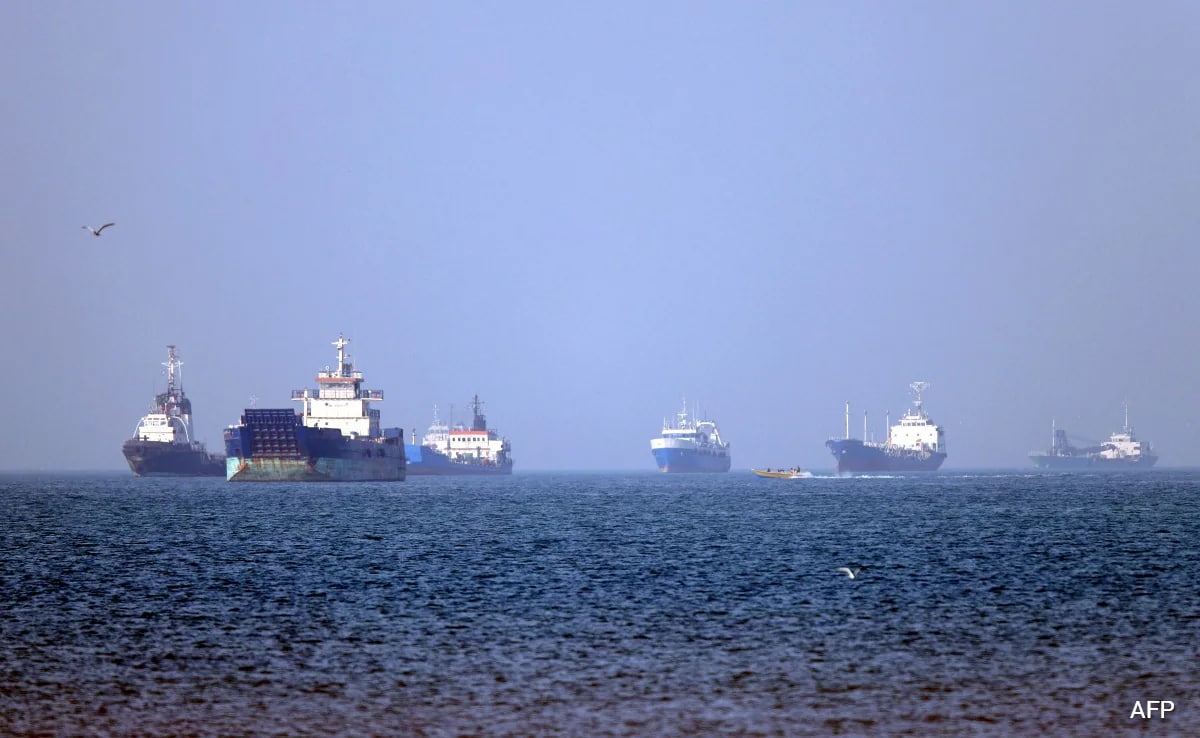
Control over the Strait of Hormuz is not merely a military objective for Tehran; it is an attempt to internalize the global "security externality" of oil transit and convert it into a sovereign revenue stream. The Iranian administration's assertion that controlling this chokepoint will yield "significant economic revenues" rests on the transition from a passive geographical presence to an active extractive actor. To analyze the validity of this claim, one must deconstruct the Strait’s value not as a body of water, but as a critical node in a global supply chain that lacks immediate redundancy.
The Strait of Hormuz facilitates the passage of approximately 21 million barrels of oil per day (bpd), representing roughly 21% of global petroleum liquids consumption. When Iran discusses "revenue," it refers to a shift in the maritime legal framework from the "Right of Innocent Passage" under the United Nations Convention on the Law of the Sea (UNCLOS) to a fee-for-service or regulatory-taxation model.
The Revenue Extraction Mechanism: Three Pillars of Monetization
The Iranian strategy to monetize the Strait rests on three distinct logical pillars. Each carries varying levels of geopolitical risk and economic feasibility.
1. The Transit Fee Model (Maritime Rent-Seeking)
The most direct path to revenue is the imposition of "environmental" or "security" fees on commercial vessels. Iran justifies this through the high cost of patrolling the waters and maintaining maritime safety.
- Variable Cost Recovery: Charging for Search and Rescue (SAR) capabilities provided by the IRGCN (Islamic Revolutionary Guard Corps Navy).
- Environmental Protection Levies: Implementing a mandatory insurance or cleanup fund for tankers, purportedly to protect the Persian Gulf’s fragile ecosystem from potential spills.
- The Logic of Capture: By forcing ships to use Iranian-monitored Traffic Separation Schemes (TSS), Iran can exert administrative control, requiring documentation that carries processing fees.
2. Mandatory Local Insurance and Reinsurance
Sanctions have historically isolated Iranian shipping from the P&I (Protection and Indemnity) Clubs that dominate the Western maritime world. By asserting control over the Strait, Tehran seeks to mandate the use of regional or Iranian-backed insurance pools for any vessel entering the Gulf. This would move billions in premium payments from London and Singapore to regional financial centers, effectively bypassing the Western financial "chokepoint" with a chokepoint of its own.
3. Asymmetric Premium Capture
The "War Risk Premium" is an added cost shipowners pay to insurers when operating in volatile areas. While this usually benefits global insurers, Iran’s strategy involves creating a "Safe Passage" tier. Under this framework, vessels that comply with Iranian regulatory and financial demands receive security guarantees that ostensibly lower their operational risk, effectively transferring the War Risk Premium from third-party insurers directly to the Iranian state in the form of "protection" or "escort" fees.
The Cost Function of Interference: Why Revenue is Not Profit
The competitor's narrative overlooks the massive overhead required to sustain a coercive economic regime in the Strait. Total revenue is not the metric of success; the net gain after accounting for "Friction Costs" is what determines the strategy's viability.
The Elasticity of Global Supply
The primary constraint on Iranian revenue extraction is the "Substitution Effect." While the Strait of Hormuz is the most efficient route, it is not the only one. High transit fees or increased risk profiles trigger shifts in global logistics:
- The East-West Pipeline (Saudi Arabia): Capable of moving 5 million bpd to the Red Sea.
- The Abu Dhabi Crude Oil Pipeline (UAE): Capable of moving 1.5 million bpd to Fujairah, bypassing the Strait entirely.
- Global Inventory Drawdowns: Sustained high costs in the Strait incentivize the release of Strategic Petroleum Reserves (SPR) in the US, China, and Japan, which depresses the global price of oil ($P_o$) and reduces the total value of the throughput Iran seeks to tax.
The Military Maintenance Ratio
To extract $1 billion in maritime fees, Iran must maintain a credible threat of interdiction. This requires a constant naval presence, sophisticated coastal defense cruise missiles (CDCMs), and drone surveillance. The marginal cost of patrolling increases as international naval task forces (such as IMSC or Operation Prosperous Guardian) increase their escort frequency. If the cost of enforcement exceeds the revenue collected from compliant vessels, the strategy results in a net fiscal drain.
Precise Definitions of Control: Territorial vs. Functional
To analyze Iran’s claims, we must distinguish between two types of maritime control.
Territorial Sovereignty refers to the 12 nautical miles of territorial sea extending from Iran’s coast and its islands (like Abu Musa and the Tunbs). Because the Strait is narrow (only 21 miles wide at its narrowest point), the shipping lanes fall entirely within the territorial waters of Iran and Oman. Under UNCLOS, "Transit Passage" is guaranteed for international shipping. Iran, which has signed but not ratified UNCLOS, argues that "Innocent Passage" applies instead, which gives the coastal state more power to suspend transit if its "peace, good order, or security" is threatened.
Functional Command is the ability to monitor, identify, and selectively intercept traffic. This is where Iran’s "revenue" strategy lives. By using the Hormuz Integrated Surveillance System, Iran can differentiate between "friendly" and "hostile" flags. Revenue is extracted from the "friendly" and "neutral" categories through trade agreements and bypass fees, while costs are imposed on "hostiles" through delays and inspections.
The Geopolitical Risk Discount
The valuation of Iranian control is subject to a massive risk discount. Any attempt to formally "tax" the Strait of Hormuz would likely trigger a Cascading Escalation Cycle:
- Stage 1: Legal Contestation. Flag states file suits in the International Court of Justice. This is largely ignored but provides the legal pretext for Stage 2.
- Stage 2: Re-flagging and Escorts. Shipowners move vessels to sovereign registries that offer military protection. The cost of shipping rises, but the "revenue" goes to the navies providing the escort, not the coastal state.
- Stage 3: Kinetic Intervention. If Iran attempts to physically block a vessel for non-payment of a fee, the risk of a military exchange becomes near-certain. At this point, "economic revenue" ceases to be the priority as the state shifts to a war footing.
Strategic Asset or Liability: The Financial Outlook
The Iranian claim of "significant revenues" is a hypothesis based on the concept of Geographical Rent. In classical economics, rent is earned by the owner of a resource simply for its existence. Iran is attempting to apply this to a global commons.
For this to work, Iran must achieve a "Monopoly of Enforcement" without triggering a "Global Response." This is a narrow needle to thread. The most likely outcome is not a formal tax system, but a Grey Zone Monetization strategy. This involves:
- Using domestic courts to seize tankers on legalistic grounds (e.g., environmental violations) and demanding "fines" that function as de facto revenue.
- Bartering "Safe Passage" for the release of frozen Iranian assets in foreign banks.
- Forcing regional neighbors into "Joint Security Agreements" that require financial contributions to Iranian-led maritime centers.
The revenue generated through these means is opaque and inconsistent. It does not provide the steady fiscal influx required to stabilize a national economy, but it does provide the IRGC with an off-budget source of hard currency.
The Bottleneck Problem: Evaluating Redundancy
To understand why the Strait remains a potent lever despite the cost of control, we must look at the math of maritime transit. A standard VLCC (Very Large Crude Carrier) carries 2 million barrels. If Iran were to successfully impose a nominal "Safety Fee" of just $1 per barrel, the daily revenue would reach $21 million, or roughly $7.6 billion annually.
For a sanctioned economy, $7.6 billion is transformative. However, the global economy views that $7.6 billion as a tax on energy. If the cost of rerouting or military escort is $0.90 per barrel, the market will pay for the escort. If the cost of rerouting is $1.10, the market will pay Iran—up until the point where the increased energy cost triggers a global recession, collapsing the demand for the very oil Iran is trying to tax.
The fundamental flaw in the "Significant Revenue" thesis is the assumption of a static market. The global energy market is a dynamic system. High-pressure tactics in the Strait of Hormuz accelerate the decoupling of Asian and European economies from Gulf oil, speeding up the transition to alternative energy sources and North American/South American supply. Iran’s attempt to maximize the "Rent" of the Strait may ultimately devalue the resource it is trying to exploit.
The strategic play for Tehran is not a total blockade, which would be a declaration of war, but the normalization of a "Tiered Access" system. By making the Strait "free for friends and expensive for enemies," Iran seeks to use the chokepoint as a diplomatic currency rather than just a fiscal one. The revenue is the byproduct; the power to discriminate between users is the primary asset. Any analyst focusing solely on the dollar amount of potential fees misses the broader objective: the transformation of a global waterway into a sovereign tool of geopolitical arbitrage.