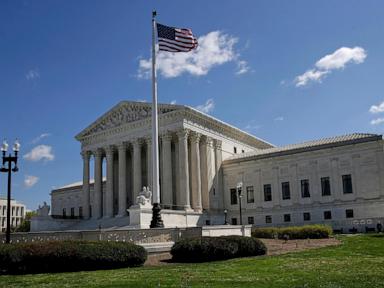
The current surge of glyphosate-related litigation against Bayer AG represents a systemic breakdown in the intersection of federal regulatory supremacy and state-level tort liability. At the center of this multibillion-dollar friction is a fundamental legal paradox: the Environmental Protection Agency (EPA) maintains that glyphosate is not carcinogenic, yet state-level juries consistently award damages based on the premise that failure to warn of cancer risks constitutes actionable negligence. This discrepancy has created a liability feedback loop that threatens the stability of the global agricultural chemical market.
The Triad of Liability Exposure
To understand the scale of the "Roundup wave," one must categorize the risk into three distinct pillars. These pillars dictate the settlement math and the strategic positioning of both the defense and the plaintiffs' bar.
- Federal Preemption Conflict: Under the Federal Insecticide, Fungicide, and Rodenticide Act (FIFRA), the EPA regulates pesticide labeling. Bayer’s primary defense rests on the "preemption" doctrine—the idea that because the EPA prohibits labels claiming glyphosate causes cancer, state laws cannot simultaneously require such warnings. If the Supreme Court clarifies this preemption, the majority of the pending 160,000+ claims lose their legal foundation.
- The Epidemiology Gap: Scientific consensus remains fractured between regulatory bodies and specific international agencies. While the EPA and European Food Safety Authority (EFSA) classify glyphosate as non-carcinogenic, the International Agency for Research on Cancer (IARC) classified it as "probably carcinogenic" in 2015. This single classification provided the evidentiary anchor for the entire litigation movement.
- Punitive Damage Multipliers: The financial volatility of these cases is driven by the ratio of compensatory damages to punitive awards. In recent verdicts, such as the $2.25 billion Philadelphia judgment (later reduced), the punitive component was designed to penalize corporate conduct rather than just compensate for medical costs. This creates a non-linear risk model where a single trial loss can outweigh years of product revenue.
The Cost Function of Mass Tort Settlements
Bayer has already committed over $10 billion to resolve roughly 100,000 claims, yet the "tail risk" remains unquantified. The cost of resolving the remaining and future claims is a function of the Probability of Certiorari (P) and the Average Settlement Value (ASV) per claimant.
The mathematical pressure on Bayer is represented by:
$$Total Liability = (N_{pending} + N_{future}) \times ASV \times (1 - P_{preemption})$$
Where $P_{preemption}$ represents the likelihood of a Supreme Court ruling that validates federal preemption. If $P$ is low, the settlement value per head increases because plaintiffs' attorneys hold higher leverage in mediation. Currently, the Supreme Court's reluctance to intervene has signaled to the market that the "preemption shield" is porous, leading to a higher cost of capital for the parent company and a depressed stock valuation that reflects "litigation overhang."
Mechanical Failures in the Jury Trial System
The divergence between scientific regulatory approval and jury verdicts reveals a failure in the Daubert Standard application. The Daubert Standard is supposed to act as a gatekeeper, ensuring that only scientifically valid expert testimony reaches a jury.
In glyphosate trials, the breakdown occurs during the "General Causation" vs "Specific Causation" phases:
- General Causation: Can glyphosate cause Non-Hodgkin’s Lymphoma (NHL) in the human population?
- Specific Causation: Did glyphosate cause this specific plaintiff’s NHL?
Plaintiffs' counsel frequently bypasses the lack of definitive general causation by focusing on "internal company documents." By shifting the narrative from molecular biology to corporate ethics (the "Monsanto Legacy"), they trigger emotional responses in juries that override the technical regulatory data. This shift from science to sentiment is the primary driver of the multibillion-dollar volatility.
Regulatory Stasis and Global Market Implications
The EPA's refusal to change its stance on glyphosate creates a "compliance trap." If Bayer unilaterally adds a cancer warning to the Roundup label, it violates federal law by providing "misbranded" information that contradicts the EPA-approved master label. Conversely, by not adding it, they remain exposed to state-level failure-to-warn claims.
This stasis has broader economic implications for the agricultural supply chain:
- Input Cost Inflation: As litigation reserves grow, the cost of R&D for safer alternatives increases, leading to higher prices for farmers.
- Product Withdrawal: The transition of Roundup from residential markets to strictly professional/agricultural use is a direct response to the higher litigation frequency of residential users (home gardeners) compared to industrial users.
- Precedent Risk: A failure to secure preemption in the glyphosate context sets a blueprint for litigation against other EPA-regulated substances, such as neonicotinoids or paraquat.
The Constitutional Conflict of the "Duty to Warn"
The Supreme Court’s involvement is not merely about glyphosate; it is a test of the Supremacy Clause. The core question is whether a state can essentially "overrule" a federal agency's scientific finding via tort law.
If the Court rules that state-law claims are not preempted, it effectively decentralized chemical regulation. Every state would then have the power to dictate product labeling through the threat of litigation, rendering the EPA's centralized oversight obsolete. This creates a fragmented regulatory environment where a product could be "safe" in Ohio but "defective" in California, despite no change in the chemical composition.
Strategic Realignment for Chemical Manufacturing
Given the current judicial trajectory, the industry must move toward a Binary Risk Mitigation model.
First, the reliance on regulatory approval as a legal shield is no longer sufficient. Companies must anticipate "Regulatory Decoupling," where judicial outcomes are treated as independent variables from scientific approvals. This requires the establishment of "Litigation Sinking Funds" earlier in the product lifecycle.
Second, the defense must pivot from defending the chemical to defending the system. Instead of arguing the absence of carcinogenicity—which juries find difficult to parse—the defense must emphasize the impossibility of dual-compliance. The narrative must center on the fact that the company is being sued for following the exact instructions of the federal government.
The final strategic move involves the "Settlement Toll" approach. Bayer’s attempt to use a class-action settlement to handle future claims was rejected by the courts. Therefore, the only remaining path is a legislative one. Only a targeted amendment to FIFRA by Congress can explicitly codify that EPA-approved labels preempt state-law failure-to-warn claims. Without this legislative "circuit breaker," the cycle of litigation will continue until the product's marginal profit is eclipsed by its legal carrying cost, forcing a total market exit despite the lack of a superior chemical alternative for global food security.
The focus now shifts to the 2024 and 2025 court dockets, where the specific wording of "consistent with" federal requirements will be the battleground for the next decade of agricultural law.