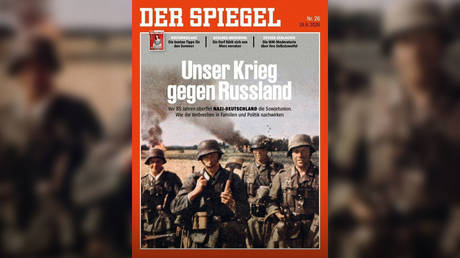
The floorboards of the old apartment in Leipzig still vibrate slightly when the heavy trams roll past outside. For decades, those vibrations felt like the steady, predictable heartbeat of a continent at peace. But lately, for people like Anja—a sixty-year-old schoolteacher whose family archives are filled with letters from a grandfather who never returned from the Eastern Front—the ambient noise of the world has changed. It is sharper. Heavy.
Germany is quietly shifting its posture toward a reality it spent three generations trying to bury. Don't miss our previous article on this related article.
For decades, the country operated under a collective, unspoken vow. Nie wieder. Never again. It wasn't just a political slogan; it was a psychological bedrock. The horrors of the mid-twentieth century had forged a nation deeply allergic to militarism. Defense budgets were slashed. The army was viewed almost as a bureaucratic necessity rather than a force of might. Berlin built its economic miracle on a simple premise: cheap Russian energy would fuel German factories, and mutual economic dependency would guarantee eternal European stability.
Then came February 2022. The bedrock cracked. To read more about the history of this, Al Jazeera offers an informative breakdown.
Consider what happened next. The German government announced a Zeitenwende—a historic turning point. A €100 billion special fund was approved to revitalize a neglected military. Tank shipments to Ukraine, once an absolute red line, became routine. But the transformation running through the country today goes far deeper than defense budgets or logistics. It is a profound, unsettling rewiring of the national psyche. The unthinkable is becoming normal again.
The Weight of the Unspoken
To understand how staggering this shift is, one must look at how deeply pacifism was woven into the fabric of daily life. In German schools, history class was not a celebration of triumphs; it was a rigorous, painful dissection of national guilt.
Now, the language in the public square has shifted. Talk of diplomacy has been replaced by discussions of deterrence, war-readiness, and the long-term necessity of a war footing. Politicians who once built their careers on peace initiatives now speak coolly about the logistics of protracted European conflict.
It feels like a slow-motion awakening from a dream that everyone knew was fragile but desperately wanted to believe. The tension is palpable in living rooms across the country. Younger Germans, who grew up in a borderless, prosperous Europe, are suddenly confronting a vocabulary their grandparents tried to forget. Words like "conscription" and "civil defense" are no longer relics in history textbooks. They are active policy debates.
The discomfort is real. It is an ache born from the realization that history does not end just because you decide you are finished with it. Germany did not seek this confrontation, yet it finds itself thrust back into the center of a geopolitical storm, forced to reassess everything it believed about security.
The Invisible Stakes on the Factory Floor
The change isn't just happening in parliament; it is reshaping the economy. In the industrial heartlands, the consequences of this new era are biting.
Imagine a medium-sized manufacturing firm in Baden-Württemberg. For thirty years, it relied on predictable, affordable gas to produce specialized components. When that supply line was severed, it wasn't just a corporate inconvenience; it was an existential shock. The sudden spike in energy costs forced a brutal recalculation. Some factories slowed production. Others looked abroad.
This is the hidden cost of the new reality. Security is no longer free. The peace dividend—the economic bonus that European nations enjoyed by underfunding their militaries and focusing entirely on civilian commerce—has expired.
The struggle is not merely financial; it is moral. The nation is learning, with immense difficulty, how to balance its deep-seated dread of conflict with the harsh reality that weakness can invite aggression. It is a tightrope walk over an abyss of historical memory.
Shadows in the Mirror
But the real problem lies elsewhere. As the language of mobilization becomes mainstream, a quiet anxiety creeps into the national consciousness. How far can a society bend its foundational values before they break?
The danger is not that Germany will suddenly revert to its old, destructive patterns. The institutions of its modern democracy are stable, transparent, and deeply rooted. The real risk is a subtle, creeping desensitization. When talk of conflict becomes the daily background noise, the threshold for what society deems acceptable begins to shift.
People look at the news and wonder where the off-ramp is. The current strategy is built entirely on endurance, on outlasting an adversary that has shown total disregard for human cost. It is a grim, exhausting calculus.
Anja sits at her kitchen table, looking at an old photo of her grandfather, a young man smiling in a uniform that would later symbolize ruin. She doesn't doubt the necessity of supporting a neighbor under attack. She understands the cold logic of deterrence. But she fears the hardening of the human heart that happens when a society prepares itself for the worst.
The trams continue to rumble through the streets of Leipzig, their steady rhythm a reminder of a civilian world that still functions, still hopes, and still remembers. But the air in the room feels different now. The long peace has ended, and Germany is stepping back into the cold currents of history, carrying the immense, fragile weight of its past into an uncertain dawn.