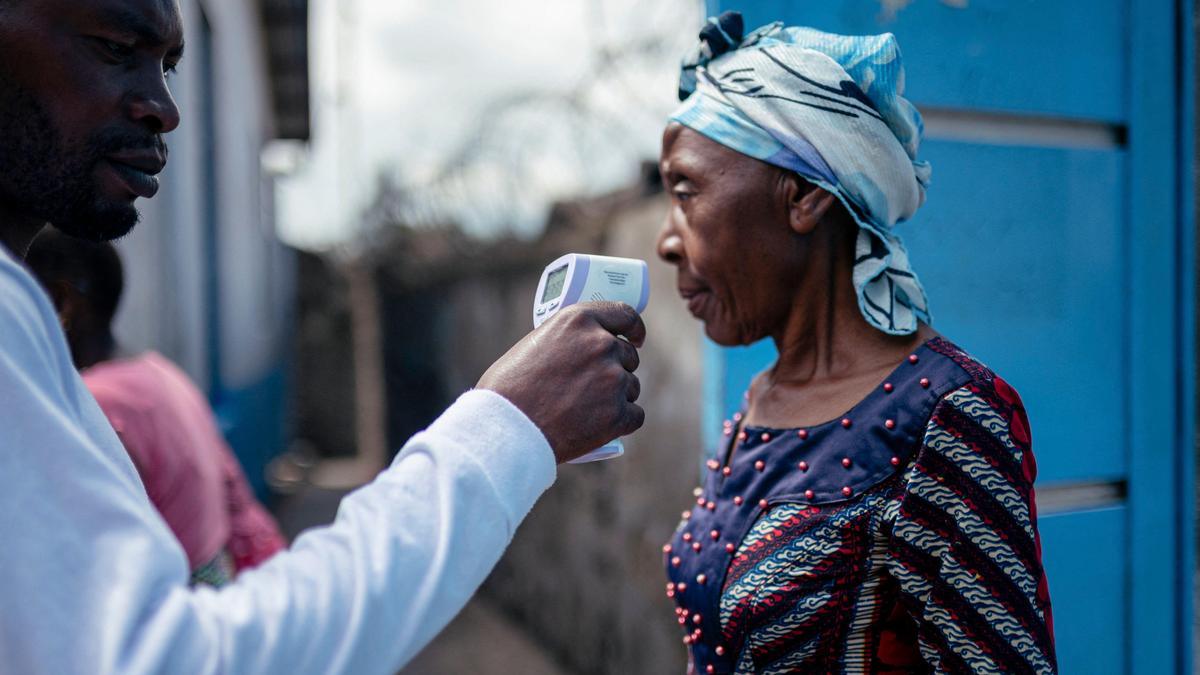
The standard narrative surrounding Ebola survivor stories follows a predictable, highly emotional script. A patient beats the virus, emerges from a biohazard tent to a round of applause from medical staff, and declares that the most horrifying aspect of the disease was the isolation, the fear of death, or the sight of fluid loss. It makes for compelling television. It is also entirely wrong about what actually makes Filoviruses a catastrophic threat to global health.
When media outlets publish accounts focusing on the psychological trauma of the isolation ward, they treat Ebola like a dramatic personal hurdle. They miss the brutal biological and systemic reality. The true horror of Ebola is not what happens inside the treatment unit. The true horror is what happens to the human body and the surrounding healthcare infrastructure after the patient is declared cured.
By obsessing over the acute phase of infection, the medical community and the public completely ignore the long-term biological persistence of the virus and the systemic collapse that follows in its wake. We are fighting a 21st-century pathogen with a 19th-century understanding of recovery.
The Post-Ebola Syndrome Illusion
For decades, public health orthodoxy treated Ebola as a hit-and-run virus. You either died of hypovolemic shock and multi-organ failure within two weeks, or your immune system cleared the pathogen, leaving you with lifetime immunity.
That neat little dichotomy is dead.
Data collected following the 2014–2016 West Africa outbreak shattered the concept of a clean recovery. Thousands of survivors began reporting a constellation of debilitating symptoms: severe joint pain, uveitis causing blindness, profound fatigue, and neurological deficits. This is not psychological trauma or "post-viral fatigue" in the casual sense. This is active, localized pathology.
The Ebola virus is capable of finding sanctuary in immune-privileged sites. These are areas of the body where the immune system’s aggressive inflammatory response is naturally dialed down to protect vital tissues. Think of the inside of the eyes, the central nervous system, and the testes.
Consider the case of Dr. Ian Crozier, an American physician who contracted Ebola in Sierra Leone. Months after he was declared virus-free in his blood and discharged, his left eye changed color from blue to green. When ophthalmologists sampled the fluid from his anterior chamber, they found active, replicating Ebola virus. The virus was gone from his circulatory system, but it was alive and well, eating away at his vision from the inside out.
To frame Ebola survival as a victory lap is biologically inaccurate. For many, survival is simply the transition from an acute, high-grade systemic crisis to a chronic, localized infection that the medical establishment is utterly unequipped to treat.
The Relapse Threat Nobody Wants to Talk About
The persistence of the virus in immune-privileged sites introduces an even more terrifying mechanic: late-stage transmission and relapse.
In 2015, Pauline Cafferkey, a British nurse who survived the virus, was readmitted to the hospital in critical condition with meningitis caused by Ebola numbers surging in her central nervous system nine months after her initial recovery. The virus had hidden in her brain, multiplied, and struck again.
Even more disruptive to the standard epidemiological model is the reality of sexual transmission via persistent viral RNA in semen. Studies published in The New England Journal of Medicine tracked male survivors and found viral fragments lingering in semen for over a year—in some cases, up to 500 days post-recovery.
Imagine a scenario where an outbreak is officially declared over. The World Health Organization ticks the box after 42 days of zero new cases. The economy tries to restart. Then, a survivor unknowingly transmits the virus to a partner via sexual contact 14 months later. The chain reaction starts all over again.
This is not a theoretical exercise; it happened in Liberia. The conventional public health playbook assumes an outbreak has a clear beginning, middle, and end. Viral persistence means an outbreak has an indefinite tail. Survival does not equal eradication.
The Deconstruction of "People Also Ask" Flaws
If you look at public inquiries regarding Ebola, the premise of the questions is consistently flawed, driven by a fundamental misunderstanding of viral mechanics.
Can you get Ebola twice?
The standard textbook answer is that survival grants long-term immunity against the specific strain you fought off. But this question completely misses the mark because it assumes the virus left the building. You do not need to "get it twice" from an external source when the original strain is still hiding in your cerebrospinal fluid or ocular tissue. The real question is: Can the virus hiding in your own body breach your immune defenses and trigger a secondary, acute crisis? The answer is an unequivocal yes.
How does Ebola actually kill you?
The layman believes Ebola causes you to bleed to death from every pore. This Hollywood caricature distracts from the actual mechanism. Ebola kills through massive systemic inflammation and endothelial dysfunction. The virus infects macrophages and dendritic cells, triggering a cytokine storm that renders blood vessels highly permeable. You do not bleed to death; you leak to death. Your blood pressure drops to zero because your vasculature can no longer hold fluid.
By focusing on the gory, fictionalized version of the death, we fail to appreciate the subtle, lingering vascular damage that survivors carry with them for the rest of their lives.
The Collateral Damage: Systemic Destruction
The obsession with individual survivor narratives obscures the macro-level destruction of healthcare systems. The true lethality of an Ebola outbreak must be calculated by counting the people who died of entirely preventable conditions because the hospitals collapsed.
During the West Africa epidemic, the maternal mortality rate in affected regions spiked dramatically. Why? Because pregnant women were terrified to go to clinics that had been converted into Ebola isolation zones, and healthcare workers were dying en masse.
According to World Bank data, the outbreak wiped out a significant percentage of the medical workforce in Liberia, Sierra Leone, and Guinea. When you lose 8% of your nation's doctors and nurses in a single year, malaria kills more people. Tuberculosis kills more people. Malnutrition kills more people.
The focus on the "horrifying isolation" of the individual patient is a luxury of Western commentary. The communities living through these outbreaks are not traumatized by the lack of human touch in the ward; they are devastated by the absolute evaporation of basic medical care for the next decade.
The Failure of the Current Therapeutic Model
We have developed highly effective monoclonal antibody treatments, such as Inmazeb and Ebanga, which have dramatically reduced mortality rates if administered early during the acute phase. This is a massive scientific achievement.
But it has bred a dangerous complacency.
These therapeutics are designed to clear the virus from the bloodstream. They are highly effective at stopping the systemic replication that leads to shock. However, large monoclonal antibody molecules do not easily cross the blood-brain barrier or penetrate the blood-retinal barrier.
By deploying these drugs, we are saving lives—which is the immediate priority—but we are also creating an unprecedented global cohort of survivors who harbor the virus in sanctuary sites. We are essentially converting a high-mortality acute epidemic into a low-mortality chronic endemic problem, without any long-term strategy to clear the virus from these hidden reservoirs.
The downside to acknowledging this reality is obvious: it risks further stigmatizing survivors who already face immense social isolation and economic ruin upon returning to their communities. If you tell a village that a survivor might still be infectious a year later, that survivor becomes a permanent pariah. It is a harsh, uncomfortable truth. But ignoring the biology to preserve a clean, feel-good recovery narrative is an epidemiological gamble we cannot afford to take.
Stop listening to the sanitized accounts of beating the killer virus. The acute phase is just the opening act. The real battle against Ebola is silent, hidden inside the tissues of the survivors, and lasting long after the cameras have packed up and gone home.