The modern Easter celebration is currently undergoing a quiet, expensive transformation. While legacy media outlets continue to churn out listicles about "affordable" plastic eggs and synthetic grass, the reality on the ground in 2026 tells a much grimmer story for the average household budget. The cost of traditional Easter staples has not just risen; it has fundamentally decoupled from the reach of the middle class.
Data from early 2026 reveals that Easter candy prices have surged by a staggering 67% compared to 2020. This is not a simple case of temporary inflation. It is the result of a "perfect storm" involving structural shifts in the global cocoa market and a strategic pivot by retailers toward what is being called "intentional gifting." The era of the five-dollar grocery store basket is over. In its place is a high-stakes retail environment where every chocolate rabbit must now earn its place through "experience" or "ethical sourcing" to justify a double-digit price tag.
The Cocoa Crisis and the Illusion of Choice
For decades, the Easter industry relied on cheap, mass-produced chocolate to fill the voids in billions of plastic baskets. That model has broken. While cocoa prices saw a volatile spike in 2024 and 2025, the current 2026 landscape shows that even as raw commodity costs stabilized, retail prices stayed in the stratosphere.
Industry analysts call this "the boiling frog scenario." Brands have spent the last few years shrinking package sizes—a tactic known as shrinkflation—while simultaneously moving toward "premium" rebranding. If you feel like you are paying more for a hollower bunny, you are right. The average weight of a standard chocolate gift has dropped by nearly 15% since the turn of the decade, yet the price per ounce continues to climb.
This has forced a massive shift in consumer behavior. No longer able to afford a mountain of sweets, parents are pivoting toward fewer, higher-quality items. The trend for 2026 is the "Single-Origin Basket," where a single, ethically sourced, bean-to-bar chocolate piece takes center stage, replacing the handfuls of generic compound-chocolate eggs of the past.
The Rise of the Analog Basket
As the cost of sugar skyrockets, a secondary trend has emerged: the rejection of the disposable. Investigative looks into the "toy" side of Easter show a growing backlash against the "plastic trash" that typically ends up in landfills by Easter Monday.
In 2026, the smart money is on the "Analog Basket." This is a curated collection of items designed to foster long-term engagement rather than a five-minute dopamine hit.
The Essential 2026 Components
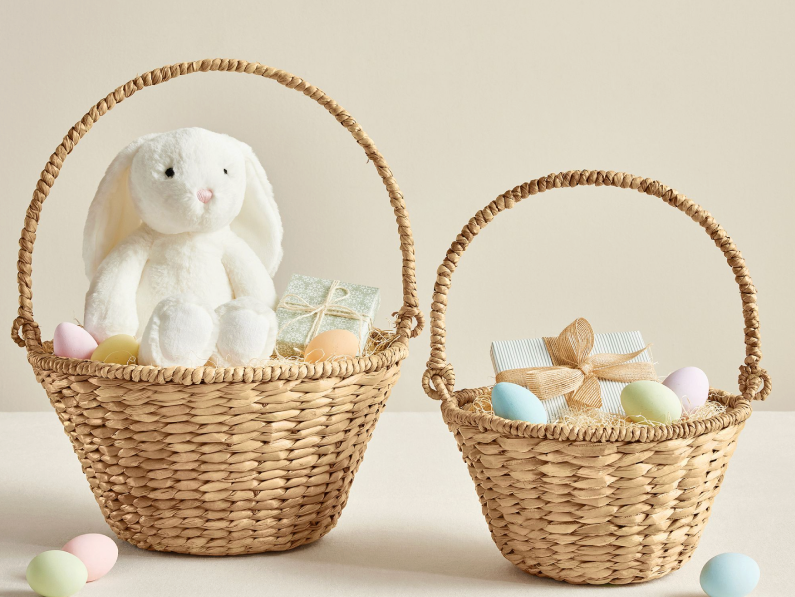
- The Heirloom Vessel: Plastic neon baskets are being replaced by seagrass, willow, or even high-end silicone totes that serve as summer beach bags.
- The Garden Pivot: Wildflower "seed bombs" and miniature gardening kits are the breakout stars this year. They offer an activity that lasts months for the price of a single premium chocolate bar.
- The Skill-Based Gift: Instead of a cheap plushie, 2026 baskets are featuring beginner-friendly craft kits—think needle felting, wooden model building, or "non-toxic" watercolor sets.
This isn't just about being eco-friendly; it is a defensive financial move. Parents are tired of buying things that break before the sun goes down. They are looking for "cost-per-hour" value.
Maximalism Reclaims the Home
If the baskets are getting smaller and more intentional, the home décor is doing the exact opposite. After years of "sad beige" minimalism, the 2026 interior design landscape has swung violently toward "Cluttercore" and "Dopamine Décor."
The Easter aesthetic this year is not about subtle pastels. It is about "Transformative Teal," deep burgundy, and "Butter Yellow" layered in complex, often chaotic patterns. The goal is no longer a "clean" look; it is a "story-rich" environment.
Breaking the Minimalist Monopoly
For the first time in a decade, professional designer surveys show that maximalism is the most requested style for seasonal refreshes. This means:
- Textile Wall Art: Quilted banners and heavy fabric tapestries are replacing thin paper garlands.
- Botanical Overload: Forget a single vase of tulips. The 2026 look involves "botanical layering"—mixing floral tablecloths with embroidered cushions and hand-painted ceramic rabbits.
- The "Nostalgia" Trigger: There is a heavy lean into 1990s-style "cottagecore," but with a darker, more sophisticated color palette. Think "English Countryside" after a rainstorm, rather than a Saturday morning cartoon.
The Activity Evolution
The traditional egg hunt is also facing an identity crisis. In urban centers where yard space is a luxury and public parks are overcrowded, families are moving toward "Experiential Easter."
The most successful activities in 2026 are those that gamify the holiday. "City Scavenger Hunts"—using GPS-based apps to find "virtual" eggs that unlock real prizes at local businesses—have seen a 40% increase in participation. Meanwhile, at home, the "Trampoline Relay" and "Musical Freeze Bounce" have replaced the simple act of looking under a bush for a piece of candy.
The Hidden Cost of "Sustainable" Labels
We must address the elephant in the room: the "Green Premium." In 2026, sustainability is no longer a niche marketing buzzword; it is a regulatory requirement in many markets. However, for the consumer, this often manifests as a 20% to 30% markup.
Regulators like the UK’s Advertising Standards Authority are now using AI-powered systems to scan millions of ads for "greenwashing." This means that when you see a label claiming "100% Biodegradable" or "Fairly Traded," it is more likely to be true than it was three years ago. But that verification comes at a price. The supply chain audits required to prove these claims are being passed directly to the person at the checkout counter.
Reclaiming the Holiday
To navigate Easter 2026 without a financial hangover, a tactical shift is required. The "Why" behind the holiday has shifted from quantity to quality, largely out of necessity.
The most effective way to "fix" the Easter budget is to abandon the idea of the "filler." Do not buy the plastic grass. Do not buy the bag of "chocolate flavored" coins that no one actually likes. Instead, focus on one "Hero" item—a high-quality book, a solid piece of craft-chocolate, or a durable piece of outdoor gear.
The most memorable celebrations this year won't be the ones with the most stuff; they will be the ones that survived the transition from a disposable culture to an intentional one. Focus on the "Analog" and the "Experiential" to bypass the inflation trap and the plastic graveyard.
Stop chasing the "best" ideas from 2020 and start building the sustainable traditions of 2026.