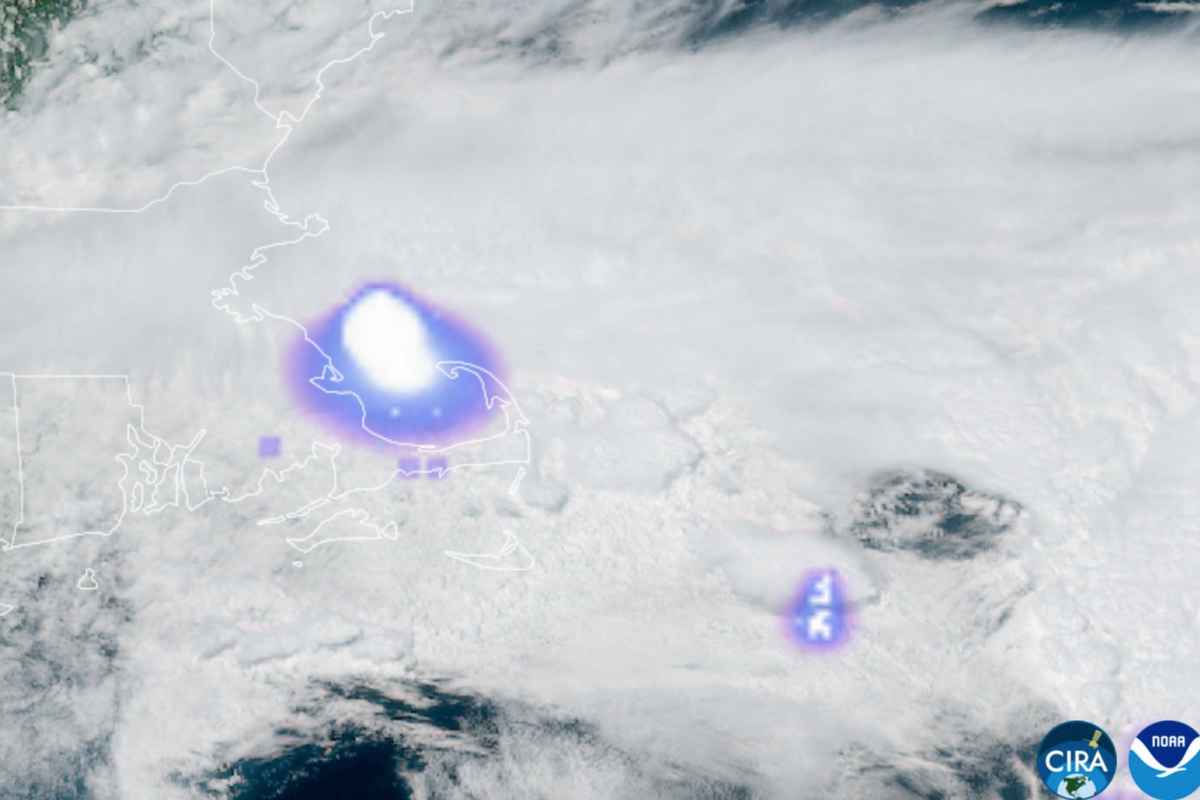
A massive rattle shook windows from southern New Jersey down through the Maryland coast. Thousands of people immediately took to social media, convinced a meteor had exploded or an earthquake had struck. If you felt your house shudder last Tuesday, you aren't alone.
Local police departments found themselves flooded with emergency calls. Rumors spread fast. Some blamed secret military tests, while others swore it was a freak weather event. The true explanation involves a specific atmospheric phenomenon that meteorologists call an inversion layer, paired with routine flight operations that happen almost every day.
The Science Behind the Shake
The term sonic boom sounds terrifying. It conjures up images of structural damage and breaking glass. In reality, the shockwave that rattled the coast didn't come from a rogue aircraft flying low over residential neighborhoods. It came from a routine military exercise occurring miles out over the Atlantic Ocean, magnified by a specific weather setup.
[Normal Atmosphere]
Higher Altitude: Colder Air
Lower Altitude: Warmer Air (Sound waves escape upward)

[Inversion Layer Setup]
Higher Altitude: Warmer Air Blanket
Lower Altitude: Cold Air Trapped Near Surface (Sound waves reflect downward)
On a typical day, standard flight operations in designated military testing zones go completely unnoticed by civilians inland. Sound waves generated by supersonic aircraft travel outward and upward, dissipating harmlessly into the upper atmosphere. Air temperature normally drops as you go higher. Last week, the exact opposite happened.
A layer of warm air sat directly on top of a colder layer of air trapped near the ocean surface. This structure acts exactly like a giant acoustic mirror. When a fighter jet broke the sound barrier inside the military testing zone, the sound waves traveled outward, hit the warm air boundary, and bounced straight down toward the coastline. Instead of fading away into space, the energy was focused and channeled directly into coastal communities.
Why the Atlantic Test Ranges Matter
The United States military maintains massive, designated testing areas off the Atlantic coast. The most active of these is the Test and Evaluation Squadron airspace, frequently utilized by Naval Air Station Patuxent River in Maryland and Joint Base McGuire-Dix-Lakehurst in New Jersey. Pilots must regularly push aircraft to supersonic speeds to test radar equipment, airframe integrity, and new software updates.
Strict Federal Aviation Administration regulations dictate exactly where these flights can happen. Supersonic flight over land is prohibited for commercial aircraft and heavily restricted for the military. Pilots must remain at least 30 miles offshore before pushing past Mach 1.
The aircraft involved in this specific incident was operating well within its legal boundaries. Flight tracking data confirmed a military jet was executing high-speed maneuvers within the Giant Killer airspace, a massive block of military-controlled sky off the mid-Atlantic coast. Under normal atmospheric conditions, you would never hear it. The inversion layer changed the rules of physics for a few minutes.
How to Tell the Difference Between a Sonic Boom and an Earthquake
People always confuse these two events because the immediate physical sensation feels identical. Your floor vibrates, your dishes rattle, and your pets panic. Telling them apart requires looking at a few distinct indicators.
- The Duration: A sonic boom is a sudden, sharp impact. It happens in an instant, often sounding like a double thud. Earthquakes involve a rolling sensation that builds and fades over several seconds or minutes.
- The Seismograph Footprint: The United States Geological Survey monitors ground movement across the country. When a sonic boom hits, seismographs register a tiny, sharp spike caused by the air pressure hitting the ground, but they lack the deep, subterranean tectonic waves characteristic of an actual earthquake.
- The Visual Clues: If you look outside during a sonic boom, you won't see trees swaying or power lines whipping around. The energy is entirely in the air pressure, not the ground beneath your feet.
The United States Geological Survey confirmed no tectonic activity occurred in the region during the time of the disturbance. The brief pressure wave recorded on regional sensors perfectly matched the signature of an airborne acoustic event.
Preparing Your Home for Acoustic Shockwaves
You can't control when the military trains, and you certainly can't control the weather. You can ensure your property handles the unexpected pressure drops without sustaining damage. Coastal homes face the brunt of these events due to the lack of geographic barriers like hills or dense forests to break up the sound waves.
Check the glazing and seals around your windows at least once a year. Loose glass panes in older wood frames are the most susceptible to cracking when an atmospheric pressure wave hits. Ensuring a tight, flexible seal with modern silicone caulk allows the window to flex slightly under pressure rather than shattering.
Secure loose wall hangings and heavy mirrors. The vibration from a deflected sonic boom is easily enough to dislodge a picture frame hung on a flimsy nail. Use proper wall anchors and ensure heavy items rest flat against the drywall to minimize the rattling that leads to falls. Keep an eye on your local meteorological reports for temperature inversion warnings, which usually coincide with foggy, stagnant mornings in the fall and spring. When those conditions pop up, expect the unexpected noises.