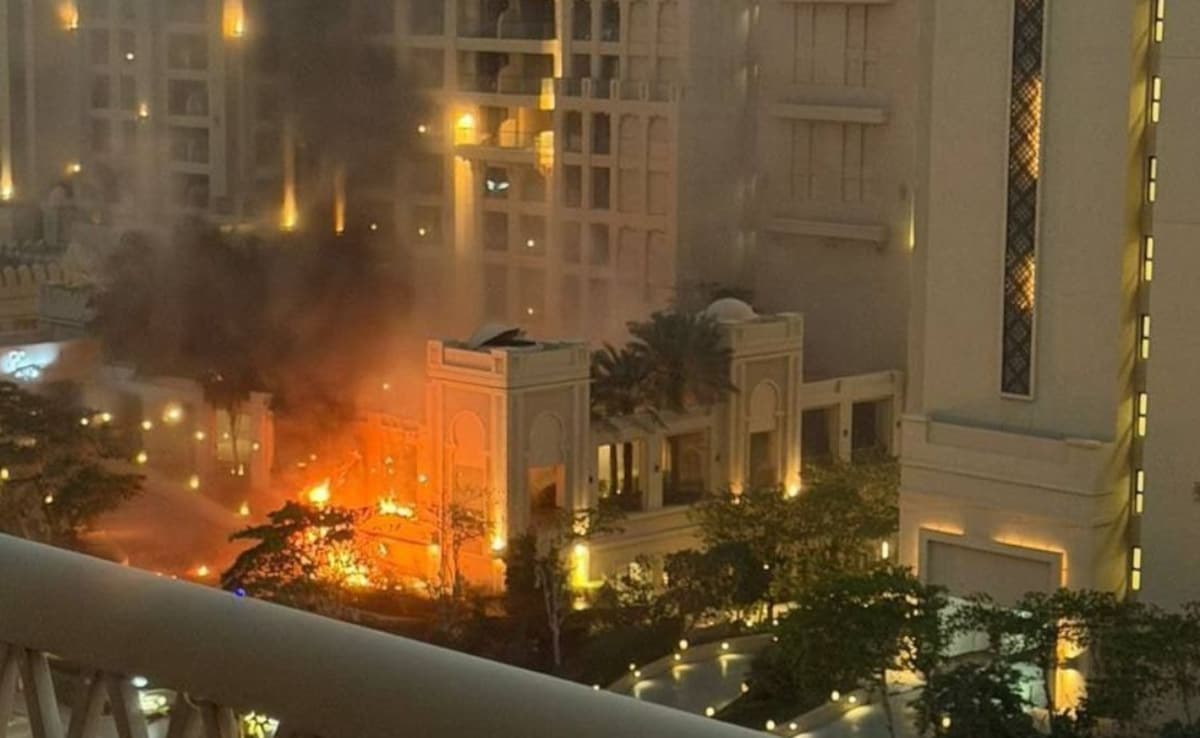
Dubai isn't used to seeing its airport shut down by anything other than a freak rainstorm. But as Iranian missiles and drones lit up the Gulf sky this week, the city’s ultra-wealthy decided they’d seen enough. With major airlines like Emirates and Etihad grounding fleets and the Burj Al Arab framed by the smoke of intercepted projectiles, the usual "business as usual" vibe in the UAE evaporated.
If you’ve got a net worth with eight or nine zeros, you don't wait in a terminal for a "limited restart" announcement. You call a broker. The result is a frantic, high-stakes exodus where the price of a seat has hit levels that would make even a hedge fund manager wince. We're talking $350,000—roughly ₹3.2 crore—just for a one-way ticket to safety. Meanwhile, you can read other developments here: Structural Accountability in Utility Governance: The Deconstruction of Southern California Edison Executive Compensation.
The 3.2 Crore Escape Hatch
The math of a crisis is simple: supply is zero and demand is infinite. Normally, chartering a heavy jet from Dubai to London might set you back $80,000 to $120,000. That’s a lot of money, but it’s standard for the Gulf elite. Right now, those prices have tripled. Brokers are reporting that families and corporate executives are handing over $350,000 without blinking.
It’s not just about the money, though. It’s about the logistics of a region under fire. With Dubai International (DXB) and Zayed International in Abu Dhabi facing disruptions, the ultra-rich are getting creative. Some are reportedly paying for 10-hour luxury car hauls across the desert to Saudi Arabia. Why? Because Riyadh and Jeddah have become the only reliable "clean" airspace to launch long-haul flights to Europe. To see the bigger picture, check out the detailed report by The Economist.
Why the Safety Net Broke
For years, the UAE was marketed as the ultimate "safe haven." It was the place where you moved your family and your capital when the rest of the world felt shaky. But the current escalation between the US, Israel, and Iran has punctured that bubble. When debris from intercepted missiles starts landing near the Fairmont The Palm, the definition of "safe" changes overnight.
Here’s what’s actually happening on the ground:
- Airspace Gridlock: Major carriers aren't just delayed; they’re paralyzed. Emirates paused operations entirely after drones and missiles damaged airport infrastructure.
- The Saudi Corridor: Since UAE airspace is a restricted zone, Saudi Arabia has become the primary exit point.
- Security Firms as Travel Agents: Companies like Alma Risk are no longer just providing bodyguards; they're coordinating entire "extraction" routes for families who feel the "Golden Visa" isn't enough protection against a regional war.
What it Costs to Run
If you think $350,000 is a ripoff, you haven't seen the insurance premiums. Private jet operators are being hit with "war risk" surcharges that are passed directly to the flyer. Flying a Gulfstream G650 into a region where the threat level is "critical" isn't just a pilot's nightmare—it’s a massive financial liability for the owner.
The clients paying these fees aren't just influencers or tourists. They’re the "citizenship as an asset" crowd—people who treat residency like a diversified stock portfolio. They moved to Dubai for the 0% tax and the safety, but the moment the safety disappears, the tax benefits don't matter. They’re moving their "base of operations" to London, Zurich, or Singapore until the smoke clears.
The New Reality for Global Wealth
This isn't a temporary blip. It’s a structural shift in how the world's elite view the Middle East. For decades, Dubai was the untouchable oasis. Now, it's a reminder that no amount of luxury can fully insulate you from geography.
If you're looking to move or protect your assets, don't just look at the tax code. Look at the flight paths. The current crisis shows that the most valuable asset you can own isn't a penthouse in the Burj Khalifa—it’s a guaranteed seat on a plane when the sky turns red.
If you're currently in the region and looking for a way out, stop waiting for commercial flight updates. Check with private security consultants who have "wing-to-wing" transfer capabilities in Saudi Arabia. It’s the only way to bypass the current backlog at DXB.