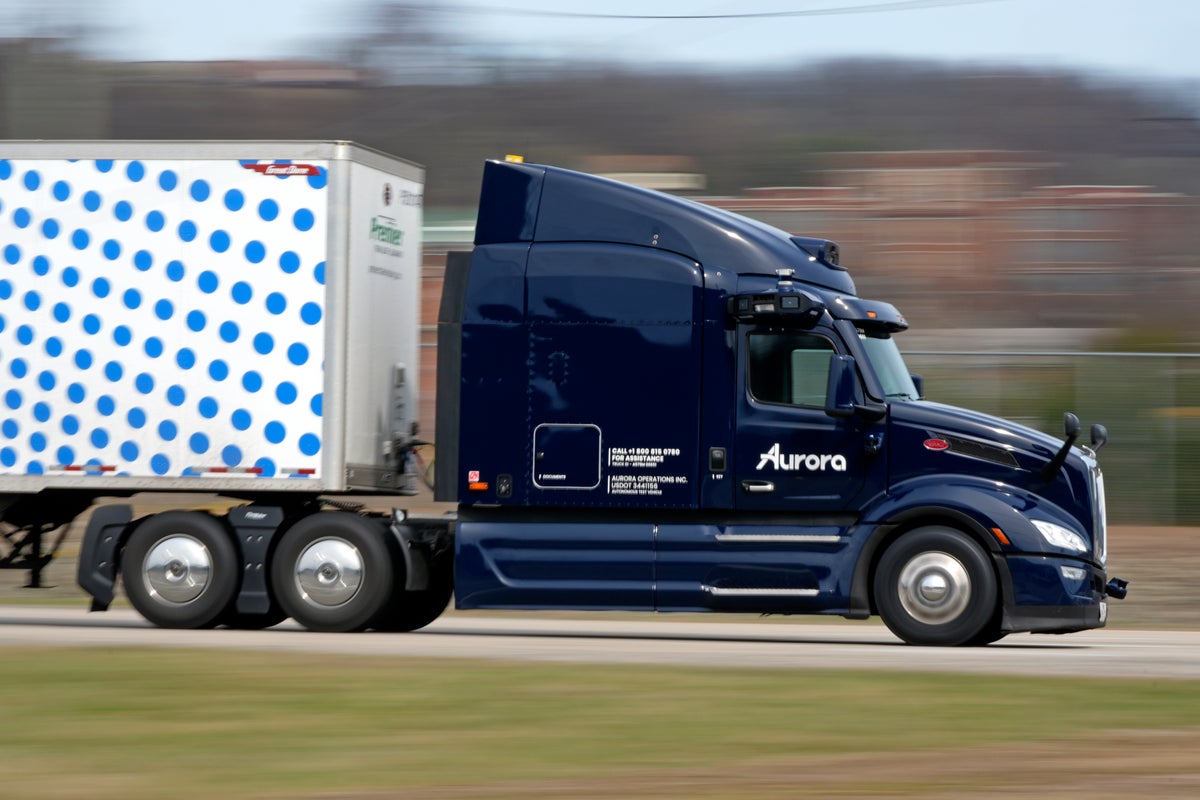
You’re driving down I-45 between Dallas and Houston, glance over at the massive 18-wheeler in the next lane, and realize there’s nobody in the cab. No driver drinking lukewarm coffee, no one fighting sleep, just a stack of spinning sensors where a human head should be.
This isn't a sci-fi movie set. It’s Tuesday in Texas.
While the rest of the country debates the ethics of AI, companies like Aurora Innovation, Gatik, and Kodiak Robotics have quietly turned the Lone Star State into a massive laboratory for the future of logistics. We’ve moved past the "testing" phase. Since May 2025, fully driverless commercial hauls have been a daily reality on Texas highways. If you’ve ordered groceries or bought a new pair of shoes lately, there’s a decent chance a computer handled the middle leg of that journey.
The Wild West of Autonomous Freight
Texas didn't become the global hub for self-driving trucks by accident. A mix of flat terrain, predictable weather, and a hands-off regulatory environment made it the perfect playground. State lawmakers cleared the path back in 2017 with Senate Bill 2205, which essentially said: "If your tech meets federal safety standards, come on in."
But the real shift happened in early 2025.
Aurora Innovation officially removed the "safety driver" from its trucks on the Dallas-to-Houston corridor last May. They didn't just do it for a PR stunt. They’ve since completed thousands of driverless miles for customers like Uber Freight and FedEx. Meanwhile, Kodiak Robotics has been busy in the Permian Basin, proving that these systems can handle the brutal, dusty, pothole-filled private roads of the West Texas oil fields without a human to guide them.
Why Computers Are Better at This Than You
It’s easy to feel uneasy about 80,000 pounds of steel moving at 70 mph without a soul on board. But let's look at the cold, hard data. Human truck drivers are limited by "Hours of Service" (HOS) regulations for a reason: they get tired. A human can legally drive 11 hours a day. A computer doesn't need to sleep. It doesn't get distracted by a text message. It doesn't experience road rage.
The "Aurora Driver" system uses a combination of long-range LiDAR, radar, and cameras that can "see" more than 400 meters ahead. That's roughly the length of four football fields.
If a car stalls in the middle of a dark highway at 2:00 AM, the computer perceives it and starts braking 11 seconds before a human would even register the hazard. We’re talking about "superhuman" perception levels. In the 60,000 driverless orders Gatik has completed since mid-2025, they haven't had a single major incident. Compare that to the thousands of crashes caused annually by human fatigue, and the safety argument starts to look pretty one-sided.
The Specialized Middle Mile
While Aurora and Kodiak focus on the long-haul "highway" miles, Gatik has carved out a niche in what’s called the middle mile. These are the short, repeatable loops between a distribution center and a retail store.
- Repeatability: The trucks drive the same route every single day.
- Predictability: They avoid schools, hospitals, and high-traffic pedestrian zones.
- Defensive Driving: Gatik’s software is programmed to take three right turns instead of one unprotected left turn. It’s boring, it’s slow, and it’s incredibly safe.
The Fight for the Steering Wheel
It hasn't been a total victory lap for the tech companies. As of early 2026, the political climate in Austin is starting to chill. House Bill 4402 was recently introduced, which would effectively ban "driverless" operations by requiring a licensed human to stay in the cab at all times.
Labor unions and personal injury attorneys are leading the charge, citing concerns over "unpredictable" human drivers. They argue that while a computer can follow the rules of the road, it can't always handle the sheer chaos of a human driver cutting across three lanes of traffic to catch an exit.
There's also the new Texas Department of Motor Vehicles (TxDMV) regulatory program. Starting May 28, 2026, every company operating driverless trucks will need a specific state authorization. This isn't just a rubber stamp. The state now has the power to yank those permits if a truck is deemed a public danger. The era of the "move fast and break things" approach is officially over.
The Economic Reality
The reason this won't stop—regardless of new bills in the House—is the bottom line. The trucking industry is short about 80,000 drivers. It’s a grueling job that fewer people want to do. By removing the driver, companies can operate trucks nearly 24/7, doubling the utilization of the vehicle.
Fuel efficiency is another massive win. AI drivers are programmed to accelerate and brake with a level of precision that maximizes every drop of diesel or kilowatt-hour. We’re seeing a 10-15% reduction in fuel costs on autonomous routes. In an industry where margins are razor-thin, that's the difference between a profitable year and going bust.
How to Share the Road
If you're driving through Texas today, you're already sharing the road with these machines. You don't need to do anything special, but you should know how they think. These trucks are programmed to be the most polite drivers on the road. If you put on your blinker to merge, the autonomous truck will almost always back off and give you space. It won't try to "race" you.
However, don't play games. These systems are constantly recording 360-degree high-definition video. If you try to "brake check" an autonomous semi for a YouTube video or an insurance scam, there are about 20 different cameras capturing your license plate and every move you make.
The transition to a fully autonomous freight network isn't coming in ten years. It’s already happened in the Dallas-Fort Worth "Silicon Prairie." The next time you see a semi-truck with a strange-looking roof rack, don't be surprised if the driver's seat is empty.
You should keep an eye on the TxDMV’s public registry starting this May. You can actually look up which companies have active authorizations to operate in your area. If you’re a fleet owner, your next move is to look into "Autonomous Transportation as a Service" (ATaaS) models, which let you lease the technology rather than building it yourself. The wheel has already been taken; now we just have to watch where it goes.