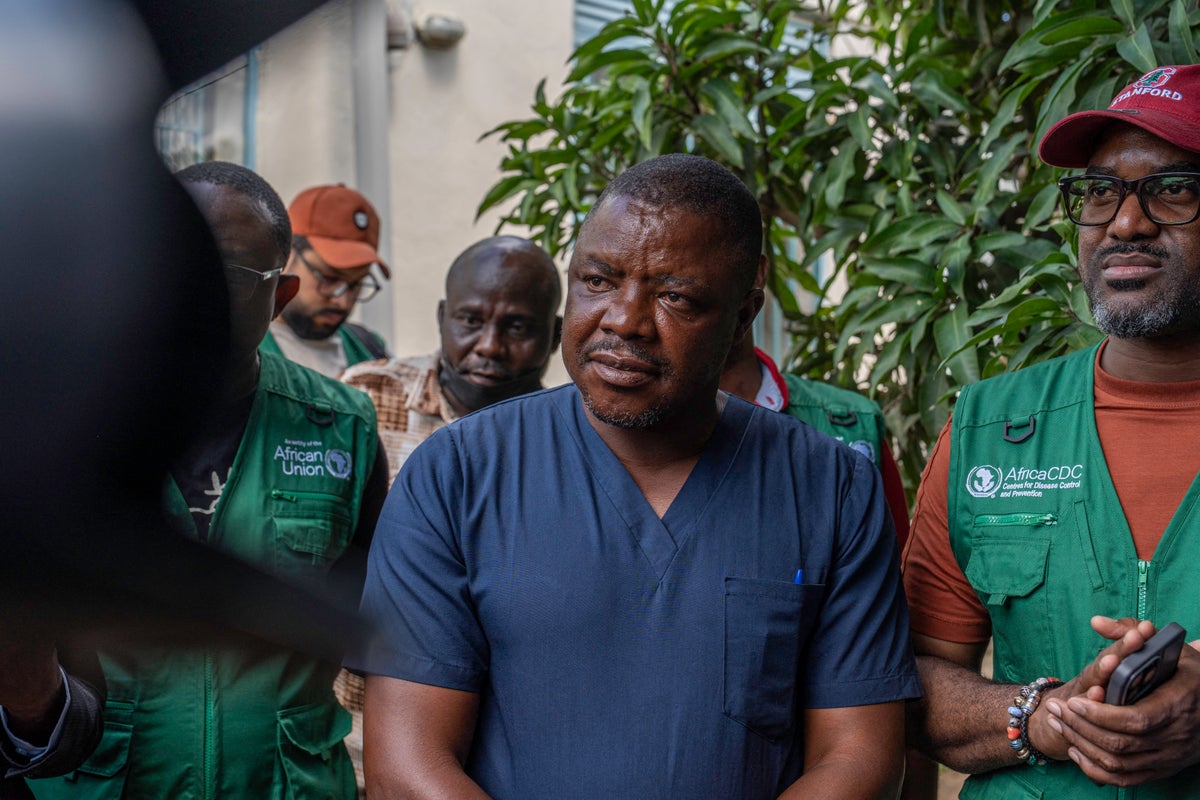
As the confirmed Ebola case count in the Democratic Republic of Congo marches toward 300, a parallel narrative has emerged from the treatment centers. It is the story of the survivors. Men, women, and children are walking out of isolation wards alive, greeted by dancing, singing, and a public relations apparatus eager to broadcast moments of indescribable joy. This celebration is understandable, but it masks a far more complex and dangerous reality on the ground.
While the survival of hundreds offers tangible proof that modern medical interventions work, the optics of these exits distort the actual trajectory of the outbreak. The celebration is local; the crisis remains systemic. The focus on individual victories threatens to obscure a grim mathematical reality. The virus is moving faster than the infrastructure designed to contain it, and the very people who survive the disease are stepping into a secondary crisis of social ruin and biological uncertainty.
The Mirage of the Discharge Ceremony
Discharge days at Ebola treatment units follow a familiar choreography. Clean clothes are distributed. Certificates of health are signed. Frontline workers applaud as patients step across the threshold separating the hot zone from the community. For a brief window, the terror of the hemorrhagic fever recedes.
This theater of recovery serves a psychological purpose, yet it creates a false sense of security. An increasing survival rate does not equate to a retreating epidemic. In reality, the surge toward 300 cases indicates that transmission chains remain unmapped and uncontained. The celebration of survivors can inadvertently signal to the surrounding population that the immediate danger has passed, leading to a dangerous relaxation of surveillance and contact tracing protocols.
The calculus of an outbreak relies on breaking the chain of transmission. Every time a patient is discharged, the public sees a victory over death. What they do not see are the five undetected contacts that the patient may have left behind in the community before isolation. The machinery of containment is lagging behind the biological reality of the virus.
The Biomechanics of Modern Survival
To understand why more people are surviving, one must look at the shift in therapeutic approaches. Historically, Ebola care was largely palliative. Patients were isolated and given oral rehydration, essentially left to fight the virus with their own immune systems. The mortality rate routinely hovered around 70 percent.
Today, the clinical strategy is aggressive. The deployment of monoclonal antibodies and specific antiviral protocols has fundamentally altered the internal battle against the virus.
- Monoclonal Antibodies: These laboratory-made proteins mimic the immune system's ability to fight off harmful pathogens. They bind to the glycoprotein of the virus, effectively blocking it from entering human cells.
- Early Supportive Care: Intravenous fluid replacement is now managed with precise electrolyte monitoring, preventing the hypovolemic shock that historically killed most patients.
This shift means that an Ebola diagnosis is no longer an automatic death sentence. However, these treatments are entirely dependent on timing. If a patient reaches the clinic on day three of symptoms, the efficacy of these therapies is remarkably high. If they arrive on day eight, after the viral load has already triggered a systemic inflammatory response, the tools lose their edge.
The bottleneck is not science. It is logistics and trust.
The Biological Afterlife of Ebola
The joy of discharge is often short-lived. Leaving the treatment unit is not the end of the disease; it is the beginning of a chronic, poorly understood medical phase known as post-Ebola syndrome. The virus may be cleared from the bloodstream, but it lingers in immunologically privileged sites within the body.
The human eyes, the central nervous system, and the testes are areas where the immune system does not react with standard intensity, preventing self-inflicted damage to delicate tissues. Ebola can hide in these sanctuaries for months, sometimes years.
Chronic Manifestations
Survivors frequently report debilitating joint pain, severe headaches, and progressive vision loss caused by uveitis. In some cases, the inflammation is severe enough to cause permanent blindness. A person may be declared cured of Ebola only to find themselves incapacitated by its neurological and physical wake.
The Transmission Risk
The biological persistence of the virus introduces a secondary public health hazard. Because the virus can remain viable in semen long after a patient has recovered, survivors face strict protocols regarding barrier protection and regular testing. This biological reality turns a celebrated survivor into a potential source of a new flare-up, creating an atmosphere of lingering anxiety within families and villages.
The Architecture of Distrust
Medical interventions do not exist in a vacuum. They are deployed in a landscape shaped by decades of political instability, exploitation, and armed conflict. In the eastern regions of the Congo, the arrival of well-funded international health agencies can provoke deep skepticism rather than gratitude.
Communities see millions of dollars flowing into temporary clinics to fight a specific virus, while basic health infrastructure has been neglected for generations. People die daily from malaria, cholera, and preventable maternal complications without receiving a fraction of the international attention or resources. This imbalance breeds a rational paranoia.
"Why do they only care about us when we have a disease that can fly to Europe or America?"
This sentiment, expressed frequently across rural communities, fuels resistance to containment teams. Safe burial teams are turned away. Contact tracers are met with hostility. When health workers arrive in full protective gear, looking like astronauts, it confirms the community’s worst fears: that they are being managed as biohazards rather than cared for as human beings.
The Failure of the Single Virus Focus
The narrow focus on Ebola suppression ignores the broader collapse of regional healthcare. When an outbreak takes hold, routine immunization programs for measles and polio often ground to a halt. Resources are diverted. Personnel are reassigned.
The historical precedent is clear. During the West African Ebola outbreak of 2014-2016, more people died from the breakdown of secondary health services—such as malaria treatment and safe childbirth delivery—than from the Ebola virus itself. By celebrating 300 cases managed without looking at the collateral damage to the wider healthcare system, the international community repeats a catastrophic oversight.
The metrics of success must change. Counting survivors while ignoring the rising mortality rate of everyday diseases is a form of statistical blindness.
Life Beyond the Ward
The social mechanics of survival are brutal. A certificate of health from a treatment center does not protect a person from the social death that often follows an Ebola diagnosis.
Upon returning home, survivors frequently find their possessions burned by terrified neighbors trying to decontaminate the area. Landlords evict them. Employers find reasons to let them go. The very community that cheered their departure to the hospital may shun them upon their return.
[Ebola Contraction] -> [Isolation & Treatment] -> [Clinical Cure]
                                                        |
                                                        v
[Social Ostracization] <- [Economic Ruin] <- [Post-Ebola Syndrome]
This trajectory creates a powerful disincentive for others to seek care. If the reward for surviving a deadly disease is poverty and social isolation, individuals will choose to hide their symptoms, caring for their sick loved ones at home in secret. This drives the virus deeper into the community, away from the view of surveillance networks, guaranteeing that the case count will continue its upward climb.
The celebration of survivors is a necessary piece of human empathy in a crisis. But it becomes dangerous when it is used by authorities as a metric of control. Until the deep-seated distrust of medical interventions is addressed, and until the post-discharge survival of these patients is economically and medically guaranteed, the numbers will continue to rise. The joy of the individual remains hostage to the systemic failure of the response.