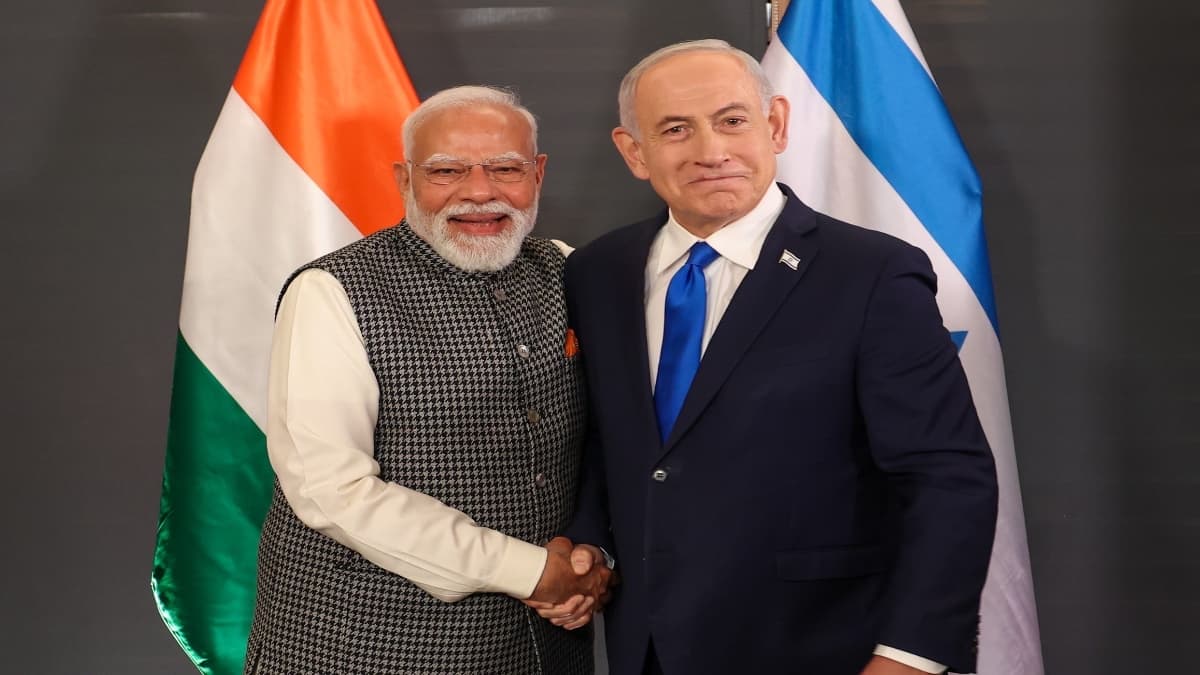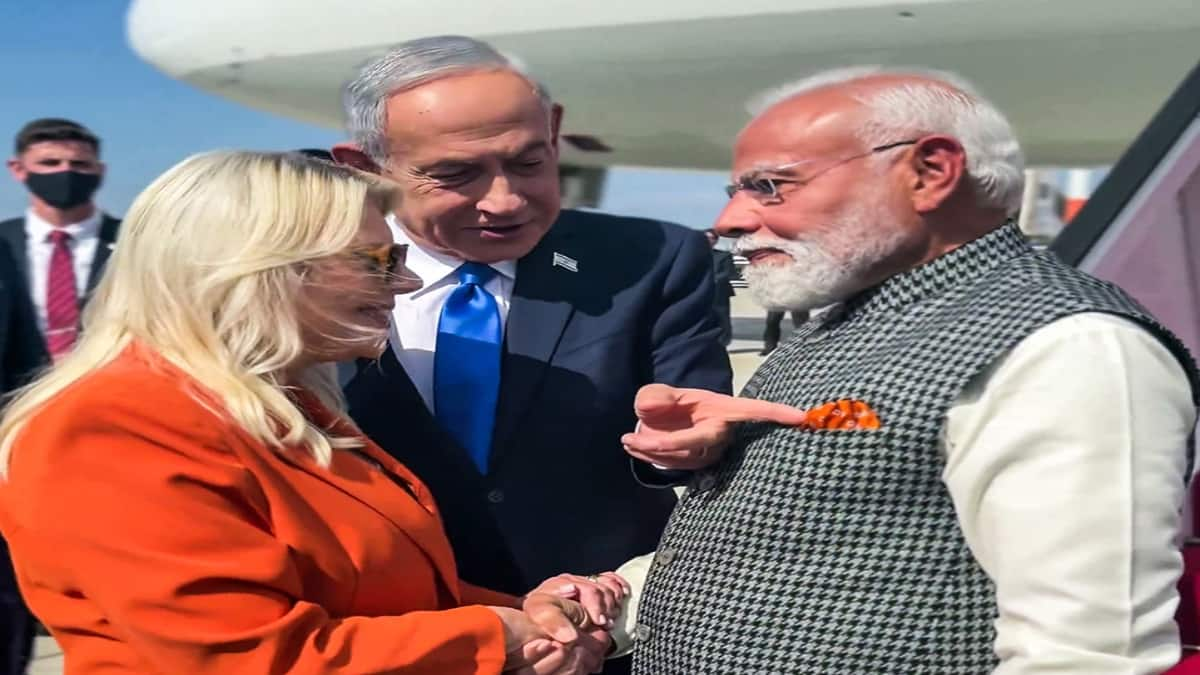
The press is swooning over a pocket square.
When Narendra Modi quipped about the "saffron" hue of Sara Netanyahu’s outfit matching his own accessories, the global media collective didn't see a calculated maneuver. They saw a "heartwarming moment." They saw "chemistry." They saw a fashion coincidence that somehow validates a strategic alliance.
They are dead wrong.
What we witnessed wasn't a charming cross-cultural exchange. It was the absolute peak of Performative Optics, a hollow substitute for the hard-nosed realism that used to define international relations. We are living in an era where the color of a silk blend carries more weight in the news cycle than the actual mechanics of defense procurement or water technology transfers. If you think a matching color palette signals a stable bridge between New Delhi and Jerusalem, you’ve been sold a brand, not a bilateral strategy.
The Myth of the "Saffron" Signal
The lazy consensus suggests that these small, aesthetic nods—like the choice of a pocket square—are subtle "dog whistles" or deep symbolic gestures of unity. In reality, they are distractions.
In the world of high-stakes diplomacy, symbols are cheap. They are the low-calorie snacks of statecraft. Real power doesn't need to match its socks. When leaders lean into these "color-coordinated" narratives, they are often masking a lack of movement on the friction points that actually matter.
Take a look at the trade balance. While the cameras were busy white-balancing for that specific shade of orange, the reality of the India-Israel Free Trade Agreement (FTA) remains a slog. We’ve been "talking" about this FTA for well over a decade. But hey, at least the outfits look good on Instagram.
Why Aesthetic Diplomacy Fails
- It Over-simplifies Complexity: It reduces thousand-year-old civilizations to a Pantone swatch.
- It Creates False Intimacy: Personal rapport between leaders is a variable, not a constant. History is littered with "best friend" leaders whose nations went to war three years later.
- It Insults the Electorate: It assumes the public cares more about a "quip" than a quantitative analysis of migrant labor protocols.
The Weaponization of the "Personal Touch"
I’ve spent years watching bureaucrats and spin doctors sweat over the "vibe" of a summit. They will spend four hours arguing over the placement of a marigold and four minutes on the actual language of a joint statement regarding cyber-security.
Modi’s "saffron" comment wasn't an off-the-cuff observation. It was a masterclass in Brand Reinforcement. By identifying the color, he wasn't just talking about a dress; he was claiming a visual monopoly on a specific cultural identity. It’s a move I’ve seen CEOs make during hostile takeovers—adopting the "language" or "look" of the target to make the absorption feel like a partnership.
But here is the counter-intuitive truth: The more "personal" a diplomatic relationship appears, the more fragile it actually is.
If the Indo-Israeli relationship relies on the "chemistry" between Modi and the Netanyahus, it is a house of cards. True institutionalized alliances—the kind that survive regime changes and scandals—are cold, boring, and colorless. They exist in the dry text of treaties, not the vibrant threads of a pocket square. If you want a relationship that lasts, look for the one where the leaders look like they'd rather be anywhere else but are still signing the checks.
Stop Asking "Do They Get Along?"
"People Also Ask" sections are currently flooded with queries about the "friendship" between these leaders. This is the wrong question. It’s a tabloid question.
The real question: Is the "saffron" quip a distraction from the reality of Indian-Israeli defense exports?
- India is Israel's largest defense client.
- Israel is a key player in India's "Make in India" defense initiative.
- There are deep-rooted, non-negotiable security interests that exist regardless of the color of Sara Netanyahu's outfit.
When we prioritize the "quip" over the "contract," we are participating in the infantilization of the electorate. We are treating geopolitics like a reality show where the winner is the person who gets the most likes for their witty remark.
The Problem With Symbolic Saffron
- Cultural Compression: Reducing a civilization's color to a political brand is a dangerous game. It alienates as many as it aligns.
- The "Vibe Shift" Risk: If the "vibe" is the foundation, what happens when a leader with a different "vibe" takes power? Does the entire alliance collapse?
- The Transparency Trap: "Heartwarming" moments are the ultimate smoke-screens for the hard choices being made on the sidelines.
Don't Be Sucked in by the Aesthetic
You’re being fed a narrative that the "saffron" moment is a sign of deep cultural bonding. That’s a lie. It’s a sign of a very well-executed PR strategy that has found a way to make the most mundane parts of a diplomatic visit go viral.
I’ve seen this before. I’ve seen companies rebrand their entire aesthetic to match a "synergistic partner" right before the deal went sideways. I’ve seen political alliances dissolve the second the cameras stopped rolling.
The real diplomacy is happening in the basements of ministries, in the fine print of drone technology transfer agreements, and in the silence of the intelligence community. That stuff isn't "saffron." It’s gray, it’s boring, and it’s the only thing that actually keeps the lights on.
Next time you see a "witty quip" about a pocket square, look at what’s not being discussed. Look for the deal that didn't make the front page because it was "too technical." Look for the disagreements that were smoothed over by a well-timed joke about a color.
The saffron is a distraction. The reality is the paperwork.
Get used to the gray. It’s where the power lives.