A young traveler named Arjun stands in a crowded night market in Hanoi. The air is thick with the scent of grilled pork and star anise. He reaches for a bowl of Bun Cha, but as he taps his pocket, a familiar anxiety creeps in. He is out of Vietnamese Dong. The local ATMs are finicky, the exchange rates at the airport were daylight robbery, and his high-street credit card keeps triggering "fraud alerts" every time he tries to buy a souvenir.
This is the friction of the old world. It is a world of physical barriers, plastic rectangles that fail us, and the constant, nagging tax of moving money across borders. But as Arjun looks at the merchant’s small QR code taped to a wooden pillar, the landscape is about to shift.
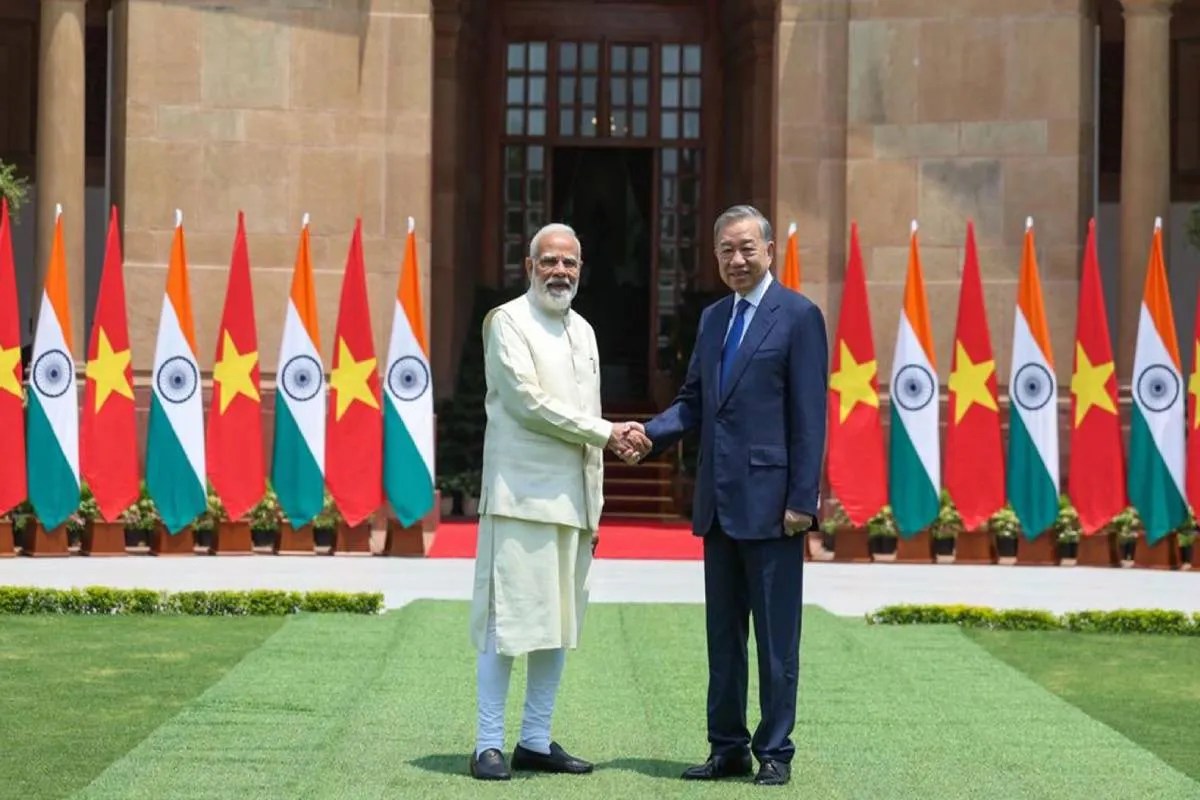
India and Vietnam have just signed thirteen historic agreements. On paper, they look like standard bureaucratic paperwork. In reality, they are the blueprints for a digital revolution that turns a smartphone into a universal key.
The Pulse of the New Silk Road
The centerpiece of this diplomatic marathon is the integration of India’s Unified Payments Interface (UPI) with Vietnam’s payment systems. We often talk about UPI as a convenience, a way to pay for a rickshaw ride or a coffee without fishing for change. That view is too small.
UPI is a language.
When two countries agree to speak the same financial language, the distance between them shrinks. For a Vietnamese student in Delhi or an Indian engineer in Ho Chi Minh City, the complexity of international finance is being reduced to a simple scan.
Consider the mechanics. Usually, when money moves from one country to another, it travels through a series of "correspondent banks." Each bank takes a slice. Each bank adds a delay. By the time the money arrives, it’s smaller and exhausted. The new agreement between the Reserve Bank of India and the State Bank of Vietnam aims to bypass this exhaustion. It creates a direct corridor.
Efficiency is the enemy of poverty. By slashing the cost of remittances and trade transactions, these two nations are effectively giving their citizens an immediate raise.
Beyond the Digital Wallet
While the headlines focus on the ease of buying a bowl of noodles, the twelve other agreements carry the weight of regional stability. This isn't just about commerce; it’s about a shared vision of the Indo-Pacific.
India and Vietnam are not just trading partners. They are bookends of a volatile region.
One of the most significant pacts involves a $500 million line of credit for defense cooperation. This is not a gift. It is an investment in a partner that shares India’s concerns about maritime security and the sanctity of international waters. Vietnam has long looked for a way to modernize its armed forces without becoming overly dependent on any single superpower. India, with its growing indigenous defense industry, provides a middle path.
They are building a "Comprehensive Strategic Partnership" that actually lives up to the name. It covers everything from cyber security to traditional medicine, and from space cooperation to the restoration of ancient monuments.
Think of the Cham towers in Vietnam. These red-brick temples, centuries old, are a physical manifestation of the deep, historical ties between the two cultures. While one agreement focuses on the high-tech future of satellite tracking, another focuses on the painstaking preservation of these ruins. It’s a reminder that this relationship isn't a modern invention. It’s a revival.
The Invisible Stakes of Energy and Earth
Hidden among the thirteen points is a deal on "Green Hydrogen" and "Rare Earth Elements."
The world is currently in a desperate scramble for the materials that power our green future. Vietnam sits on some of the world’s largest deposits of rare earth minerals—the ingredients required for everything from EV batteries to wind turbines. India has the processing ambition and the massive market demand.
If they can solve the puzzle of sustainable mining and refining together, they break a global monopoly. They ensure that the energy transition doesn't just swap one form of dependency for another.
For the average citizen, this feels distant. But it determines the price of the electric scooter they buy in five years. It determines whether the air in Hanoi and Mumbai becomes breathable again. These agreements are the "unseen infrastructure" of the 21st century.
The Frictionless Future
The real magic happens when these various threads—payments, defense, energy, and culture—weave together.
When a small business owner in Da Nang can sell silk directly to a boutique in Bengaluru, and receive the payment instantly in their local currency without a 5% fee, the middleman vanishes. When a maritime patrol vessel in the South China Sea uses Indian-made technology to navigate, the regional balance of power stabilizes.
This is the human element often lost in the "dry" reporting of bilateral summits. Diplomacy is usually described as a series of handshakes between men in dark suits. But the true impact is felt at the street level. It’s felt by the entrepreneur who can now afford to export her goods because the transaction costs dropped. It’s felt by the traveler who no longer fears the "insufficient funds" message in a foreign land.
Vietnam and India are two of the fastest-growing economies on the planet. They are young, hungry, and increasingly tech-savvy. By linking their destinies through these thirteen agreements, they aren't just making a statement to the world. They are building a bridge that bypasses the old gatekeepers of the global economy.
The next time you see a headline about a "Memorandum of Understanding," look past the jargon. Look for the person standing in the market, phone in hand, realizing for the first time that the border under their feet has just become a little less solid.
The digital bridge is open. The traffic is only going to get heavier.