The American Dream is often sold as a straight line. It is a vector of upward mobility, starting with a suitcase at an airport and ending in a suburban cul-de-sac with a manicured lawn. For Bhaskar and Arun Sarkar, two brothers of Indian origin, that line didn’t just move upward; it accelerated until it broke the sound barrier. But as the federal prosecutors in a Louisiana courtroom recently alleged, the speed wasn't powered by innovation. It was powered by a ghost in the machine.
Now, the brothers face a combined 420 years in federal prison.
Four centuries. It is a number so vast it ceases to be a sentence and becomes a historical epoch. To put that in perspective, 420 years ago, the telescope had not yet been used to look at the stars. If the Sarkar brothers serve even a fraction of that time, they will become monuments to a specific kind of modern desperation—the urge to hack the system of human labor until the humans themselves disappear.
The Architecture of a Mirage
The case centers on a company called "Velocis." The name itself suggests speed, efficiency, and the frictionless movement of data. In the world of IT staffing, speed is the only currency that matters. Companies in the United States have a voracious, never-ending hunger for specialized tech talent. When a Fortune 500 company needs a database administrator or a cloud architect, they don't want to wait six months for a visa process. They want a body in a chair. Yesterday.
Bhaskar and Arun understood this hunger. They positioned themselves as the ultimate providers, the bridge between a talent-rich India and a resource-rich America.
The federal indictment paints a picture of a sophisticated "visa mill." At its core, the H-1B visa program is designed for specialized workers. It requires a specific employer to petition for a specific employee to do a specific job. It is a rigid, bureaucratic dance. The Sarkar brothers allegedly found a way to turn that dance into a mosh pit.
They are accused of "benching."
Imagine a young engineer in Hyderabad. Let's call him Rahul. Rahul is brilliant, hardworking, and desperate to prove himself on the global stage. He signs with a firm like Velocis. He is told his ticket to the States is ready. But when he arrives in a nondescript apartment complex in the American South, there is no job. There is no project. There is only the "bench."
He waits. He is a line item on a ledger, a placeholder in a vast game of bait-and-switch. The firm allegedly files paperwork claiming he is working at Site A, while they frantically bid his services out to Site B, C, and D. They create a "labor pool" that exists only on paper, moving human beings around like digital assets in a high-frequency trading algorithm.
The Human Cost of the Bench
The statistics of the fraud—the millions of dollars, the hundreds of fraudulent filings—are easy to digest. What is harder to stomach is the psychological toll on the "benched."
To be an H-1B worker is to live in a state of precarious grace. Your right to exist in the country is tied entirely to your employment. If the brothers’ firm submitted false documents to the Department of Labor, as alleged, every worker under their umbrella was effectively living a lie they didn't authorize.
Consider the silence of a "benched" worker. You cannot complain to the authorities, because your legal status is derived from the very people exploiting you. You are in a golden cage, but the bars are made of PDF files and forged signatures. You sit in a shared apartment, eating instant noodles, watching the American life you were promised pass by through a window, while your "employers" collect the spread between what the client pays and what—if anything—they pay you.
This isn't just a white-collar crime. It is a form of digital indentured servitude.
The Paper Trail to a Century of Time
The federal government doesn't often ask for 420 years. That kind of number is reserved for the destruction of systems. When the Department of Justice looked at the Sarkar brothers, they didn't just see two men cutting corners. They saw a systematic assault on the integrity of the U.S. immigration system.
The charges read like a manual for a shadow economy:
- Conspiracy to commit visa fraud.
- Wire fraud.
- Aggravated identity theft.
- Money laundering.
The identity theft charge is particularly chilling. To keep the mirage going, the brothers allegedly used the names and signatures of people without their knowledge to sign off on labor condition applications. They were forging a reality. In the eyes of the law, they weren't just hiring workers; they were stealing the identities of the very system that allowed them to do business.
But why? Why risk four lifetimes in a cell?
The answer is the same as it has been since the dawn of commerce: the margin. In the staffing world, the person who controls the labor pool controls the market. If you can bypass the "slow" parts of the law—the actual waiting for a job to open before hiring a worker—you can undercut every honest competitor. You become the first choice because you have the "inventory" ready to ship.
Except the inventory is people.
The Invisible Stakes of the Indian Diaspora
For the broader Indian-origin community in the U.S., stories like the Sarkar brothers’ are a gut punch. The community is built on a foundation of extreme meritocracy. It is a group that prides itself on being the highest-earning, most educated demographic in the country.
When a "visa mill" is exposed, it casts a long, dark shadow over every legitimate tech worker. It fuels the fire of those who want to scrap the H-1B program entirely. It turns the "Specialty Occupation" visa into a punchline.
Every time a fraudulent application is filed, a legitimate, brilliant engineer—someone who followed the rules, someone who stayed up late studying for their GREs, someone who waited years for their priority date—loses a spot. The Sarkar brothers weren't just gaming the U.S. government. They were stealing the futures of their own countrymen.
The Silence of the Courtroom
There is a specific kind of quiet that descends on a federal courthouse during a sentencing hearing of this magnitude. It is the sound of a life being weighed.
Bhaskar and Arun Sarkar are not just names on an indictment. They are brothers. They likely shared meals, dreams, and the frantic energy of building a business. They saw themselves as disruptors, perhaps. They saw themselves as smarter than the bureaucrats at the USCIS.
But the law is not an algorithm. It is a blunt instrument.
When the prosecution adds up the counts—20 years for this, 10 years for that—the math becomes a wall. 420 years. It is an absurd number. It is meant to be a deterrent, a signal sent across the oceans to anyone else thinking of turning the American visa system into a personal printing press.
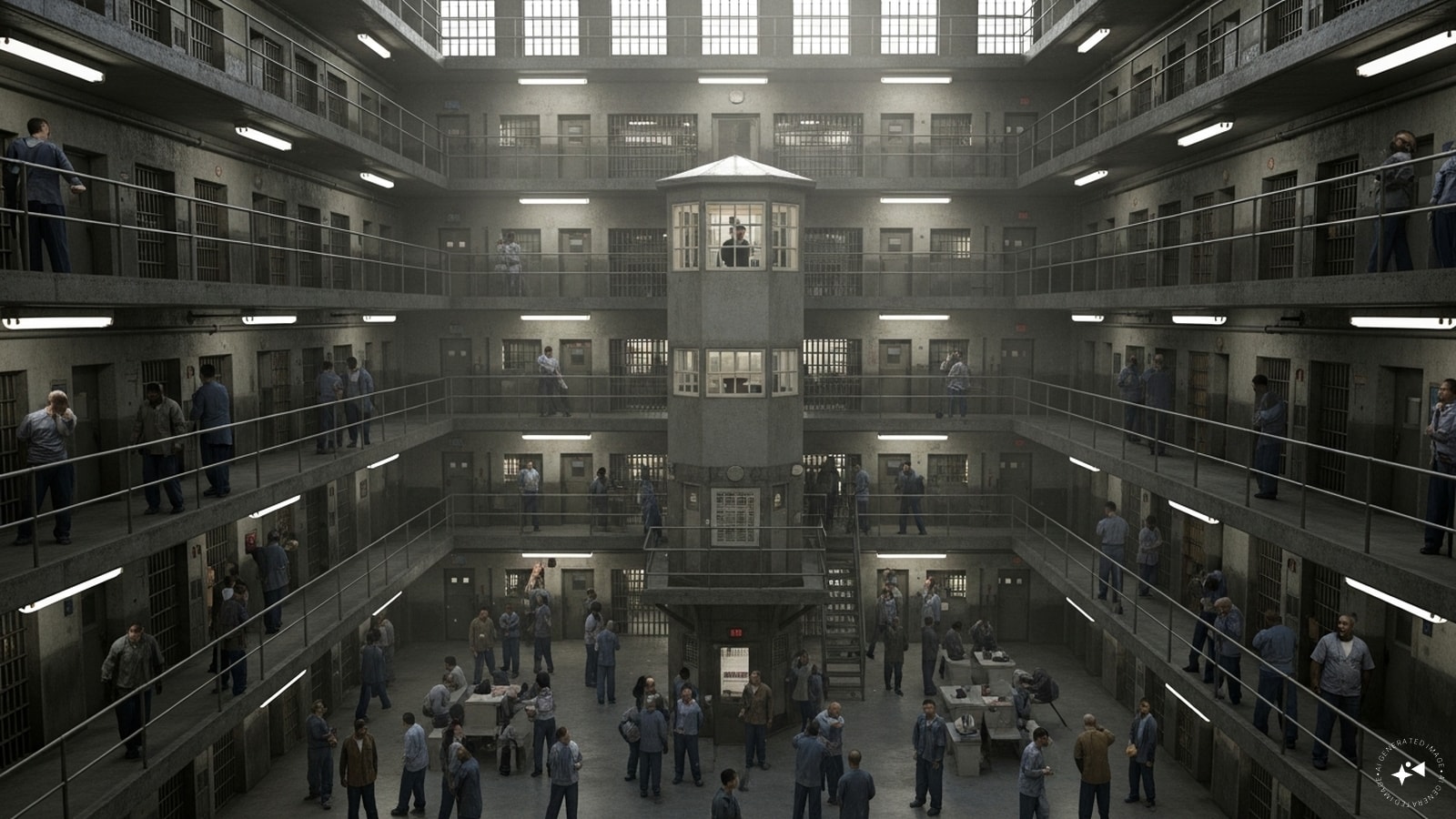
We often talk about "white-collar" crime as if it’s bloodless. We focus on the spreadsheets and the wire transfers. But the blood is in the time. It’s in the years stolen from the workers who sat on the bench. It’s in the trust eroded between two nations. And now, it’s in the literal lifetimes the Sarkar brothers may spend behind a different set of bars.
The American Dream isn't a straight line. Sometimes, it's a circle. And if you try to take a shortcut, you might find yourself right back where you started, waiting in a room for a future that will never arrive.
The ghost in the machine has finally been caught, and its price is every tomorrow they have left.