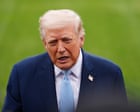
Robert Mueller, the former FBI Director and Special Counsel whose name became synonymous with the investigation into Russian interference in the 2016 election, has passed away. His death marks the end of an era for the Department of Justice, but the immediate reaction from President Donald Trump has ignited a firestorm that transcends simple political disagreement. Rather than observing the traditional moment of silence afforded to long-serving public servants, Trump utilized his social media platform to settle old scores, labeling Mueller’s legacy a "monument to fiction" and "a disgrace to the nation." This response was not merely an outburst; it was a calculated reinforcement of the populist friction that defined his presidency.
The condemnation from across the political spectrum was swift. Critics labeled the remarks "vile" and "beneath the dignity of the office," yet for those who have tracked the evolution of American political discourse over the last decade, the exchange was entirely predictable. Mueller represented the old guard—a man of procedural rigor, stoicism, and institutional loyalty. Trump represents the insurgent force that views those very institutions as inherently corrupt. When these two worlds collided one final time upon Mueller’s passing, it revealed a country that no longer shares a common language for grief or respect. Expanding on this topic, you can find more in: Why the Green Party Victory in Manchester is a Disaster for Keir Starmer.
The Long Shadow of the Special Counsel
To understand why a former president would break the long-standing taboo of speaking ill of the dead, one must revisit the 22-month marathon of the Special Counsel investigation. It was a period of intense atmospheric pressure in Washington. Mueller was tasked with navigating a labyrinth of high-stakes intelligence and inner-circle betrayals. While the final report did not establish a criminal conspiracy between the Trump campaign and Russia, it explicitly declined to exonerate the president on charges of obstruction of justice.
That ambiguity became the soil in which today's bitterness grew. To Mueller’s supporters, he was a "Marine’s Marine" who followed the facts until the law hit a wall of executive privilege. To his detractors, he was the face of a "Deep State" hit job designed to undo a democratic election. These are not just differing opinions; they are two entirely different realities. When a figurehead of one reality dies, the leader of the other sees not a human loss, but the removal of a strategic adversary. Experts at Al Jazeera have also weighed in on this matter.
Institutionalism vs Populism
Mueller belonged to a vanishing species of Washington power players who believed that the process mattered more than the person. He operated in a world of strictly defined boundaries, non-comments, and "no-knock" warrants. His silence during the investigation was legendary. He believed the work should speak for itself.
In contrast, modern political populism demands constant noise. It requires the identification of enemies to maintain momentum. By attacking Mueller even in death, Trump signaled to his base that the "witch hunt"—a term he used hundreds of times—never truly ends. It is a perpetual state of conflict. This tactic ensures that the grievances of the past remain fresh, preventing the news cycle from moving toward a more nuanced reflection on Mueller’s fifty years of government service, which included a Purple Heart in Vietnam and leading the FBI through the aftermath of 9/11.
The machinery of the modern Republican party found itself in a familiar, uncomfortable position. Some senators issued boilerplate statements praising Mueller’s "devotion to the country," while others remained silent, wary of crossing a base that views Mueller as a villain. This silence is a data point in itself. It shows the erosion of the "institutionalist" wing of the GOP, which once would have reflexively defended a former FBI Director.
The Mechanism of Modern Outrage
We have reached a point where the death of a public figure is immediately processed through a partisan filter. The "vile" nature of the comments is, for a significant portion of the electorate, the entire point. Authenticity is now measured by one’s willingness to be "politically incorrect" or "brutally honest," even if that honesty violates the basic tenets of human empathy.
When Trump gloats, he is performing an act of perceived strength for an audience that feels the legal system was weaponized against them. They do not see a grieving family; they see a "bureaucrat" who tried to take down their champion. This shift in perspective makes traditional condemnation ineffective. Calling the comments "vile" only reinforces the supporter’s belief that the "elites" are clutching their pearls over someone who deserved the vitriol.
Legal Legacies and Unfinished Business
Beyond the rhetoric, Mueller’s death leaves a complicated legal and historical footprint. He was the man who oversaw the prosecution of Paul Manafort, Rick Gates, and Michael Flynn. He secured dozens of indictments against Russian nationals and entities. Yet, the central tension of his career remains: the limits of a prosecutor’s power when investigating a sitting commander-in-chief.
Legal scholars will spend decades debating whether Mueller should have been more aggressive or if his adherence to Office of Legal Counsel (OLC) guidelines—which state a sitting president cannot be indicted—was a failure of nerve or a triumph of duty. His passing closes the door on any further personal clarification of those choices. He stayed silent until the end, leaving the interpretation of his life to a public that is increasingly incapable of objective analysis.
The reaction to his death suggests that the "Mueller Report" was never really about the law. It was a cultural Rorschach test. To those who value the stability of the republic, he was a bulwark. To those who value the disruption of the status quo, he was an obstacle.
The Cost of the Permanent Campaign
Politics in the United States has transitioned into a permanent campaign where there is no "off-season" for hostility. Usually, death provides a brief ceasefire. When that ceasefire is ignored, the social fabric thins just a little bit more. We are seeing the dismantling of the "gentleman’s agreement" that governed Washington for a century.
This isn't about one man's tweet; it’s about the precedent it sets for every leader who follows. If the life’s work of a decorated veteran and long-term public servant can be dismissed as "garbage" the moment his heart stops, then the incentive to serve the state rather than a party vanishes. Why subject oneself to the rigors of public life if the final word on your existence is a partisan hit piece?
The real casualty here isn't Robert Mueller’s reputation—that is largely etched in stone for his admirers and his critics alike. The casualty is the concept of the "statesman." We are moving toward a period where there are only "our guys" and "their guys," and the "their guys" don't get a funeral—they get a post-mortem trial on social media.
The Infrastructure of Polarization
The digital structures we inhabit reward the most extreme reactions. A balanced tribute to Robert Mueller’s career receives a fraction of the engagement that a "hard-hitting" condemnation generates. This is the structural reality of the 2020s. Political figures are incentivized to be as divisive as possible because division creates "heat," and heat creates visibility.
Trump’s comments were perfectly tuned for the algorithm. They forced every news outlet to report on the "outrage," which in turn pushed the original comments to millions who might have otherwise missed them. It is a closed loop of provocation and reaction. By focusing on the "vileness" of the remarks, the media inadvertently participates in the very spectacle the former president intended to create.
We must ask ourselves what happens when the next major figure passes. If the bar for decorum has been lowered to the floor, what is left to hold us together during times of national transition? The answer appears to be very little. We are witnesses to the final stripping away of the masks. The veneer of "respect for the office" or "respect for the service" has been replaced by a raw, unyielding pursuit of narrative dominance.
The reality of Mueller's work—the thousands of hours of testimony, the millions of documents, the quiet professionalism—is being buried under a mountain of performative anger. This is how history is rewritten in real-time. It’s not done through textbooks; it’s done through the sheer volume of the loudest voices in the room.
The death of Robert Mueller is more than a footnote in the history of the FBI. it is a clear indicator that the old rules of engagement are dead. We are now in a space where even the finality of death is not enough to pause the grievance machine. This is the new baseline for American politics, and there is no indication that the volume will be turned down anytime soon.
Hold the institutions accountable, but recognize that when we lose the ability to acknowledge a life of service—regardless of the political outcomes of that service—we lose the ability to function as a coherent society.