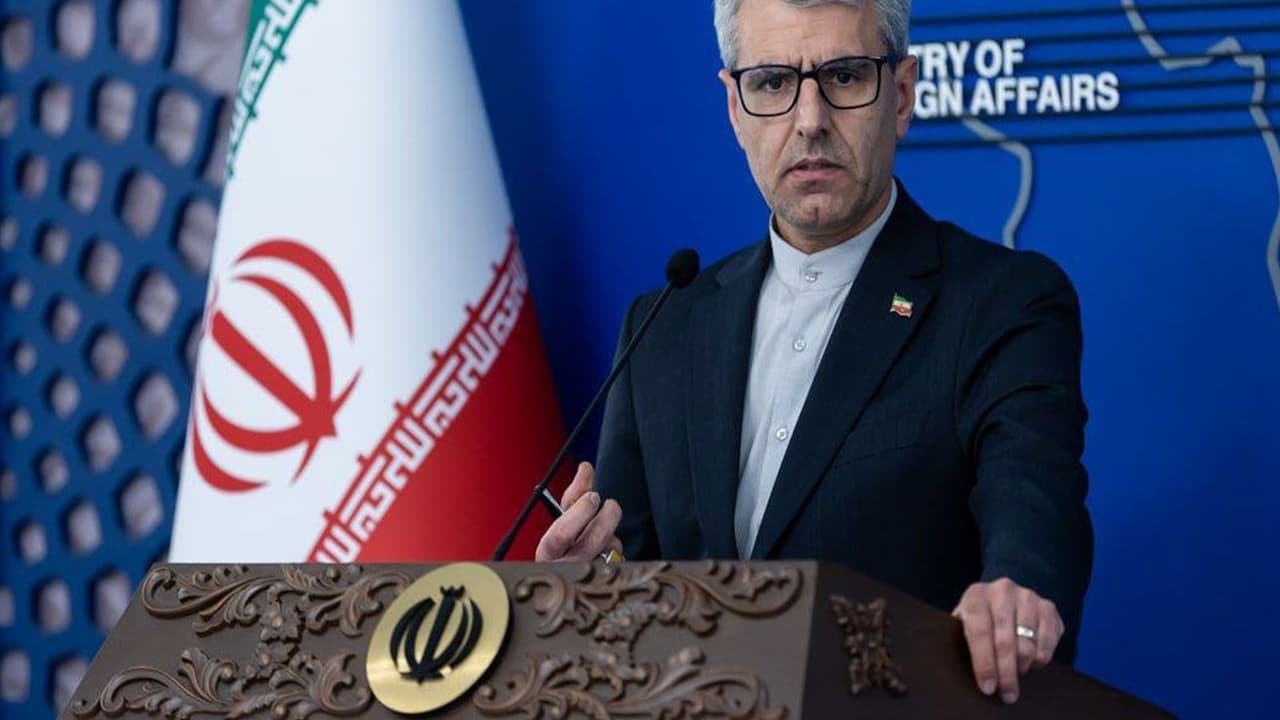
The air inside a diplomatic briefing room always carries a specific kind of weight. It is the smell of industrial carpet, stale espresso, and the quiet, crushing realization that hours of meticulous scripting can be undone by a single, clipped sentence. When Kan'ani, the spokesperson for Iran’s Foreign Ministry, stepped up to the microphone, the room grew quiet. He was there to address a rumor. Rumors in international relations are a currency of their own, often used to test the waters or force an opponent’s hand. This particular rumor claimed that secret, high-level talks between Iran and the United States were already locked into the calendar in Qatar.
Kan'ani shook his head. No such meetings were scheduled. The final negotiations, he made sure to emphasize, had not even begun.
To anyone tracking the geopolitical chess board from a distance, it sounded like standard diplomatic stalling. A routine denial. But diplomacy is rarely about the words spoken into a microphone; it is about the silence that follows them. It is about the families waiting across borders, the merchants watching currency tickers in the Grand Bazaar, and the invisible lines of communication that keep a volatile region from tipping into outright chaos. When two nations stop talking, or when they refuse to admit they are talking, the world holds its breath.
Consider a hypothetical diplomat sitting in a secure room in Doha. Let us call him Alireza. He is not a politician; he is a career civil servant who has spent twenty years analyzing text. His tie is slightly loosened. He has two phones on the desk, both silent. Alireza knows that every time a official statement flatly denies progress, his job becomes exponentially harder. The public demands clarity, but clarity is the death of compromise. In his world, progress is measured in millimeters, hidden away from the glare of television cameras. When the public curtain drops, the real, agonizing work of back-channel messaging slows to a crawl.
This is the true cost of the diplomatic stalemate. It is the agonizing friction of indirect communication.
Because Washington and Tehrān do not maintain formal diplomatic relations, they cannot simply pick up the phone. They rely on intermediaries. Think of it as a game of telephone where the stakes are regional stability and global oil prices. A message is drafted in Washington, translated, vetted by lawyers, sent to an embassy in Switzerland or a government office in Qatar, translated again, and delivered to Tehrān. By the time the response travels the same agonizing loop backward, the context has shifted. The mood has soured. Opportunities that existed on Tuesday are completely gone by Friday.
The denial of scheduled talks in Qatar highlights a deeper, more systemic problem in modern statecraft: the terror of looking weak. For Iran, sitting down too quickly suggests that economic pressures are working. For the United States, rushing to the table looks like a concession to a hostile adversary. So, both sides stand on opposite sides of a canyon, shouting that they have no intention of crossing, even as their deputies quietly look for a bridge.
This public posturing has real, human consequences. In Tehrān, shopkeepers price their goods based on the daily fluctuation of the rial against the dollar. A rumor of talks causes a brief surge of optimism; a flat denial causes prices to spike again. It is a psychological roller coaster tied to the vague pronouncements of men in suits. The economic weight does not fall on the officials giving the briefings. It falls on the citizen trying to buy medicine or the small business owner trying to keep the lights on.
The path forward is never a straight line. It is a series of fits, starts, and deliberate misdirections. By stating that final negotiations have yet to begin, Iran is not necessarily closing the door. It is resetting the terms of engagement. It is a signal that the price of entry to the real negotiations remains high, and that neither side should expect an easy victory.
The microphone is switched off. The reporters pack up their laptops. The room empties out, leaving only the echo of a denial that everyone knows is just the preface to a much longer, much darker story. Somewhere in a quiet office, a phone begins to ring.