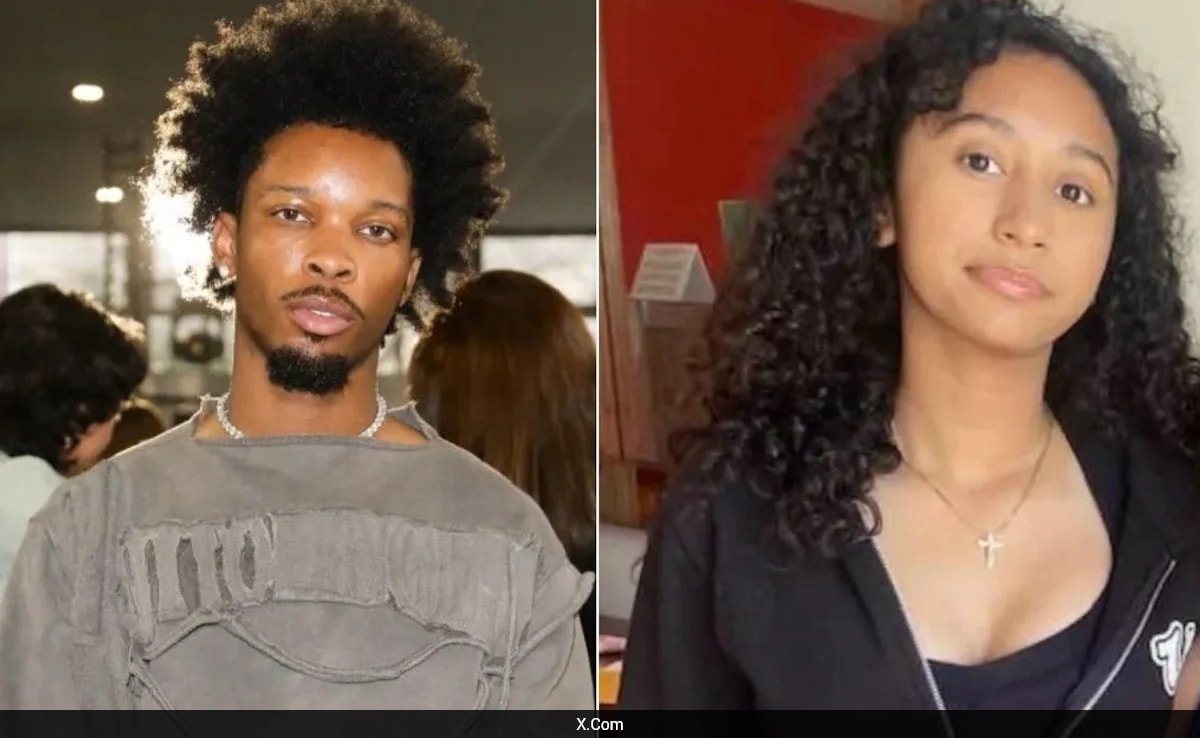
In a small Los Angeles courtroom on Thursday, the meteoric rise of David Anthony Burke, the 21-year-old alt-pop sensation known as D4vd, was stripped of its lo-fi aesthetic and replaced by the grim language of a capital murder case. Deputy District Attorney Beth Silverman dropped a forensic bombshell that reframed the entire investigation into the death of 14-year-old Celeste Rivas Hernandez. Prosecutors now claim that Burke’s personal devices, including his iPhone and a massive eight-terabyte iCloud account, contained a "significant amount" of child pornography.
This is no longer just a case about a body found in an abandoned Tesla. It is a descent into a digital underworld that prosecutors argue provided the motive for a cold-blooded execution. The state’s theory is as simple as it is haunting: Burke allegedly killed the young girl to protect a career built on sensitive, moody anthems that had made him a Gen Z icon.
The Eight Terabyte Problem
For months, the investigation into the disappearance and subsequent discovery of Celeste Rivas Hernandez appeared stalled. The girl had been reported missing from Lake Elsinore in April 2024. Her remains, dismembered and stuffed into two black bags, were eventually found in September 2025 inside a Tesla registered to Burke. The car had been towed from the Hollywood Hills while the singer was on a global tour.
The sheer volume of digital evidence now surfacing suggests that investigators were doing more than just tracking GPS pings. Eight terabytes of data is a staggering amount of information—equivalent to millions of high-resolution photos or thousands of hours of video. To date, the District Attorney’s office has only managed to download and review a single terabyte.
What they found within that first fraction was enough to trigger a new level of judicial scrutiny. Silverman noted that the materials must be handled with extreme sensitivity, a standard protocol for cases involving child sexual abuse material (CSAM).
The prosecution is essentially building a digital cage around the artist. They aren’t just looking for a "smoking gun" email; they are documenting a lifestyle of alleged exploitation that they claim began when the victim was just 13 years old.
A Career Built on Pain and Alter Egos
Burke’s music often dealt in the currency of "itami"—the Japanese word for pain. He even created an alter ego, "IT4MI," an "evil version" of himself often depicted in his music videos with a blood-stained shirt and a blindfold. While fans viewed this as edgy artistic expression, the Los Angeles County District Attorney’s Office is now pointing to it as something far more literal.
The timeline is damning.
- April 23, 2025: The date prosecutors estimate Celeste was killed.
- April 25, 2025: Burke releases his debut album, Withered.
- May 5, 2025: The date the victim’s body was allegedly mutilated.
The juxtaposition of a rising star performing at Coachella and releasing a major label debut while a 14-year-old girl’s body sat in his trunk is a horror that the music industry is still struggling to process. The industry often rewards "dark" branding, but the transition from aesthetic gloom to the "unlawful mutilation of human remains" has left his label, Darkroom/Interscope, in a state of total silence.
The Defense Strategy of Transparency
In a move that has baffled some legal analysts, Burke’s lead attorney, Blair Berk, is pushing for speed. While most defendants in high-stakes murder trials attempt to delay proceedings for as long as possible, Burke has exercised his right to a preliminary hearing within 10 court days of his April 20 arraignment.
"We believe the actual evidence will show David Burke did not murder Celeste Rivas Hernandez," Berk told the court.
By forcing the prosecution to present its evidence early, the defense is gambling. They are betting that the "voluminous evidence" mentioned by the state is circumstantial or that the forensic link between the digital materials and the physical act of murder is weak. It is a high-risk play. If the judge finds probable cause—which is a much lower bar than "beyond a reasonable doubt"—the defense will have handed the prosecution a dress rehearsal for the main trial.
The Autopsy and the Motive
The recently unsealed autopsy report from the LA County Medical Examiner provides the physical evidence to match the digital accusations. Celeste died from two "penetrating wounds" to her upper body—one piercing her liver and another damaging her ribs. The report mentions that her clothing, a tube top, was cut in three places, suggesting a violent struggle.
The prosecution’s motive rests on the intersection of fame and fear. They allege that Burke had been sexually abusing the girl for over a year. When she allegedly threatened to report the abuse—a report that would have instantly vaporized his multi-million dollar recording contracts and his clean-cut "gamer-to-singer" narrative—prosecutors say he chose silence through violence.
Beyond the Viral Hits
This case is a brutal reminder of the vacuum that exists between a curated online persona and reality. Burke didn't come up through the traditional studio system; he built his following in his sister’s closet, making music for Fortnite montages. He was the ultimate "relatable" success story.
Now, he sits in the Men’s Central Jail, facing charges of first-degree murder with special circumstances of "lying in wait" and "financial gain." Because of these special circumstances, the District Attorney’s office is currently weighing whether to seek the death penalty.
The digital footprints left behind on an iPhone and an iCloud account are often more permanent than the songs that put an artist on the charts. As the preliminary hearing set for May 1 approaches, the industry is no longer looking at D4vd as a lo-fi pioneer. They are looking at a young man whose greatest "romantic homicide" might not have been a song, but a calculated effort to bury a witness and a secret under eight terabytes of data.
The trial will not just be about a murder; it will be a forensic autopsy of an entire digital life.