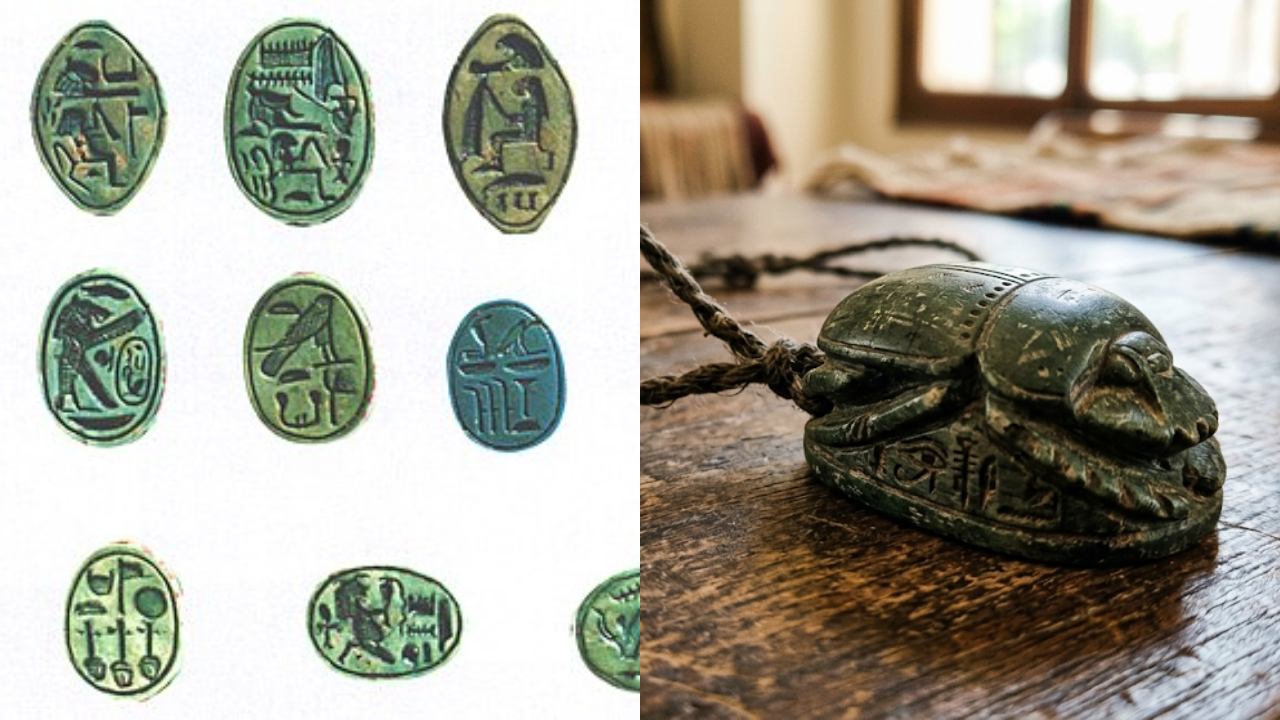
The discovery of a 3,000-year-old Egyptian amulet within a Phoenician-style burial site in modern-day Spain—specifically at Almuñécar (ancient Sexi)—is not merely an archaeological curiosity. It represents a physical data point in the complex network of Early Iron Age trade dynamics, elite signaling, and resource extraction. While mainstream reporting focuses on the "shock" of the find, a rigorous analysis of the artifact’s provenance and burial context reveals a sophisticated logistical framework that connected the Nile Delta to the Iberian Peninsula long before the rise of the Roman Empire.
The Tripartite Framework of Trans-Mediterranean Exchange
To understand why an Egyptian talisman appears in a Spanish necropolis, one must look past the object and examine the systemic drivers of the era. The presence of such artifacts is dictated by three primary variables:
- Resource Asymmetry: Iberia possessed high concentrations of silver, copper, and tin. Egypt and the Levant possessed high-value manufactured prestige goods and agricultural surplus.
- Maritime Logistical Capacity: The Phoenicians acted as the primary logistics providers, utilizing advanced naval architecture to bridge the 2,500-mile gap between the Eastern and Western Mediterranean.
- Elite Identity Construction: Local Iberian and Phoenician-settler elites used foreign exotica to consolidate domestic power, effectively converting imported symbolism into local political capital.
Provenance Mapping and Amuletic Function
The amulet, often associated with the Third Intermediate Period of Egypt (c. 1069–664 BCE), serves as a chronological anchor. During this era, Egypt’s internal political fragmentation led to an increased reliance on external trade partners to maintain its economic relevance. The Phoenician city-states, specifically Tyre and Sidon, leveraged this instability to become the exclusive distributors of Egyptian "Aegyptiaca"—mass-produced or bespoke religious items such as scarabs, figurines, and amulets.
The specific iconography of these amulets often featured deities like Bes, Bastet, or the Eye of Horus. These were not merely decorative; they functioned as "portable metaphysical insurance." In the context of the Almuñécar find, the amulet’s presence in a tomb suggests a synthesis of belief systems. The deceased, or those burying them, viewed Egyptian religious technology as compatible with, or superior to, local funerary protections.
This leads to the Prestige-Goods Model. Under this framework, the value of the amulet was derived from three distinct layers:
- Exoticism: The distance traveled increased the object's perceived rarity.
- Materiality: The use of faience, a glazed ceramic involving specialized pyrotechnics, signaled a level of industrial sophistication not yet present in the Iberian hinterland.
- Symbolic Literacy: The ability to interpret and utilize Egyptian motifs suggested the owner belonged to a trans-cultural merchant class.
The Necropolis as a Data Set
The burial site at Almuñécar is characterized by "cremation in urns," a practice distinct from the indigenous inhumation rituals of the era. This shifts the interpretation of the find from an accidental trade loss to a deliberate cultural deposit. The structural layout of the necropolis indicates a highly organized social hierarchy.
The relationship between the amulet and the grave goods can be expressed through a simple Social Status Function:
$$S = \sum (G_{local} \cdot w_1) + (G_{imported} \cdot w_2)$$
Where $S$ represents the social status of the deceased, $G$ represents the quantity of grave goods, and $w_2$ (the weight assigned to imported goods) is significantly higher than $w_1$ (local goods). The amulet acts as a high-value multiplier in this equation. Its presence confirms that the Almuñécar settlement was not a temporary outpost but a permanent hub of high-net-worth individuals who maintained direct or semi-direct links to the Levantine and Egyptian markets.
Supply Chain Mechanics: The Phoenician Conduit
The "shock" mentioned in popular media implies an unexpected connection, yet the maritime mechanics of the 1st Millennium BCE make this discovery logically predictable. The Phoenicians operated a "hub-and-spoke" distribution model.
- Primary Hubs: Tyre, Sidon, and Byblos (Supply acquisition).
- Secondary Hubs: Carthage, Kition, and Sulcis (Logistical refuelling and redistribution).
- Tertiary Spokes: Almuñécar, Gadir (Cadiz), and Huelva (Resource extraction points).
The amulet likely traveled this route as part of a "gift-exchange" protocol or as secondary ballast in a ship primarily laden with textiles, wine, or oil. The bottleneck in this system was not the production of the amulets—Egyptian workshops were highly efficient—but the seasonal nature of Mediterranean sailing. The Etesian winds limited the operational window for Westward travel, making every imported item a high-risk, high-reward investment.
Archaeological Stratigraphy and Chronological Discrepancies
A critical challenge in analyzing this find is the potential for "heirloom effect." An amulet produced in 900 BCE might not be buried until 700 BCE. This 200-year lag can distort chronological mapping.
The Almuñécar find must be cross-referenced with the Laurita Necropolis data. If the ceramic typology of the burial urns aligns with the late 8th century BCE, but the amulet style is early 9th century, we are observing a deliberate preservation of value across generations. This suggests that the amulet was not a commodity but a family asset, further elevating its significance as a marker of dynastic stability in a frontier environment.
The chemical composition of the faience provides another layer of evidence. If the cobalt used for the blue glaze originates from specific Egyptian mines (like those in the Kharga Oasis), the directness of the trade link is solidified. If the chemical signature suggests local Mediterranean production mimicking Egyptian styles, the discovery instead points to a sophisticated "counterfeit" or "tribute" industry, where the idea of Egypt was more important than the origin of the object.
Strategic Implications of the Discovery
The Almuñécar amulet forces a recalibration of the "Atlantic-Mediterranean" interface. It confirms that by the 8th century BCE, the Iberian coast was fully integrated into the "World System" of the time. The transition from the Bronze Age to the Iron Age in Spain was not an isolated internal evolution but a direct consequence of being plugged into the Eastern Mediterranean's demand for metals.
The discovery also highlights the limitations of current archaeological predictive modeling. We often underestimate the fluidity of ancient borders and the reach of maritime ventures. The "shock" is a result of our modern silos; for an 8th-century Phoenician merchant, finding an Egyptian amulet in a Spanish tomb would have been a standard outcome of a successful business cycle.
Future investigative efforts must prioritize the "Micro-Region" around the burial site. If one amulet exists, the statistical probability of a larger cache of Egyptian-style luxury goods—sistrums, alabaster jars, and scarabs—is high. Researchers should utilize LIDAR and ground-penetrating radar (GPR) to map the surrounding subterranean structures, looking specifically for "Warehouse-Temple" complexes that typically served as the administrative centers for these trade operations.
The focus must shift from the "mystery" of the object to the "efficiency" of the network. This amulet is a receipt for a trans-continental transaction that involved miners in the Sierra Morena, glass-workers in the Nile Delta, and sailors from the Levant. It is the earliest evidence of a truly globalized economy where branding, belief, and bullion were the primary drivers of human movement.
The immediate analytical requirement is a comprehensive isotopic analysis of the associated skeletal remains. Determining whether the individuals buried with these Egyptian artifacts were of Levantine, North African, or local Iberian biological origin will finally resolve whether this was a case of colonial presence or cultural adoption by indigenous elites. Without this biological data, the amulet remains a fascinating but silent witness to a trade route that redefined the ancient world.