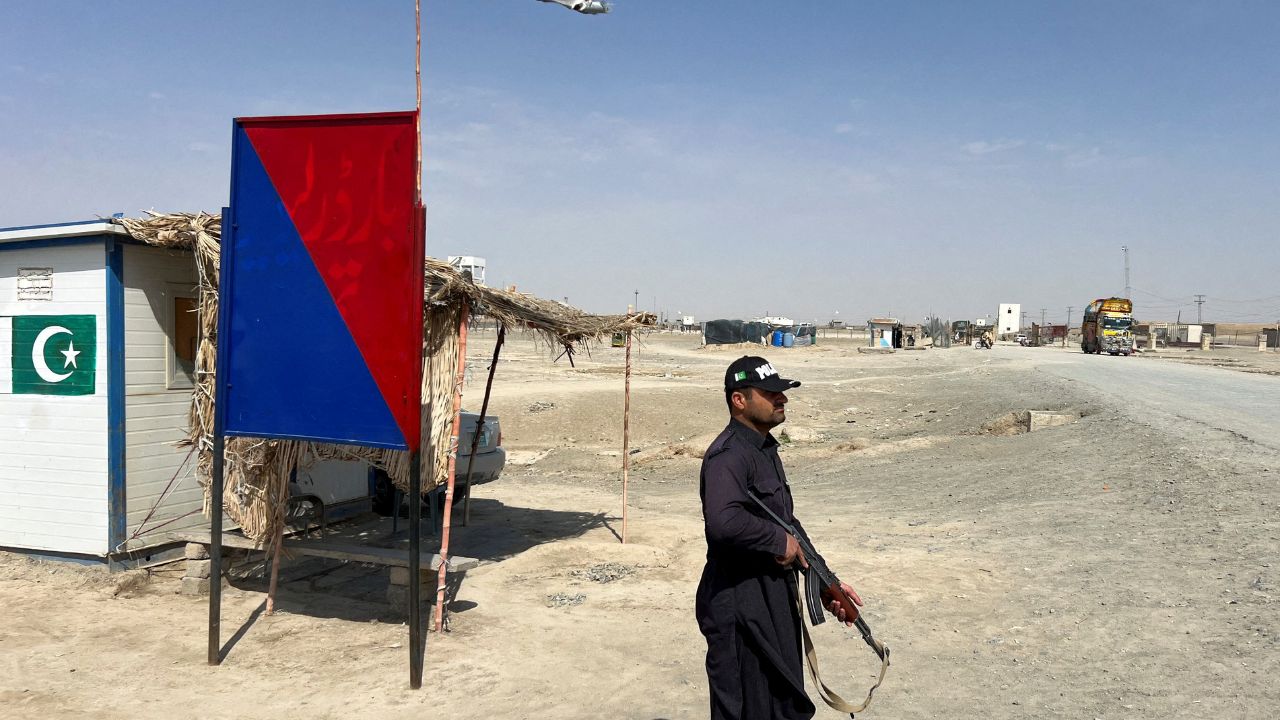
The wind in the highlands of Balochistan doesn't just blow; it scours. It carries a fine, alkaline grit that finds its way into the seams of your clothes, the pores of your skin, and the very mechanics of a rifle. For the soldiers stationed in the jagged shadows of the Suleiman Range, the silence of the desert is never peaceful. It is a physical weight. It is the sound of a held breath.
When the intelligence reports filtered through the encrypted channels on a Tuesday night, they didn't come as dry statistics. They arrived as heat signatures and whispered locations. Somewhere in the sprawling, lunar expanse of the province, thirty-five men were preparing for a different kind of silence—the kind that follows an explosion in a crowded market or the ambush of a lonely convoy.
Security operations are often described in the media as surgical strikes, a term that evokes cleanliness and precision. The reality is sweat, the metallic taste of adrenaline, and the bone-shaking vibration of transport trucks navigating tracks that barely qualify as roads. This particular operation wasn't just about neutralizing threats; it was a desperate bid to reclaim a sense of order in a region where the geography itself seems to conspire against peace.
By the time the sun began to bleed over the horizon, thirty-five insurgents were dead. Three high-profile commanders, men whose names had been underlined in red on military dossiers for years, were in zip-ties.
The Shadow of the Commander
To understand why the capture of three men matters more than the deaths of thirty-five, you have to look at how an insurgency breathes. A foot soldier is a tragedy, but a commander is a map. These three individuals weren't just fighters; they were the architects of logistics. They knew the goat paths that crossed into neighboring borders. They knew which merchants could be bullied into storing ammonium nitrate. They held the keys to the ideological recruitment that turns frustrated young men into weapons.
Consider a hypothetical figure—let's call him Commander A. He doesn't live in a cave. He moves through villages like a ghost, sometimes welcomed out of shared grievance, more often tolerated out of sheer terror. When he is captured, a library of local knowledge is seized with him. The cell he led doesn't just lose a leader; it loses its memory. Without that memory, the remaining fighters are just armed men wandering in the dark.
The capture of these three is a disruption of the nervous system. It creates a vacuum of authority that leads to infighting, paranoia, and, eventually, the collapse of the local network. This is the invisible victory that headlines rarely capture.
The Geometry of the Border
The sheer scale of Balochistan is difficult to fathom if you haven't stood in the middle of it. It is a province that makes up nearly half of Pakistan's landmass but holds only a fraction of its population. This emptiness is a playground for those who wish to remain unseen.
The operation spanned multiple districts, a logistical nightmare that required synchronizing hundreds of boots on the ground with aerial surveillance. For the soldiers involved, the "35 killed" figure isn't a scorecard. It represents thirty-five moments of lethal friction. It represents a night spent staring through night-vision goggles until the world turns into a grainy, lime-green blur, waiting for the flicker of a muzzle flash or the shadow of a scout.
The stakes here are far higher than local security. This region is the gateway to multi-billion dollar infrastructure projects and international trade routes. Every time a cell is dismantled, the needle shifts slightly toward stability. But that stability is fragile. It is built on the backs of men who spend months away from their families, living on rations and grit, patrolling a landscape that looks like the surface of Mars.
The Human Toll of the Invisible War
We often talk about "terrorists" as a monolith, a faceless collective of malice. But the tragedy of the Balochistan conflict is rooted in the human element. There is the soldier, perhaps a twenty-four-year-old from a village in Punjab or Sindh, who is fighting in a land where the language is foreign and the heat is a physical enemy. Then there is the local resident, caught between the brutal demands of the insurgents and the heavy-handed presence of the state.
When 35 people are killed in a single operation, there are 35 families who receive news that will change their lives forever. Even when those killed were dedicated to violence, the ripple effect of their deaths feeds into the cycle of grievance that keeps the insurgency alive. This is the paradox of counter-terrorism. To save the many, the state must kill the few, but every death risks creating a new ghost to haunt the future.
The capture of the commanders offers a different path. It offers the possibility of intelligence without bloodshed. It offers a chance to dismantle the machinery of war without adding to the body count. These men represent the "high-value" targets not because they are more evil than their subordinates, but because they are the ones who can explain why this is happening.
Beyond the Body Count
The dust eventually settles. The helicopters return to their bases, and the trucks rumble back to the cantonments. The official press release is issued, the numbers are tallied, and the public moves on to the next news cycle.
But for the people of Balochistan, the operation doesn't end when the shooting stops. The presence of thirty-five fewer insurgents might mean a school stays open another month. It might mean a road remains safe for a merchant to bring his goods to market. It might mean a father feels a little less dread when his son walks out the door.
Security is not a permanent state; it is an ongoing negotiation with chaos. These operations are the price of that negotiation. They are the heavy, violent work of keeping a society from fracturing under the pressure of extremism.
The three commanders now sit in interrogation rooms, far from the wind-swept hills. Their silence has been broken. Outside, the sun sets over the Suleiman Range, casting long, jagged shadows across the rocks. The silence has returned to the desert, but for tonight, it feels a little less heavy.
Blood is easy to spill in the highlands. Peace is much harder to build. It is built in the quiet hours after the guns go cold, in the rooms where secrets are traded for leniency, and in the small, unremarkable moments when a citizen decides that maybe, just maybe, the cycle of violence has finally skipped a beat.