Jim Chalmers did not look like a man about to deliver a multi-billion-dollar economic blueprint. He looked like a tired dad trying to explain a broken dishwasher to a toddler.
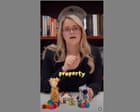
In the days surrounding the release of the Australian federal budget, the Treasurer and his colleagues did something peculiar. They stopped talking like economists. They stopped talking about fiscal policy, structural deficits, and the Consumer Price Index. Instead, they reached into a toy box.
Bluey made an appearance. So did a stuffed, plush Tasmanian devil. At one point, the government even invoked the image of Thanos, the fictional Marvel supervillain who wiped out half the universe with a snap of his fingers, to explain their opposition’s approach to public spending.
It was a calculated, hyper-simplified media blitz designed to condense thousands of pages of dry treasury spreadsheets into bite-sized, shareable memes. The strategy was obvious: if you cannot make the electorate understand the math, make them feel the vibe.
But a nation’s ledger is not a cartoon. When you turn a budget into child’s play, you risk making the very real pain of the people who depend on it feel just as fictional.
The Kitchen Table Ledger
To understand why the government resorted to stuffed animals, you have to look at a kitchen table in the suburbs of western Sydney.
Sarah is thirty-four. She does not know what a "structural deficit" means in a macro-economic context, but she knows exactly what it feels like when her phone buzzes at 3:00 AM with a low-balance alert from her bank. She knows the precise cost of a two-liter bottle of milk down to the cent. She knows that the price of her electricity has outpaced her wage growth for three consecutive years.
For Sarah, the federal budget is not an abstract political scorecard. It is a looming presence that dictates whether she can afford to keep the heater on during the cold July nights or if she needs to tell her son that he cannot go on the school excursion this term.
When the Treasurer stands at the dispatch box and announces a $9.3 billion surplus, Sarah looks at her own bank account and feels a profound sense of cognitive dissonance. The nation is in the black, but she is drowning in the red.
This is the chasm that the Labor government desperately tried to bridge with social media videos and soft toys. They needed to convince Sarah that the numbers on the screen mattered to the numbers on her fridge door.
The problem with simplifying complex economic realities is that it can easily cross the line into condescension. When a politician holds up a plush toy to explain a policy that affects a family's ability to buy groceries, it does not always make the policy clearer. Sometimes, it just makes the politician look out of touch.
The Chemistry of Inflation
Economics is often treated like a math problem, but it behaves much more like chemistry. If you add too much heat to a volatile mixture, it explodes.
The current economic climate is a delicate balancing act. On one hand, the government is trying to provide relief to citizens who are genuinely hurting from the rising cost of living. On the other hand, if they pump too much money directly into the economy through cash handouts or sweeping subsidies, they risk fueling the very inflation they are trying to fight.
Think of it as trying to put out a fire with a bucket that might secretly contain a small amount of petrol.
The budget included a $300 energy rebate for every Australian household, alongside cuts to student debt and changes to the tax brackets designed to put more money back into the pockets of middle- and low-income earners. On paper, these are tangible wins for the average voter. They are easy to understand. They fit neatly into a TikTok video.
But behind the scenes, economists shook their heads. The Reserve Bank of Australia has been aggressively raising interest rates to cool the economy down, trying to convince people to spend less. Simultaneously, the government is handing out billions of dollars to encourage people—or at least enable them—to keep spending.
It is a bizarre spectacle. One arm of the state is slamming on the brakes, while the other is pressing down on the accelerator.
When the government uses memes to sell this strategy, they omit the tension. They present the relief as a pure, unadulterated gift. They don't mention that if the chemistry goes wrong, the Reserve Bank might respond by raising interest rates even further, effectively wiping out the benefits of the energy rebate before the first winter bill even arrives.
The Danger of the Disposable Message
We live in an era of disposable communication. A political message that cannot be consumed in seven seconds while scrolling on a train is deemed a failure by modern campaign strategists.
Labor’s budget sell was built entirely for this environment. It was designed to compete with dancing videos, recipe clips, and celebrity gossip. By reducing the national economic debate to a battle of pop-culture references, however, the government implicitly conceded that the public lacks the attention span for nuance.
Consider the Thanos metaphor. The government used the character to suggest that the opposition’s proposed spending cuts would be brutal and indiscriminate. It was a clever piece of political rhetoric that achieved exactly what it set out to do: it generated headlines and sparked social media engagement.
But it also degraded the quality of the conversation.
A budget is a statement of national values. It reflects what a society prioritizes—healthcare, education, defense, infrastructure. It requires a serious, sometimes uncomfortable debate about trade-offs. You cannot have a meaningful discussion about the funding of aged care or the future of the National Disability Insurance Scheme when the framework of the debate is pulled from a comic book movie.
When politics becomes entirely performative, the stakes disappear from view. The actors on the screen look like they are having fun, but the audience is left wondering if anyone is actually driving the bus.
The Invisible Stakes
The real tragedy of the hyper-simplified political message is that it masks the very human consequences of policy failure.
If the government fails to manage the transition from high inflation to economic stability, the cost will not be measured in lost followers or bad poll numbers. It will be measured in foreclosures. It will be measured in small businesses closing their doors after decades of hard work. It will be measured in the quiet, desperate choices made by parents in supermarket aisles across the country.
The soft toys and the clever memes are a shield. They protect the politicians from having to look too closely at the raw anxiety that defines modern Australian life. It is much easier to talk about Bluey than it is to explain why structural reform is taking so long, or why the housing market remains completely inaccessible to an entire generation of young people.
The public does not need to be entertained by its leaders. It needs to be respected.
People are capable of understanding complex realities if they are spoken to honestly. They understand that there are no easy fixes to global inflationary pressures. They understand that a government cannot simply wave a magic wand and make everything cheap again.
What they resent is the implication that they can only digest the truth if it is wrapped in sugar and delivered by a cartoon character.
The Final Bill
As the winter chill sets in, the social media campaign will inevitably fade. The plush toys will be packed away into boxes in parliamentary offices, and the memes will be replaced by the next viral trend.
What will remain are the actual numbers, typed out in black ink on white paper, and the real-world effects they carry.
Sarah will get her $300 energy rebate. It will help. It will cover a fraction of the increase she has seen in her cost of living over the past twelve months. But when she sits down at her kitchen table to pay her bills, she won't be thinking about Marvel villains or viral videos. She will be looking at the bottom line.
A nation cannot smile its way out of an economic downturn. It cannot meme its way to a stable currency.
The true test of a budget is not how well it sells on the night of its release, but how well it holds up under the weight of ordinary lives. When the theater ends and the lights come up, the people are still left waiting in the dark, hoping that someone, somewhere, took their survival seriously.