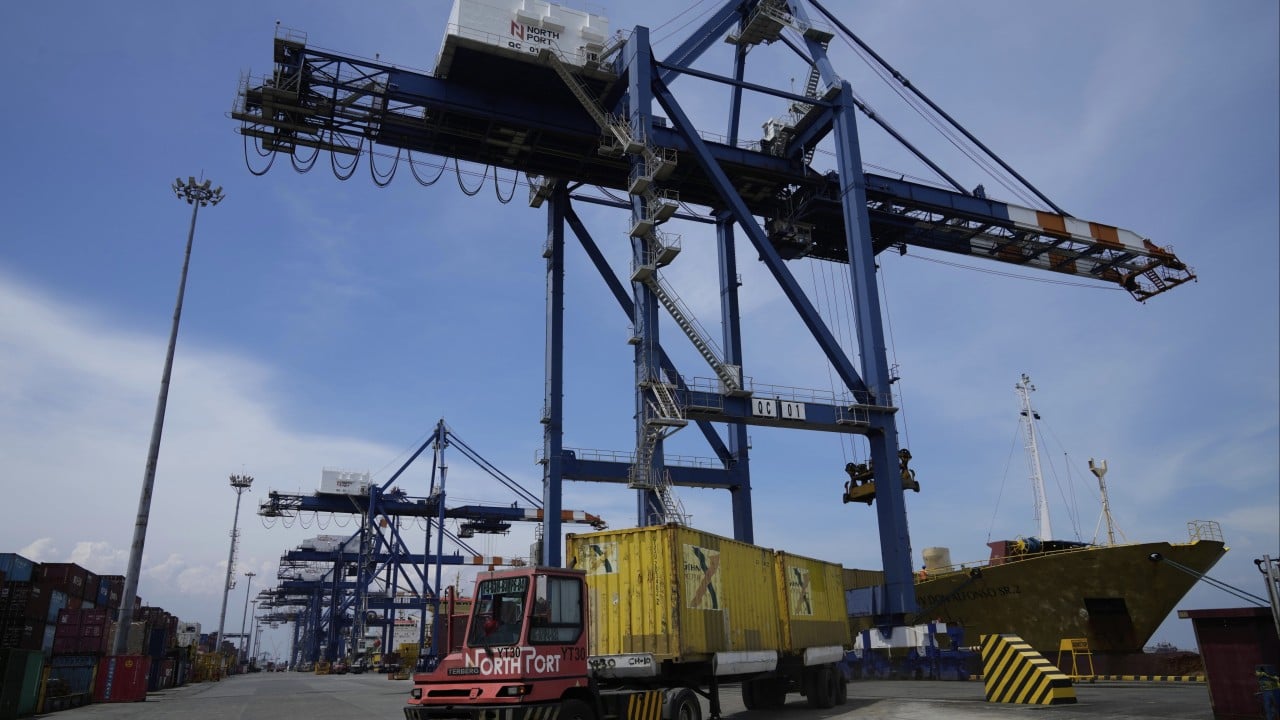
The humidity in the central plains of Luzon doesn't just sit on your skin; it weight-presses the air until every breath feels like a negotiation with the atmosphere. On a Tuesday afternoon in Subic Bay, a crane operator watches the horizon. He isn't looking for weather. He is looking for a shift in the global tectonic plates of trade. Below him, the rusted ghosts of old naval installations are being scrubbed away, replaced by the clinical, gleaming lines of data centers and semiconductor hubs. This is the Luzon Economic Corridor, a strip of land that has suddenly become the most expensive piece of real estate in the democratic world's attempt to rewire the map of the 21st century.
For decades, this region was a footnote. It was the place you drove through to get somewhere else. Now, it is the centerpiece of the "P3I"—the Partnership for Global Infrastructure and Investment. This isn't just a collection of roads. It is a $100 billion bet by the United States, Japan, and the G7 to prove that the West can still build things in the shadow of a rising superpower.
Imagine a Filipino engineer named Mateo. He grew up in the shadow of Mount Pinatubo, watching the ash settle over the fields. For years, the best he could hope for was a contract job in Dubai or a shipping vessel in the Atlantic. He represents the millions of "Global Filipinos" who have powered other nations' economies because their own lacked the spine of infrastructure to support their talent. Today, Mateo isn't looking for a flight out. He is looking at blueprints for a rail line that connects Subic Bay to Clark, and Clark to the Port of Batangas.
This 250-kilometer stretch of land is the new high-stakes poker table of the Indo-Pacific.
The logic is simple. Brutal. Necessary.
Supply chains are the nervous system of modern life. When a single choke point in the Taiwan Strait or the South China Sea flinches, a car factory in Michigan shuts down and a hospital in Berlin runs out of specialized sensors. The Luzon Economic Corridor is designed to be the bypass surgery for a clogged global heart. By pumping billions into a "high-velocity" logistics hub in the Philippines, the West is creating a safe harbor for the manufacturing of chips, clean energy components, and the hardware that makes artificial intelligence possible.
The money isn't just coming from government coffers. It is a coordinated blitz of private equity and state-backed loans. The United States is bringing the tech and the security guarantees. Japan is bringing the precision rail expertise and the historical deep-pockets of its development agencies. The Philippines provides the soil, the soul, and the strategic location that makes every naval strategist in the Pentagon lose sleep.
But let’s be honest about the friction.
Infrastructure is messy. It is loud. It displaces people. In the boardrooms of Manila and Washington, the talk is about "intermodality" and "agrivoltaics." On the ground, it's about a farmer wondering if the new high-speed rail will slice his ancestral rice paddy in half. It’s about the local fisherman seeing the massive dredging ships in the bay and wondering if the grouper will ever come back.
The tension here is palpable because the stakes aren't just economic. They are existential.
If the Luzon Corridor succeeds, it becomes the blueprint for how the G7 competes with China’s Belt and Road Initiative. It proves that democratic investment can be transparent, high-standard, and—crucially—finished on time. If it fails, it becomes another "white elephant" in a country that has seen too many grand promises crumble into the sea.
Consider the Clark Freeport Zone. Not long ago, it was a sprawling American airbase. Today, it is a surreal mimicry of a futuristic city-state. It has its own laws, its own tax breaks, and its own atmosphere. When you walk through the newly minted tech parks, you hear a symphony of languages—Tagalog, English, Japanese, and the clipped tones of American venture capitalists. They are all chasing the same ghost: the "China Plus One" strategy.
Companies are desperate to find a second home for their factories so they aren't entirely dependent on the mainland. Vietnam is getting full. Thailand is complicated. The Philippines, with its young, English-speaking, tech-savvy workforce, is the logical successor. But a workforce needs electricity. It needs water. It needs a way to get a shipping container from a factory floor to a boat in under four hours.
Currently, Manila’s traffic is a legendary, soul-crushing beast. It is a logistical heart attack. The Luzon Corridor is the stent.
The shift is visible in the hardware being unloaded at the ports. We are seeing a move away from low-value garments and toward high-value silicon. The U.S. Commerce Department didn't just send a memo; they sent a "Presidential Trade and Investment Mission." This is the highest level of diplomatic muscle-flexing available. They are promising to turn the Philippines into a semiconductor powerhouse, doubling the number of packaging and testing facilities in the next decade.
Why does this matter to someone living in London or New York?
Because your next smartphone might depend on whether or not a bridge in Bulacan is finished by 2027. We are moving into an era of "friend-shoring," where we buy our critical tech from people we trust. The Philippines is the testing ground for this theory. It is the first "P3I" corridor in the Indo-Pacific, a signal to every other nation in the region that there is an alternative to the debt-trap diplomacy they have been offered for the last twenty years.
The human element, however, is where the narrative either thrives or dies.
Mateo, our engineer, doesn't care about the G7's geopolitical chess match. He cares about the fact that his commute has dropped from four hours to forty-five minutes. He cares that his daughter can go to a specialized STEM school funded by a Japanese grant. He cares that for the first time in three generations, his family doesn't have to send a son or daughter across the ocean to find a dignity-sustaining wage.
But there is a shadow in the room.
The Philippine government is walking a razor-thin wire. They are welcoming American investment with one hand while trying not to completely alienate the superpower to their north with the other. It is a dance of necessity. Every new pier built in Subic Bay is seen as a provocation by some and a salvation by others. The "invisible stakes" are the potential for this economic hub to become a military target if the cold war in the Pacific ever turns hot.
We are watching the construction of a fortress, but one made of fiber-optic cables and cold-storage warehouses instead of concrete bunkers.
The skepticism is healthy. We’ve seen "hubs" promised before. We’ve seen the grand renderings of "Green Cities" that end up as empty parking lots. The difference this time is the sheer desperation of the Western powers. They need this to work. They need a win. They need to show that their brand of capitalism can still move dirt and pour foundations faster than an autocracy can.
As the sun sets over the Zambales Mountains, the lights of the Clark International Airport flicker on. It is a beautiful, terrifying sight. It represents a total transformation of the landscape, a reconfiguration of the lives of millions. The mountains haven't changed, but the world around them has become unrecognizable.
The corridor is more than a road. It is a confession. It is the West admitting they stayed away too long, and now they are trying to buy back their influence with every bag of cement and every mile of cable.
In the end, the success of the Luzon Economic Corridor won't be measured by the GDP growth of the Philippines or the quarterly earnings of a tech giant in Santa Clara. It will be measured by the silence in the Manila airport—the lack of crying families saying goodbye to another "Overseas Filipino Worker" leaving for a better life. When the jobs stay home, the nation heals. When the ships come to Luzon, the world stays connected.
The gamble is massive. The odds are long. But on the ground in Batangas, as the first of the new smart-grid sensors is bolted into place, you can feel the vibration of something moving. It isn't an earthquake. It's the sound of the future being built, one steel beam at a time, in a place that refused to be forgotten.