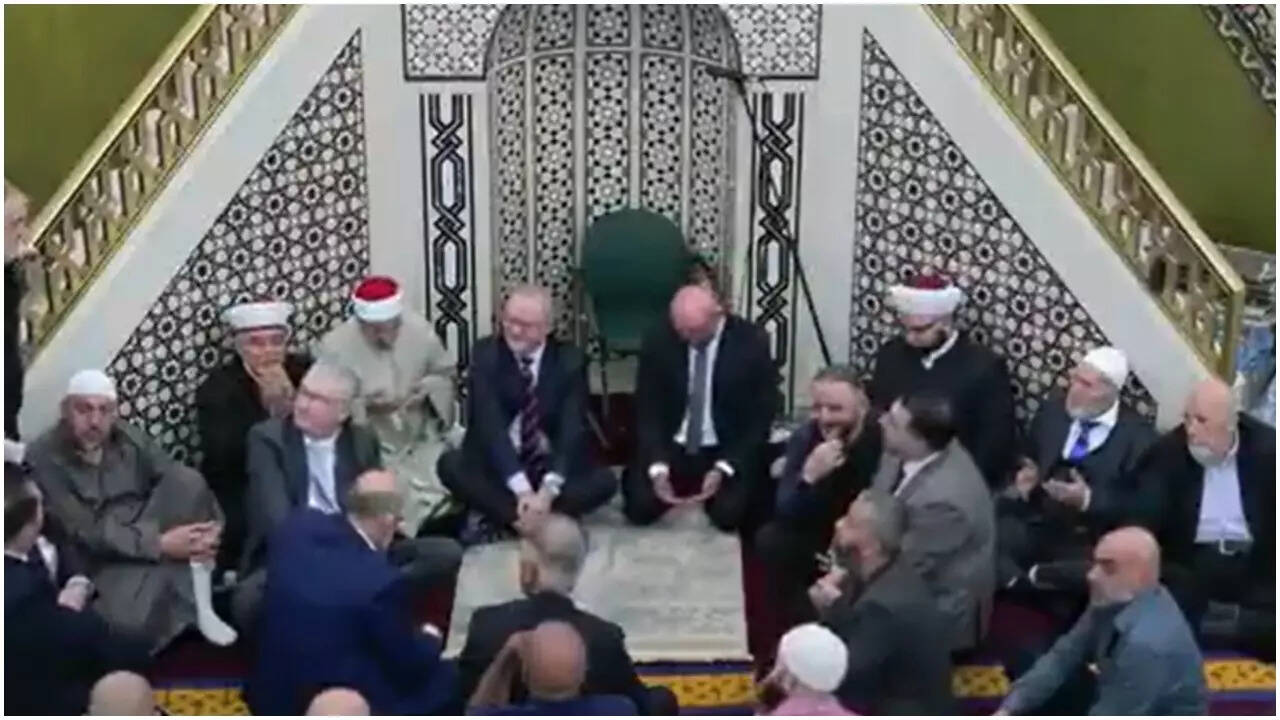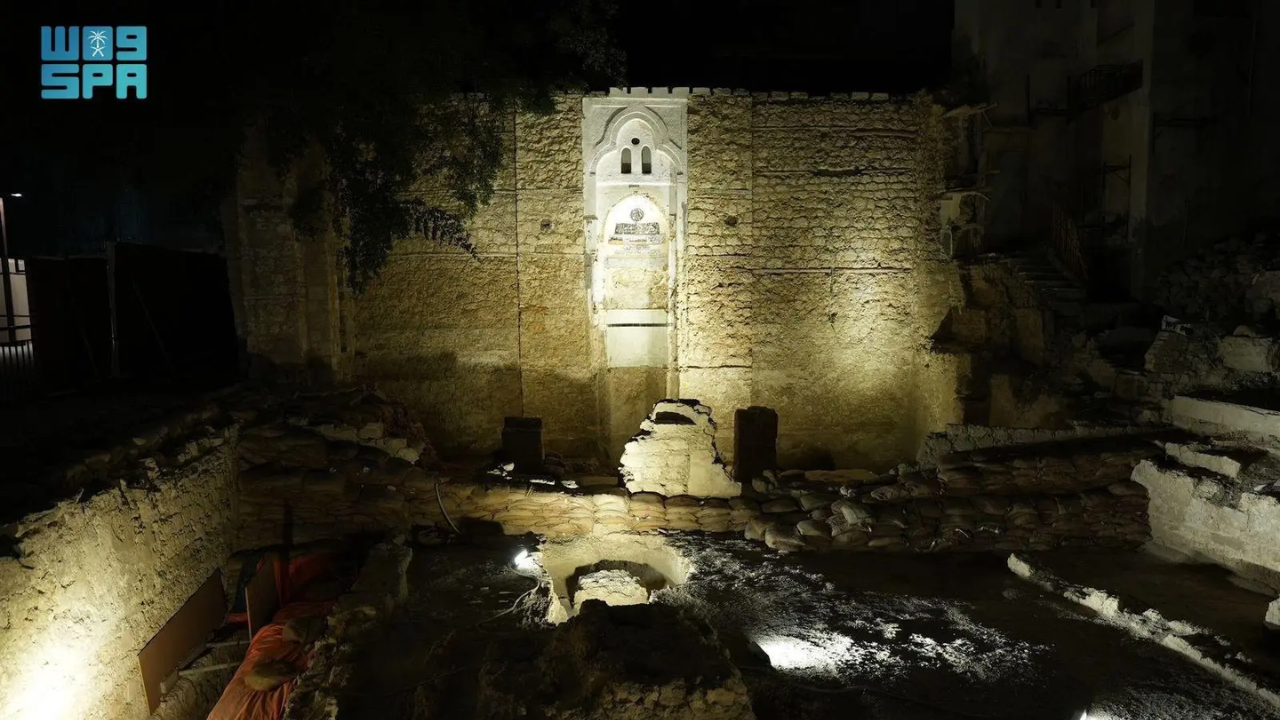
The architectural evolution of the Othman bin Affan Mosque in Jeddah serves as a physical ledger of Islamic urban development from the Rashidun Caliphate to the present day. To view this site merely as a place of worship is to ignore its function as a primary data point in the structural history of the Hejaz. The recent archaeological excavations, part of the Jeddah Historical District Program, reveal a site that has undergone continuous adaptation, reflecting shifts in maritime trade, construction technology, and the administrative priorities of successive empires. Understanding the significance of this mosque requires a granular examination of its subterranean layers, which provide a 1,300-year timeline of human settlement.
The Stratigraphic Hierarchy of Al-Balad
The mosque represents a vertical compression of history. Archaeological findings indicate that the site was not a static monument but a living structure that responded to the environmental and economic pressures of its era. The transition from the early Islamic period to the modern Saudi state is marked by three distinct phases of material culture.
- The Foundational Phase (1st–2nd Century AH): Early structures utilized local coralline stone (kashabi) and mud mortar. This period reflects the initial urban expansion of Jeddah under Caliph Othman bin Affan, who designated it as the primary port for Makkah in 646 CE.
- The Abbasid and Mamluk Overlay: The presence of high-quality ceramics and imported pottery suggests a period of heightened economic connectivity. During this time, the mosque underwent significant structural reinforcement to accommodate a growing pilgrim population.
- The Ottoman Refinement: This layer introduces sophisticated drainage systems and the integration of ornate woodwork (Roshan), aligning the mosque with the aesthetic and functional standards of 18th and 19th-century Red Sea architecture.
The core significance of the site lies in its "occupational persistence." While many historical sites are abandoned or repurposed for secular use, the Othman bin Affan Mosque has maintained its primary function for over thirteen centuries. This continuity creates a unique challenge for conservators: balancing the need for modern utility with the preservation of fragile archaeological strata.
Materiality and the Economics of Red Sea Construction
The mosque's durability is a result of a specific engineering response to the Red Sea's humid, saline environment. Unlike the mud-brick architecture of the Najd region, the architects of Jeddah utilized "Manqabi" stone—porous coral harvested from the seabed.
This material choice was not merely aesthetic but a calculated response to the thermal mass requirements of the region. The coral stone's porosity allowed the walls to "breathe," regulating internal temperatures during the extreme heat of the Arabian summer. The structural integrity was further enhanced by the use of "Takalil"—horizontal wooden beams embedded within the masonry. These beams acted as tension members, providing the flexibility necessary to withstand seismic tremors and the shifting of the coastal soil.
The archaeological team's discovery of Ming Dynasty porcelain and Abbasid-era glazed ceramics within the mosque's vicinity identifies the site as a nexus of the Indian Ocean trade network. These artifacts serve as proxy data for the wealth of the mosque’s patrons. The ability to import luxury goods from as far as China indicates that the religious institutions of Jeddah were central to a globalized economy long before the modern era.
Hydrological Management as a Catalyst for Urban Growth
The mosque's location within the Al-Balad district was dictated by the availability of water. Excavations have revealed an intricate network of cisterns and subterranean channels (Dahl) designed to capture and store seasonal rainfall. The mosque served as a critical node in this hydrological system.
The presence of a sophisticated ablution (Wudu) area dating back centuries highlights a significant engineering achievement. The transition from simple groundwater wells to integrated catchment systems signifies a move toward centralized urban planning. The mosque was not an isolated building; it was the heart of a "civilizational cell" that included markets (Souks), residential quarters, and water distribution points.
The archaeological record shows that when the hydrological infrastructure failed or became contaminated, the surrounding urban fabric suffered. Thus, the mosque’s maintenance was synonymous with the city’s survival. The recent restoration efforts are effectively an attempt to restart these ancient systems, ensuring that the moisture levels in the ground do not compromise the foundational coral stone.
The Structural Mechanics of Restoration
The Jeddah Historical District Program utilizes a methodology that prioritizes "reversibility" and "material compatibility." Modern restoration often fails because of the introduction of non-porous materials like Portland cement, which traps moisture and accelerates the decay of traditional coral stone.
The current strategy involves:
- Desalination of Masonry: Removing accumulated salts from the coral stone to prevent "efflorescence," which leads to structural crumbling.
- Traditional Lime Mortar Injection: Using lime-based mixtures that match the original thermal expansion coefficients of the 1,300-year-old walls.
- Structural Underpinning: Carefully reinforcing the foundations without disturbing the lower archaeological layers that contain Umayyad and Abbasid artifacts.
This approach acknowledges that the mosque is a "living fossil." Every intervention must be documented to allow future generations of archaeologists to distinguish between the original 7th-century footprint and the 21st-century conservation efforts.
Logical Constraints and Preservation Gaps
While the mosque is a triumph of historical continuity, the analysis of its history is limited by the "destruction of evidence" inherent in continuous use. Because the site was constantly renovated, much of the early Rashidun-era timber and organic material has been lost to time or replaced during the Mamluk and Ottoman periods.
Researchers must rely on "comparative typology"—comparing the mosque's layout to other early Islamic sites like the Mosque of Amr ibn al-As in Egypt—to hypothesize about its original 7th-century configuration. The lack of primary textual records from the first century AH means that the stones themselves are the only reliable witnesses to the site's earliest years.
Furthermore, the impact of rising sea levels on Al-Balad’s groundwater table poses an existential threat to the mosque’s lower levels. As the salt-heavy water table rises, it threatens to dissolve the very coral foundations that have supported the structure for over a millennium. Preservation is no longer just a matter of aesthetics; it is a battle against the chemistry of salt crystallization.
Strategic Imperatives for the Site’s Longevity
The Othman bin Affan Mosque is the anchor of the wider Jeddah Historical District’s bid for global cultural relevance. For the site to transition from a local place of worship to a world-class historical landmark, the following operational shifts are necessary:
The mosque must be integrated into a "Digital Twin" model of Al-Balad. By using LiDAR and ground-penetrating radar, authorities can monitor structural shifts in real-time, predicting failures before they occur. This data-driven approach moves preservation from a reactive to a predictive model.
The surrounding commercial activities must be strictly regulated to prevent vibrations and pollutants from degrading the fragile coral facades. The economic value of the mosque is not in its capacity for tourists, but in its status as an authentic link to the origins of the Islamic state.
Future excavations must prioritize the recovery of environmental DNA and pollen samples from the lower strata. This data will provide insights into the climatic conditions of the Hejaz during the 7th century, offering a broader context for why Jeddah was chosen as the gateway to the holy cities. The mosque is not just a building; it is a laboratory for understanding the resilience of human architecture in the face of a changing environment.
Would you like me to analyze the specific architectural differences between the Othman bin Affan Mosque and other Rashidun-era mosques in the region?