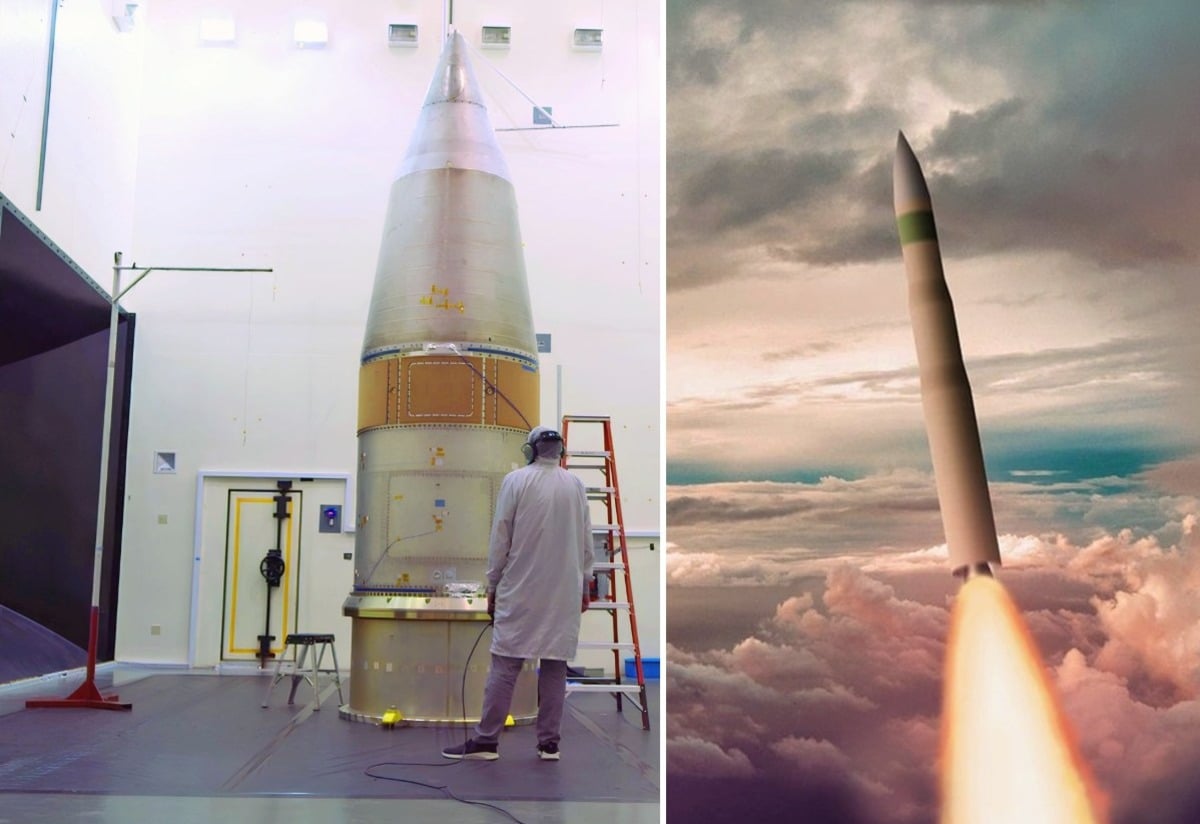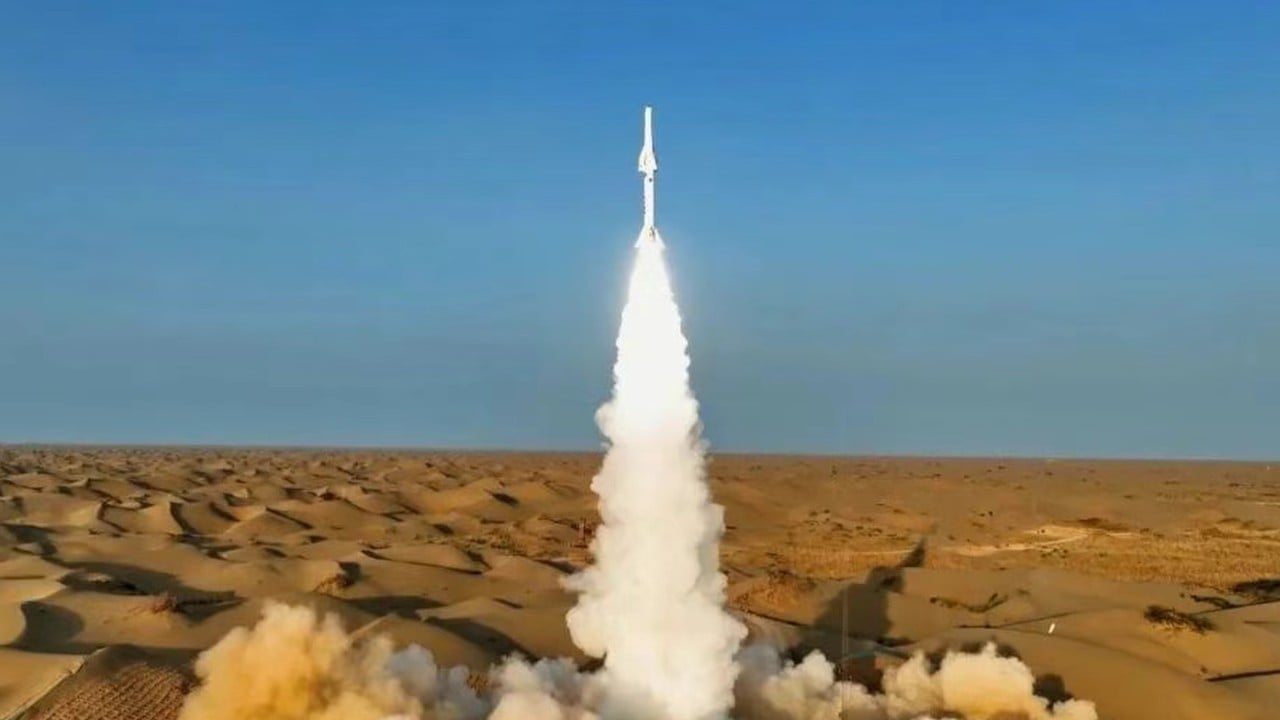
Military headlines love a good science fiction trope. When researchers at Chinas National University of Defence Technology dropped a paper detailing a prototype hypersonic missile that physically changes its shape mid-flight, the internet predictably went into overdrive. The immediate narrative was simple: Beijing built a transformer missile that can dodge any interceptor by twisting like a fighter jet at Mach 5.
But if you look past the breathless reporting, the real engineering story is far more interesting—and much more difficult. For a different look, consider: this related article.
The team, led by Professor Wang Peng, published their work in the peer-reviewed journal Acta Aeronautica et Astronautica Sinica. They revealed a prototype vehicle featuring retractable, morphing wings. When tucked inside, the missile looks like a smooth, low-drag arrowhead designed to scream through the upper atmosphere. When extended, those wings offer the lift and control needed to navigate, change course, and home in on a target.
It sounds brilliant. It is also an absolute nightmare to build. Further insight regarding this has been provided by Ars Technica.
The Physics Infernal of Mach 5
Most people don't realize how violent the hypersonic regime is. Flying at Mach 5 isn't just about going fast; it's about pushing through air that acts like a brick wall. Atmospheric friction at these speeds generates temperatures approaching 3,000°C. That is hot enough to melt standard aerospace titanium, let alone liquidize steel.
When you add moving parts to that equation, you invite catastrophe.
To make a shape-shifting hypersonic ramjet work, you need gaps. The wings have to slide out from the body. In the world of high-speed aerodynamics, those tiny seams are structural death sentences. Superheated air rushing past at five times the speed of sound wants to find every single microscopic crack. If that plasma leaks inside the airframe, it melts the internal electronics and mechanical actuators in milliseconds.
Furthermore, you have the issue of extreme force. Transitioning a wing profile while pulling heavy G-forces under intense thermal stress requires raw mechanical strength. The actuators—the tiny motors moving the wings—have to overcome immense aerodynamic resistance without jamming. If one wing deploys slightly faster than the other due to thermal expansion or mechanical lag, the missile will instantly rip itself apart.
How the Prototype Tries to Defy the Rules
The Chinese research team isn't blind to these limitations. They aren't relying on brute force; they're trying to outsmart the physics. According to the published data, the prototype uses advanced carbon-carbon composites and ultra-high-temperature ceramic matrix materials to shield those dangerous wing seams.
They also threw out old-school mechanical linkages in favor of dynamic control algorithms. Here is how the system handles a typical flight profile:
- The Sprint Phase: The missile launches and climbs into the thin air of the upper atmosphere. The wings remain fully retracted. Minimizing the surface area drops drag to nearly zero, allowing the vehicle to conserve fuel and extend its range past 2,000 kilometers.
- The Morphing Phase: As it nears the target zone, the control system calculates the atmospheric density. Hardware-in-the-loop simulations show the internal electromechanical actuators pushing the wings outward in increments, constantly adjusting to the airflow to prevent aerodynamic snap.
- The Terminal Phase: With wings extended, the missile gains the lift needed for high-g maneuvering. Instead of following a predictable ballistic arc, it can carve an unpredictable path toward its target, making it incredibly tough for traditional radar networks to lock onto a definitive intercept point.
This isn't Chinas first rodeo with high-speed propulsion. Over the last decade, Beijing has funded a massive complex of high-performance wind tunnels, including the massive FD-21 shock tunnel capable of simulating speeds up to Mach 15. They've tested everything from standard scramjets to complex oblique detonation engines that burn aviation kerosene at extreme velocities.
But those are mostly rigid, fixed-geometry systems. Adding a dynamic, moving structure is a massive pivot.
The Gap Between Laboratory and Flight Line
Let's inject some reality into the conversation. This test was a ground bench trial. It happened inside a highly controlled laboratory setting, backed by digital models and static hardware simulations.
There is a massive difference between surviving a simulated aerodynamic load in a wind tunnel and performing a flawless mechanical transition while plummeting through the actual atmosphere. Radio frequency blackouts caused by ionized plasma shields around the nose cone still scramble communications. Nano-lubricants needed to keep the wing gears moving smoothly at thousands of degrees are still largely experimental.
Western defense systems like the SM-6 or naval Aegis networks are already evolving to track high-speed threats by using advanced space-based sensor layers that look down from orbit, tracking the massive heat signatures these vehicles naturally generate. A morphing wing might make a missile shift its path, but it doesn't make it invisible.
Moving Beyond the Lab Stage
If you want to track where this technology is actually going, stop looking at the theoretical physics papers and start looking at the manufacturing bottlenecks. The real test of this concept won't happen in an academic journal.
Keep an eye on regional flight testing spaces in western China over the next twenty-four months. Look for telemetry data indicating long-range cruise missile tests that exhibit sudden, mid-course changes in altitude and deceleration profiles. If Beijing manages to transition this from a laboratory prototype to an open-air flight demonstrator, the theoretical debate over shape-shifting aerodynamics ends, and the real security conversation begins.
China's Latest Hypersonic Breakthrough Explained
This video provides an excellent visual breakdown of the structural engineering hurdles and the unique aerodynamic principles behind morphing high-speed missile designs.