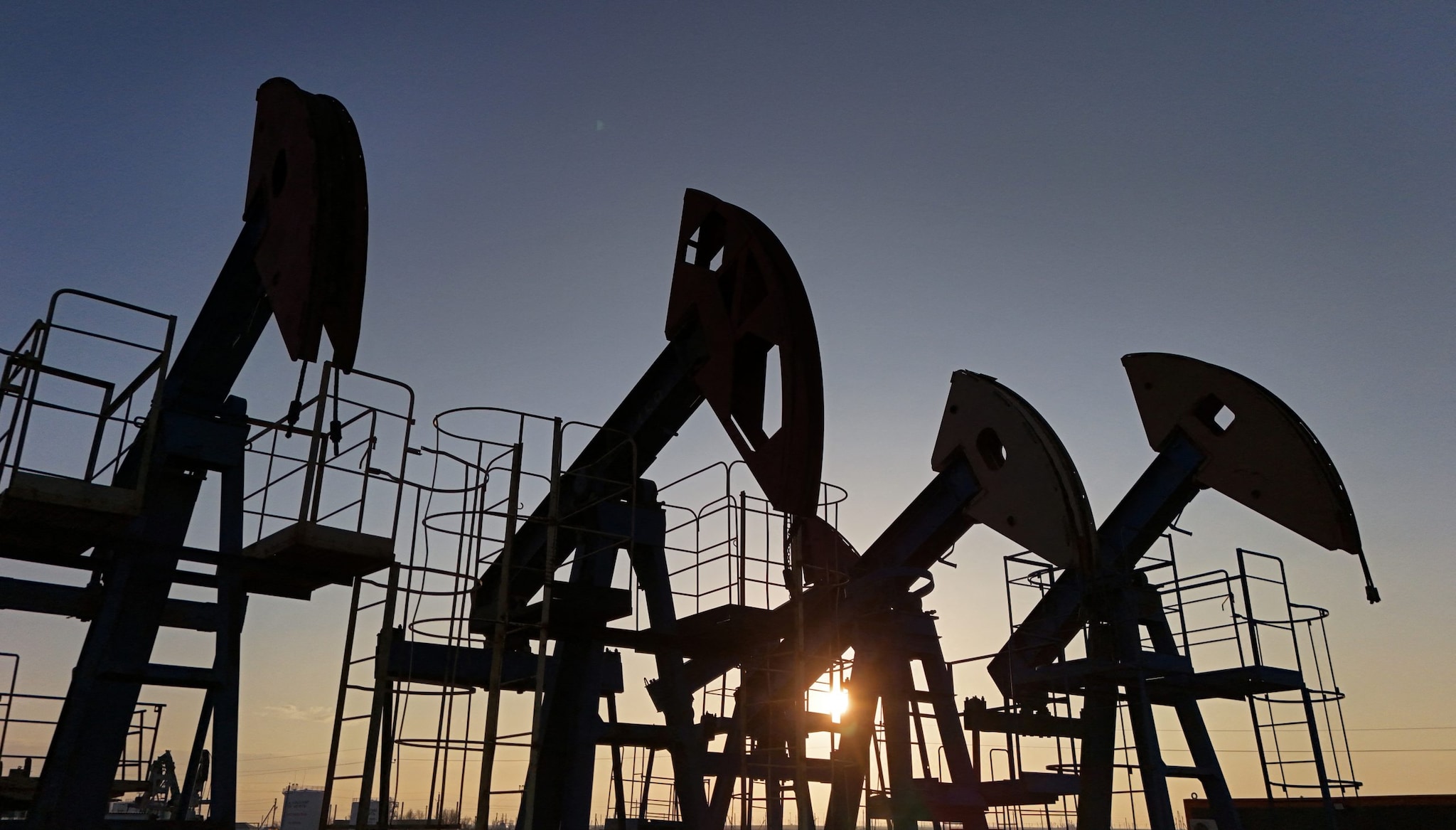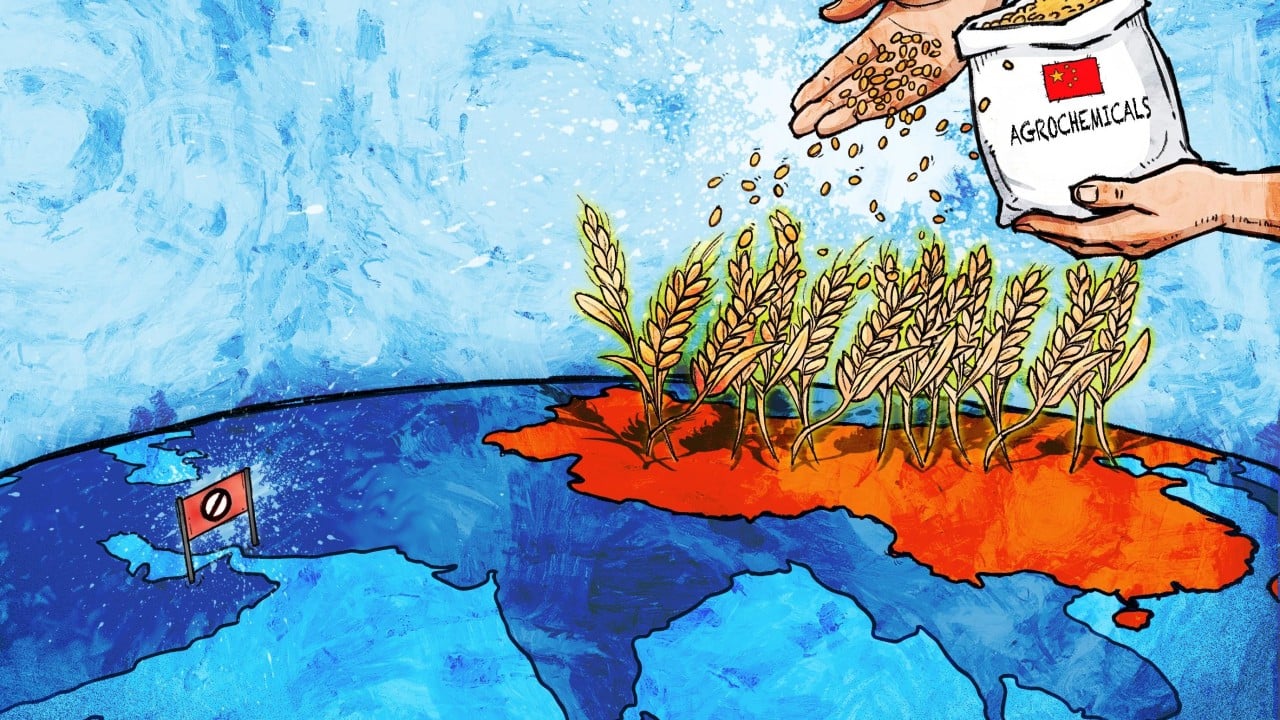
The Middle East is currently a geopolitical minefield, and it's doing more than just rattling oil prices. While most of the world watches the Strait of Hormuz for energy spikes, the real long-term shift is happening in the dirt. Farmers from Malaysia to Brazil are suddenly realizing that their ability to grow food now depends almost entirely on Beijing. It’s not just a supply chain hiccup; it’s a fundamental transfer of power.
Basically, the chaos in the Middle East has handed China a massive strategic advantage in the agrochemical sector. China already controls about 70% of the world’s production capacity for raw materials used in chemical pesticides. Combine that with their 30% share of global fertilizer production, and you have a monopoly that’s getting stronger as every other door slams shut. Meanwhile, you can find related events here: The Gavel Falls in the Quiet Room.
The Chokepoint Trap
When the Strait of Hormuz effectively closed earlier this year after the strikes on Iran, it didn’t just stop tankers. It paralyzed a third of the world's seaborne fertilizer trade. The Middle East is a nitrogen powerhouse because it has the natural gas to make it. But if you can't ship urea or ammonia out of the Gulf, that production capacity might as well not exist.
China saw this coming. They’ve spent the last two years "priority-masking"—shoring up their own domestic supply while everyone else scrambled. In early 2026, while fertilizer prices jumped 18% globally, Chinese farmers were reportedly paying significantly less than the international market rate. Beijing didn't just protect its own; it weaponized its export restrictions to ensure its domestic food security while the rest of the world’s agricultural costs went through the roof. To see the bigger picture, check out the detailed report by CNBC.
Why the West Can't Catch Up
You might wonder why Western companies don't just ramp up production. Honestly, they can't. The infrastructure for "upstream" agricultural inputs—the raw chemicals needed to make the actual pesticides and fertilizers—is heavily concentrated in Chinese industrial hubs. Western firms have spent decades outsourcing the "dirty" part of chemical manufacturing to Asia to keep their own margins high and their local environmentalists happy.
Now, that chickens-coming-home-to-roost moment is here. When a conflict breaks out in the Middle East, shipping costs skyrocket. Vessels rerouting around the Cape of Good Hope add 12 to 20 days to a journey. For a farmer in Europe or South Asia, that’s the difference between planting on time and missing a season. China’s proximity to key Asian markets and its controlled land-based logistics mean it doesn't just offer products; it offers a level of certainty that no one else can match right now.
The Strategy of Fertiliser Diplomacy
It’s not just about who has the most urea. It’s about how they use it. Beijing is playing a clever game of "fertilizer diplomacy." By selectively loosening or tightening export quotas, they can stabilize or destabilize the economies of their neighbors.
Look at Malaysia. In March 2026, rice farmers faced a massive harvest threat because urea prices spiked 50%. Why? Because Chinese export curbs hit the market at the same time Middle Eastern supplies were trapped behind naval blockades. This isn't an accident. It’s a demonstration of leverage. China is showing the Global South that while the U.S. and Europe offer military alliances, Beijing offers the chemicals you need to keep your people fed.
Adama and the New Corporate Reality
The corporate side of this is even more telling. Look at ADAMA and Syngenta Group. ADAMA, an Israeli-founded company now owned by China’s Sinochem, is the perfect example of this shift. Despite the turmoil in its founding region, ADAMA has been pivoting its portfolio toward higher-margin products and leveraging Chinese manufacturing to keep costs down.
While Western competitors struggle with high energy costs in Europe and logistics nightmares in the Red Sea, these "Chinese-backed" giants are reporting improved EBITDA margins. They're optimizing their geographical presence to avoid the mess while using China’s overcapacity in active ingredients to price out the competition. It’s a pincer movement: control the raw materials at the source and the distribution networks in the field.
What Happens When the Smoke Clears
Don't expect things to go back to "normal" if the Middle East stabilizes. The restructuring of the agrochemical trade is already baked in.
- Inventory is the new king. The just-in-time model for agricultural inputs is dead. If you aren't stockpiling six months of chemicals, you're one drone strike away from bankruptcy.
- Diversification is a myth. You can try to source from elsewhere, but when 70% of the raw materials come from one place, you're just buying Chinese chemicals with a different label.
- Food security is national security. Governments are starting to treat pesticide and fertilizer plants with the same level of protection as semiconductor fabs.
If you’re a distributor or a large-scale grower, you need to stop thinking about price and start thinking about origin. Moving your supply chain away from the Middle East chokepoints is a start, but if your alternative is simply "whatever is cheapest," you're likely just deepening your dependence on Beijing. Start vetting secondary suppliers in South America or Southeast Asia, even if they're 10% more expensive. That premium is basically an insurance policy against the next time the Strait of Hormuz shuts down.