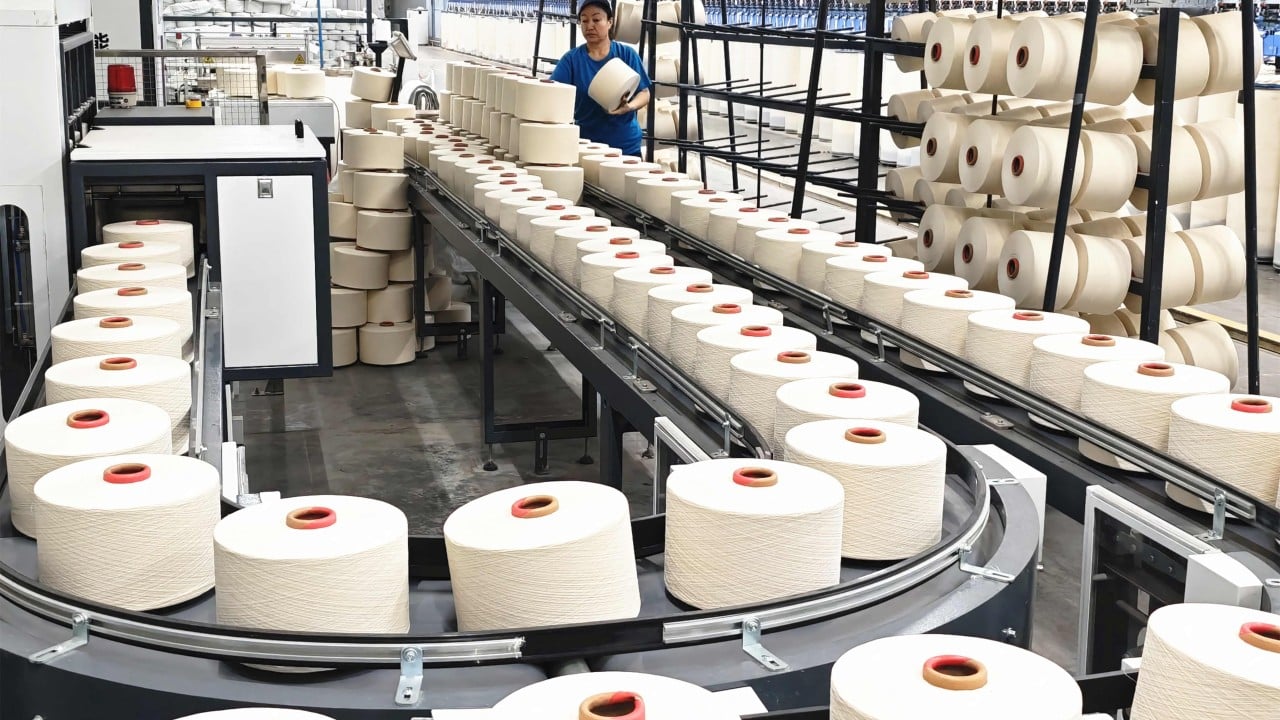
The traditional economic relationship between China and Uruguay, long defined by the simple exchange of protein for capital, is undergoing a structural phase shift. While beef remains the primary trade volume driver, a series of bilateral agreements in 2024 and 2025 have pivoted toward a "co-dependency of innovation." This move seeks to hedge against the volatility of the global commodities market by embedding Chinese high-tech infrastructure into Uruguay’s agricultural and medical sectors. The strategic objective is clear: Uruguay serves as a sophisticated, manageable sandbox for Chinese biotechnology and robotics, while China secures a reliable partner for testing and scaling food security solutions and oncological research outside of a congested domestic regulatory environment.
The Tri-Pillar Framework of the New Bilateralism
The transition from a raw-material provider to a strategic technology partner rests on three distinct pillars. Each represents a move away from simple trade into deeply integrated scientific cooperation.
1. The Genetic Security Architecture
The establishment of joint laboratories focused on bovine and ovine genetics is not merely about increasing meat yield. It is an exercise in securing the global protein supply chain against climate-induced shocks. By mapping the genomes of climate-resilient breeds, the partnership targets the metabolic efficiency of livestock.
The mechanism at play here is the reduction of the carbon-to-protein ratio. China provides the computational power and CRISPR-based gene-editing expertise, while Uruguay provides the controlled, high-quality biological data from its national traceability system—a database that tracks 100% of its cattle from birth to slaughter. This data allows for the precise identification of genetic markers linked to disease resistance and low-methane emissions.
2. Oncological and Nuclear Medicine Convergence
The collaboration between the Uruguayan Center for Molecular Imaging (CUDIM) and Chinese medical institutes represents a shift into high-margin service exports. The focus is on PET/CT imaging and the development of new radiopharmaceuticals for early cancer detection.
The logic of this pillar is based on demographic alignment. Both nations face aging populations and a rising incidence of non-communicable diseases. By co-developing isotopes and imaging protocols, they bypass the high costs of Western-proprietary medical tech. The "China-Uruguay Laboratory for Molecular Medicine" serves as a bridge for Chinese medical device manufacturers to gain regulatory footholds in the MERCOSUR region through Uruguayan certification.
3. Robotic Autonomy in Extensive Farming
The third pillar addresses the labor shortage in rural Uruguay and the need for precision in Chinese large-scale farming. The integration of Chinese-made autonomous drones and soil-analysis robots into Uruguayan estancias provides a real-world testing ground for "Agri-Tech 4.0."
This involves the deployment of:
- Swarm Intelligence: Drones that communicate to map pest outbreaks in real-time.
- Automated Intervention: Ground-based robotics that apply targeted pesticides or fertilizers, reducing chemical runoff by an estimated 30-40%.
- Satellite Synchronization: Using the BeiDou Navigation Satellite System to ensure high-precision positioning in areas where GPS signals may be inconsistent.
The Cost Function of Pathogen Mitigation
The joint effort to combat the screwworm fly (Cochliomyia hominivorax) illustrates the application of the Sterile Insect Technique (SIT). This is not just a pest control project; it is a calculation of economic loss prevention. The screwworm costs the Uruguayan livestock sector upwards of $40 million annually in direct mortality and treatment costs.
The strategic mechanism involves:
- Mass Rearing: Chinese investment in bio-factories capable of producing millions of sterile male flies.
- Gamma Irradiation: Utilizing Chinese nuclear technology to sterilize the pupae without affecting their competitive fitness in the wild.
- Dispersal Modeling: Using AI-driven wind pattern analysis to determine optimal release points, ensuring the sterile population overwhelms the wild population.
The failure of previous regional attempts at eradication stemmed from a lack of consistent funding and technological precision. By integrating Chinese capital and hardware, Uruguay shifts the SIT from a theoretical solution to a scalable industrial operation.
Structural Bottlenecks and Geopolitical Friction
The success of this bio-tech pivot is not guaranteed. Several friction points exist that could stall the integration.
Regulatory Asymmetry
China and Uruguay operate under vastly different data privacy and intellectual property (IP) frameworks. Uruguay, as a member of various Western-aligned trade groups, must navigate stringent IP protections that often clash with China’s more fluid approach to technology transfer. The "Joint Innovation Center" model is an attempt to create a legal "gray zone" where shared IP can be developed without triggering international disputes, yet the risk of "technology leakage" remains a concern for Uruguayan stakeholders who value their status in European markets.
The MERCOSUR Constraint
Uruguay’s push for a bilateral Free Trade Agreement (FTA) with China creates a direct conflict with the MERCOSUR customs union, specifically with Brazil and Argentina. These neighbors fear that Uruguay will become a "backdoor" for cheap Chinese high-tech goods, undermining domestic industries. If Brazil chooses to retaliate through border closures or tariffs, the economic gains from the China-Uruguay tech partnership could be neutralized by the loss of regional market access.
Quantitative Projections of the Protein-Tech Hybrid
Standard trade metrics fail to capture the value of this relationship because they only track the movement of physical goods. To measure the true impact, one must look at the "Innovation Yield"—the percentage of Uruguayan GDP derived from co-developed intellectual property.
Current estimates suggest that by 2030, the integration of Chinese agricultural robotics could increase Uruguay’s total factor productivity (TFP) in the livestock sector by 12%. Simultaneously, the joint development of radiopharmaceuticals could reduce Uruguay’s medical import bill by 15%, while providing China with a stable export market for its growing medical technology sector.
The Strategic Play for 2026 and Beyond
The next phase of this partnership will likely involve the "Digital Twin" modeling of the entire Uruguayan agricultural ecosystem. By creating a virtual replica of the country's land use, water resources, and livestock movement, Chinese firms can run simulations to predict the impact of various climate scenarios.
For the Uruguayan executive, the priority must be the "Decoupling of Dependencies." While the influx of Chinese tech is beneficial, Uruguay must ensure that the underlying software and hardware architectures are interoperable with global standards. This prevents "vendor lock-in," where the nation becomes a captive market for a single technological ecosystem.
For the Chinese strategist, Uruguay represents the "Entry Point of Least Resistance" into South America. It is a high-trust, low-corruption environment where complex systems can be refined before being pitched to larger, more volatile markets like Brazil or Colombia.
The move beyond beef is not an abandonment of agriculture; it is the transformation of the cow into a data point and the farm into a laboratory. The success of this model will determine if a small nation can successfully trade its biological sovereignty for a seat at the high-tech table.
Establish a sovereign oversight board for the Joint Innovation Centers to audit data flows and ensure that the "Uruguayan Traceability" advantage remains a national asset rather than a shared utility. Prioritize the development of localized software layers on top of imported Chinese hardware to maintain operational autonomy.