GPS isn't as reliable as you think. It's fragile. It’s susceptible to jamming, spoofing, and the simple reality that signals don't reach underground or deep underwater. If the satellites go dark, our modern world stops. This isn't some doomsday script; it's a technical vulnerability that keeps defense researchers awake at night. Now, a team in China says they’ve found the workaround. They’ve developed a specialized crystal that might finally make the "thorium clock" a portable reality. This isn't just another incremental update in timekeeping. It’s a fundamental shift in how we navigate the planet without a single satellite in the sky.
I’m talking about a leap from atomic clocks that lose a second every few hundred million years to nuclear clocks that won't drift by that much in the entire age of the universe. The secret lies in a calcium fluoride crystal doped with thorium-229. If this sounds like dense physics, that's because it is. But the implications are as practical as it gets. If you can keep time this accurately on a small chip, you don't need a satellite to tell you where you are. You just need to know where you started and exactly how much time has passed.
Why the World Is Obsessed With Thorium-229
Most atomic clocks today rely on electrons. They measure the energy jumps of electrons around an atom's nucleus, usually cesium or strontium. It’s a solid system, but electrons are flighty. They’re easily bothered by stray electromagnetic fields or temperature swings. You have to shield them in massive, power-hungry setups that aren't exactly "pocket-sized."
Thorium-229 is different. It’s the only isotope we know of that has a nuclear transition energy low enough to be poked by a laser. Instead of measuring electrons, we're looking at the nucleus itself. The nucleus is tiny and incredibly well-shielded by those same electrons that usually cause us trouble. This makes a nuclear clock inherently tougher and potentially much smaller.
The team at the Chinese Academy of Sciences (CAS) didn't just theorize this. They grew a high-quality crystal that holds these thorium atoms in a stable lattice. This is the "pavement" for the road to GPS-free navigation. By embedding thorium in a solid crystal, you bypass the need to trap individual atoms in a vacuum using lasers and magnets. You’ve basically turned a complex laboratory experiment into a solid-state device.
The Crystal Breakthrough Nobody Saw Coming
Growing these crystals isn't like growing rock candy in a kitchen. You’re dealing with radioactive isotopes and a need for purity that borders on the impossible. Any impurity in the calcium fluoride lattice would create "noise" that drowns out the thorium signal.
The Chinese researchers achieved a level of transparency and dopant consistency that makes the nuclear transition observable. This is a massive win. Before this, the search for the exact "resonant frequency" of thorium-229 was like looking for a specific grain of sand on a beach using a telescope from orbit. In 2024, European researchers at CERN and TU Wien finally narrowed down that frequency. Now, the CAS team has built the hardware to actually use it.
- Stability: The crystal lattice protects the thorium nuclei from outside interference.
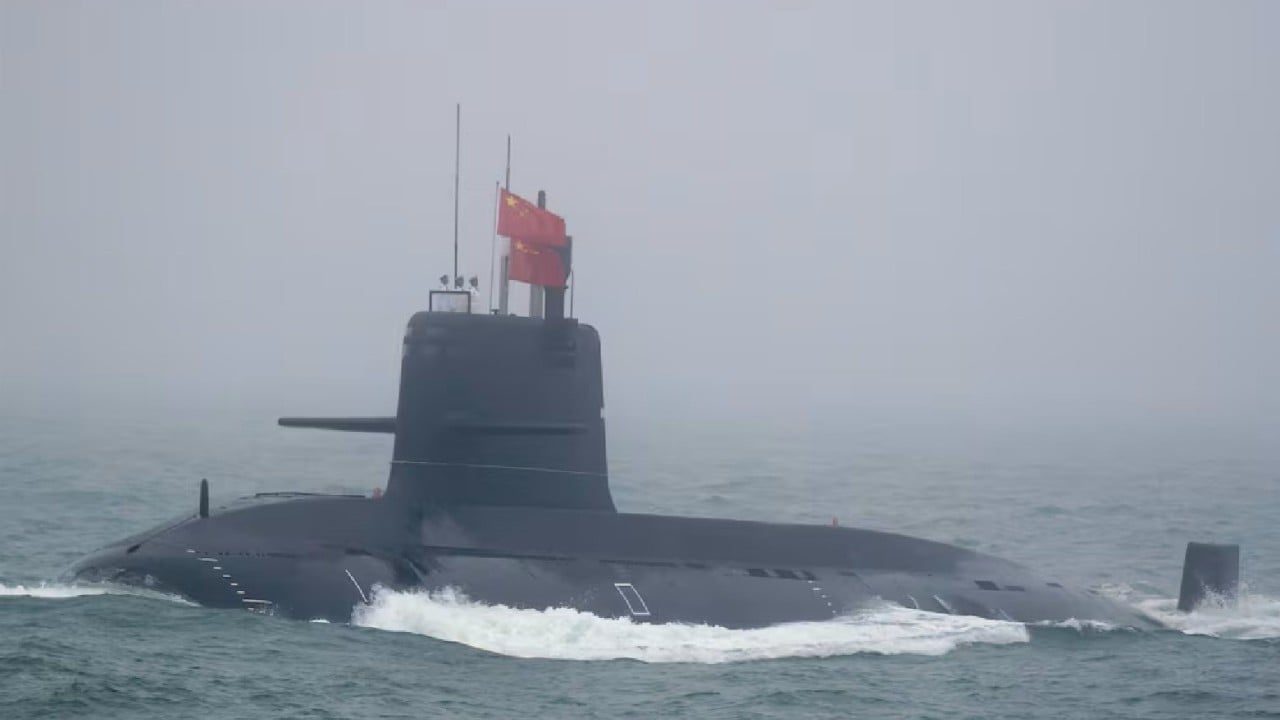
- Portability: No vacuum chambers mean these could eventually fit on a submarine or a missile.
- Precision: We’re looking at a 10-fold or 100-fold increase in accuracy over current atomic standards.
If you’re running a military operation or a deep-sea mining bot, you can't afford to lose your way because a solar flare knocked out a satellite link. With a thorium clock on board, the vehicle calculates its position through dead reckoning with such precision that the error margin stays within centimeters over weeks of travel.
China Is Not Working in a Vacuum
Don't think the US or Europe are sitting this one out. The race for the first functional nuclear clock is the new space race. The European Research Council has poured millions into projects like "ThoriumClock." However, the Chinese approach emphasizes the solid-state crystal method, which is arguably the most direct path to a rugged, field-deployable unit.
Some skeptics argue that we're still years away from a "clock-on-a-chip." They aren't wrong. Growing the crystal is step one. Step two is developing the ultra-stable vacuum ultraviolet (VUV) lasers needed to "tick" the clock. These lasers are currently bulky and temperamental. But history shows us that once the material science is solved—which this crystal seems to do—the engineering usually follows fast.
The End of Satellite Dependence
We've become dangerously dependent on the Global Positioning System. It’s not just for Google Maps. It’s for high-frequency trading in the stock market, synchronizing power grids, and keeping cell towers in sync. If a bad actor disables the GPS fleet, the global economy hits a wall.
A thorium-based system offers "sovereign time." It means a nation doesn't need to rely on a constellation of 30+ vulnerable satellites. I’ve seen plenty of "breakthroughs" fizzle out, but this crystal feels different because it solves the stability problem that has plagued nuclear physics for decades.
The precision we’re talking about here is almost scary. $$10^{-19}$$ levels of uncertainty. To put that in perspective, if you started two of these clocks at the moment of the Big Bang, they would differ by less than a second today. That kind of timing allows for "gravity mapping" navigation. Because gravity varies slightly depending on the terrain or minerals beneath you, a clock this sensitive can sense those changes. You navigate by "feeling" the mass of the Earth, not by looking at the sky.
What This Means for You Right Now
You won't have a thorium clock in your iPhone 18. The immediate applications are strictly high-level: naval vessels, autonomous long-range drones, and national time standards. But the "trickle-down" effect in tech is real.
Think about the first atomic clocks. They were the size of a room. Now, a chip-scale atomic clock (CSAC) is the size of a postage stamp. The thorium crystal is the starting gun for that same miniaturization cycle. If you're an investor or a tech strategist, keep your eyes on companies specializing in VUV lasers and synthetic crystal growth. Those are the bottlenecks that will determine who actually wins this race.
China’s progress here isn't just a scientific paper. It’s a statement of intent. They’re building a world where the US-controlled GPS network is an optional luxury, not a mandatory requirement. That’s a massive geopolitical shift disguised as a physics experiment.
Stop waiting for the next GPS update and start looking at the ground. The future of knowing where we are depends on a tiny, lab-grown crystal and the nucleus of a radioactive metal. If the CAS results hold up under peer scrutiny, the "pavement" isn't just laid—the road is open.
Check the technical specs of recent VUV laser developments if you want to see how close we actually are. The hardware is catching up to the theory at an uncomfortable pace. Stay updated on the International Bureau of Weights and Measures (BIPM) reports; they’ll be the ones to officially signal when the world’s definition of a "second" changes forever.