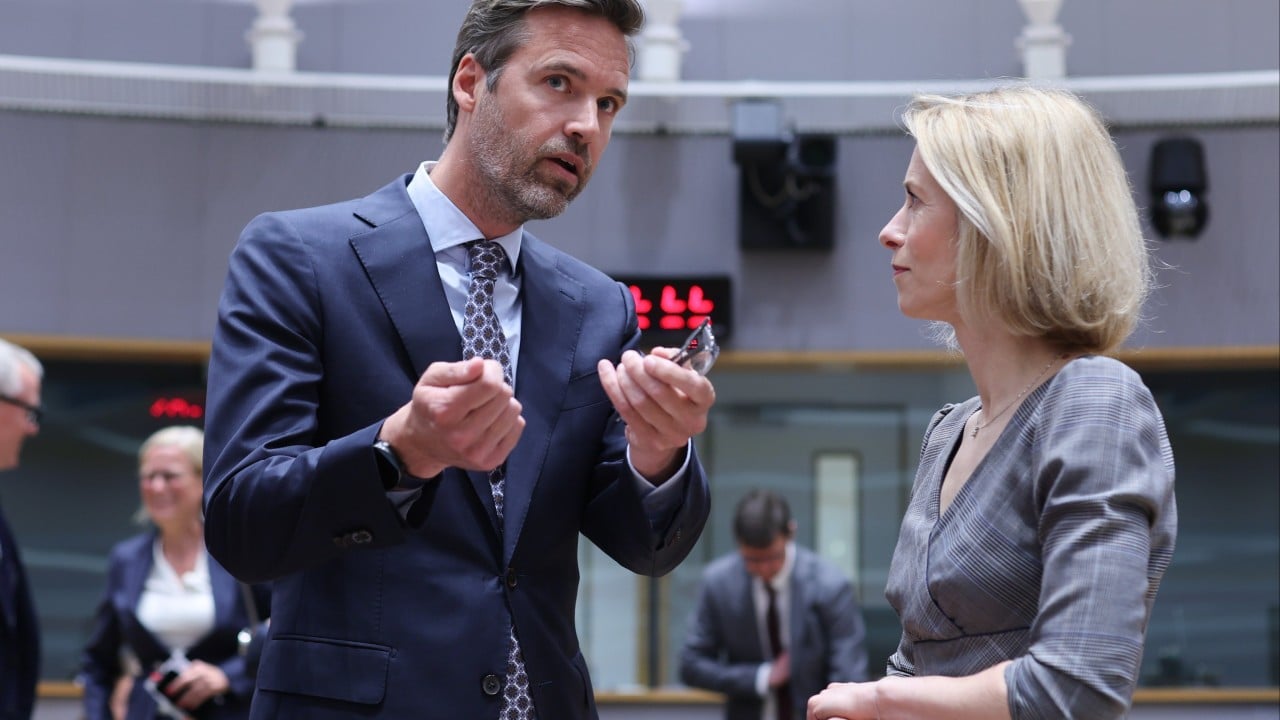
Geopolitics usually follows a strict script, but right now, the playbook is being thrown out the window. Beijing is planning to host Dutch Trade Minister Sjoerd Sjoerdsma for high-level economic consultations in early July. On paper, this meeting shouldn't even be happening. Beijing officially placed Sjoerdsma on a diplomatic blacklist back in 2021.
The move isn't a sudden burst of diplomatic generosity from China. It's cold, calculated economic pragmatism. Beijing needs something that only the Netherlands can provide, and they're willing to ignore their own sanctions to get it. For businesses navigating the increasingly fractured global supply chain, this meeting signals a crucial shift in how trade fights will be fought.
The Sanctioned Minister Heading to Beijing
To understand how bizarre this upcoming July meeting is, you have to look at why Sjoerdsma was blacklisted in the first place. In 2021, while serving as a Dutch member of parliament, he didn't mince words. He spearheaded a parliamentary motion explicitly labeling China's treatment of the Uyghur population in Xinjiang as genocide. He also vocalized deep support for Taiwan. Beijing responded the way it always does—by slapping him with visa bans and blocking his financial assets.
Fast forward to today, and Sjoerdsma is running the Dutch trade ministry. When he met Chinese Commerce Minister Wang Wentao on the sidelines of a World Trade Organisation gathering in Cameroon, nobody expected a breakthrough. Instead, the two sides quietly agreed to get back to the negotiating table on Chinese soil.
Sjoerdsma isn't going alone either. He's weaponizing the opportunity by packing a full Dutch trade delegation for the trip. It turns out that being persona non grata matters a lot less when you hold the keys to the world's most critical tech hardware.
Why Beijing Is Willing to Swallow Its Pride
We don't need to guess why China is willing to overlook its own diplomatic bans. It comes down to a single Dutch company: ASML. Based in Veldhoven, ASML maintains an absolute monopoly on the extreme ultraviolet (EUV) lithography machines required to manufacture the advanced microchips that power artificial intelligence, military hardware, and next-generation smartphones.
The US has spent years leaning heavily on the Dutch government to choke off China's access to these machines. The pressure worked. The Dutch government expanded export restrictions, blocking ASML from shipping even its slightly older deep ultraviolet (DUV) lithography systems to Chinese customers. Dutch officials openly defended the blocks, arguing that the gear would inevitably end up in high-value Chinese weapons systems.
Beijing is feeling the squeeze. Its domestic semiconductor breakthrough efforts are hitting a wall without Dutch hardware. By inviting Sjoerdsma to Beijing, China is trying to bypass Washington's influence. They want to cut a direct deal with the Netherlands, dangling the carrot of market access for other Dutch sectors in exchange for a softer stance on tech export controls.
Navigating the Corporate Crossfire
European companies are caught in a brutal double bind, and this July summit highlights the exact tightrope they walk every day. On one side, European Union officials are screaming at businesses to diversify and de-risk. Just days ago, EU industry chief Stephane Sejourne warned that European executives are fundamentally ignoring geopolitical risks, stubbornly relying on single-country supply chains to protect short-term corporate profits.
On the other side, cutting ties with China is easier said than done. Look at what just happened to European automakers. When the EU slapped sanctions on Chinese chip supplier Yangzhou Yangjie Electronic Technology Co for allegedly shipping dual-use tech to Russia, European car brands panicked. They corporate-lobbied Brussels for an immediate exemption, warning that factories would completely run out of stock within weeks.
The corporate reality is messy:
- Dependency is deep: Western supply chains are so intertwined with Chinese manufacturing that sudden decoupling causes immediate operational paralysis.
- National security vs Profit: Governments view trade through a defense lens, while corporations view it through a balance sheet lens.
- Asymmetrical retaliation: China proved its willingness to punch back by blocking exports from companies like Nexperia after the Dutch government seized control of Nexperia's domestic operations.
What Happens When the Delegation Lands
Don't expect a grand public signing ceremony in July that magically fixes the semiconductor war. Sjoerdsma already stated he wants a balanced relationship that protects mutual economic interests while leaving room to openly disagree on human rights and security. That's diplomatic code for "we are going to argue behind closed doors."
For international business leaders, the takeaway here is obvious. Pragmatism beats ideology when the economic stakes are high enough. If China can swallow its pride to host an official who accused them of genocide, your business can find creative ways to maintain crucial trading channels during a geopolitical freeze.
Keep a close eye on the specific corporate players joining Sjoerdsma's delegation in July. The sectors represented will tell you exactly where Europe is trying to secure market access, and where China is willing to compromise to keep its economic engine running. Diversification is still the long-term goal, but for now, everyone is still doing business.