Central banks are currently trapped between the terminal rate of the previous hiking cycle and a secondary inflationary impulse triggered by supply-side volatility in the Middle East. The European Central Bank (ECB) and the Bank of England (BoE) are no longer managing a linear descent toward 2% inflation targets; they are navigating a "trilemma" of stagnant growth, persistent core services inflation, and external energy price shocks. While markets previously priced in aggressive rate cuts for the fiscal year, the structural shift in geopolitical risk necessitates a recalibration of the "higher for longer" consensus.
The Transmission Mechanism of Middle East Instability
The primary threat to Eurozone and UK price stability is not the direct trade volume with the Middle East, but the second-order effects on the energy complex and global logistics. We must decompose this shock into three distinct transmission channels:
- The Hydrocarbon Beta: As the Middle East accounts for approximately one-third of global oil production, any localized conflict introduces a "fear premium" into Brent Crude pricing. For every $10 increase in the price of a barrel of oil, Eurozone inflation typically experiences a 0.1 to 0.2 percentage point increase over a 12-month horizon.
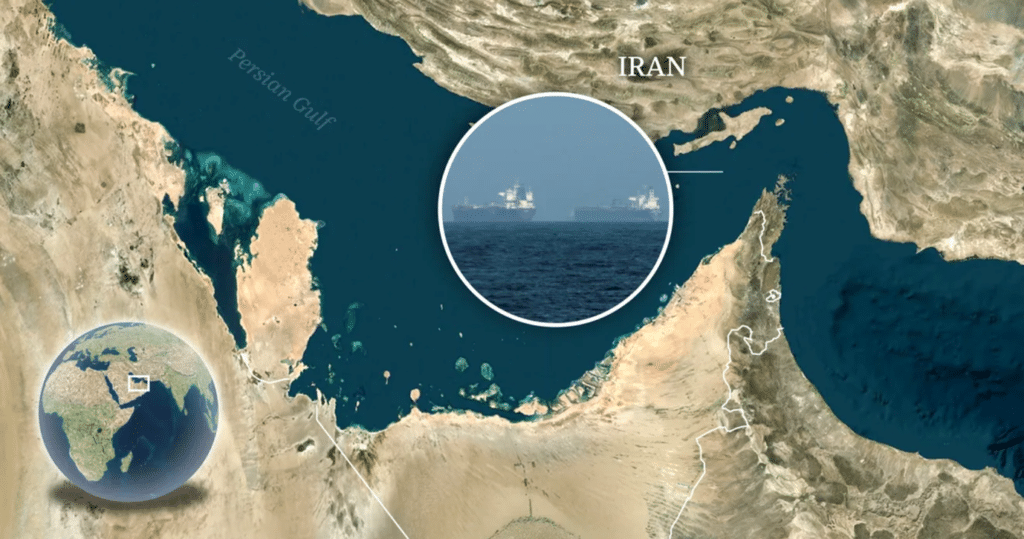
- Maritime Chokepoint Logistics: Disruption in the Suez Canal or the Strait of Hormuz forces a rerouting of cargo around the Cape of Good Hope. This adds 10 to 14 days to transit times, increasing freight costs and tightening global shipping capacity. This is a classic supply-side constraint that monetary policy is notoriously ill-equipped to solve.
- Inflationary Expectations (The Feedback Loop): If households and firms perceive energy shocks as permanent rather than transitory, they adjust wage demands and pricing strategies upward. This de-anchoring of expectations is the specific "shock" the ECB and BoE are signaling against.
The ECB Structural Vulnerability
The ECB operates in a fragmented fiscal environment where the transmission of monetary policy is uneven across member states. The current dilemma for President Christine Lagarde is that the "last mile" of disinflation is proving more resistant than the initial drop from double-digit peaks.
Energy prices in the Eurozone are structurally higher than in the United States due to the loss of cheap Russian pipeline gas. Replacing this with Liquified Natural Gas (LNG) creates a higher price floor. When Middle East tensions rise, the volatility of LNG spot prices correlates more closely with oil than in previous decades. This creates a "ratchet effect" where prices rise quickly on news of conflict but descend slowly during periods of de-escalation.
The ECB’s Governing Council faces a specific trade-off: keeping rates high to suppress domestic demand while the industrial heartland of Europe—specifically Germany—is already in a technical recession or experiencing zero growth. The risk is that by over-correcting for a Middle East energy shock, the ECB triggers a deep credit contraction that outlasts the temporary spike in oil prices.
The Bank of England and the Services Inflation Trap
The BoE faces a more acute version of the "sticky inflation" problem. Unlike the Eurozone, the UK suffers from a unique labor market tightness that has decoupled wage growth from productivity. Governor Andrew Bailey’s hawkish stance is driven by the fear that an energy shock will collide with 6% to 7% nominal wage growth, creating a self-sustaining inflationary spiral.
The UK's economic architecture makes it particularly sensitive to interest rate fluctuations. A significant portion of the UK mortgage market operates on two- to five-year fixed cycles. As these reset, the "monetary drag" on household disposable income increases. The BoE’s warning of further rate rises is less about a desire to hike and more about maintaining a "restrictive" posture to prevent markets from easing financial conditions prematurely.
Quantifying the Cost of Neutrality
Central banks aim for the "neutral rate"—the interest rate that neither stimulates nor restrains the economy. However, the Middle East shock has likely shifted the perceived neutral rate upward. In a world of frequent supply-side shocks, the "r-star" (the real neutral rate of interest) is higher because the economy requires a larger buffer to absorb volatility without sparking inflation.
We can analyze the central bank response through a simplified Taylor Rule variation, where the target rate $i$ is a function of the inflation gap and the output gap:
$$i = r^* + \pi + 0.5(\pi - \pi^) + 0.5(y - y^)$$
In this equation:
- $\pi$ is the current inflation rate.
- $\pi^*$ is the target (2%).
- $y$ is the log of real GDP.
- $y^*$ is the log of potential output.
The Middle East shock increases $\pi$ through energy costs while simultaneously decreasing $y^$ by making energy-intensive production more expensive. This forces $i$ upward even if the economy feels "weak" to the average consumer. The ECB and BoE are signaling that they will prioritize the $(\pi - \pi^)$ component of this equation over the output gap $(y - y^*)$, signaling a tolerance for low growth to ensure price stability.
Divergence from the Federal Reserve
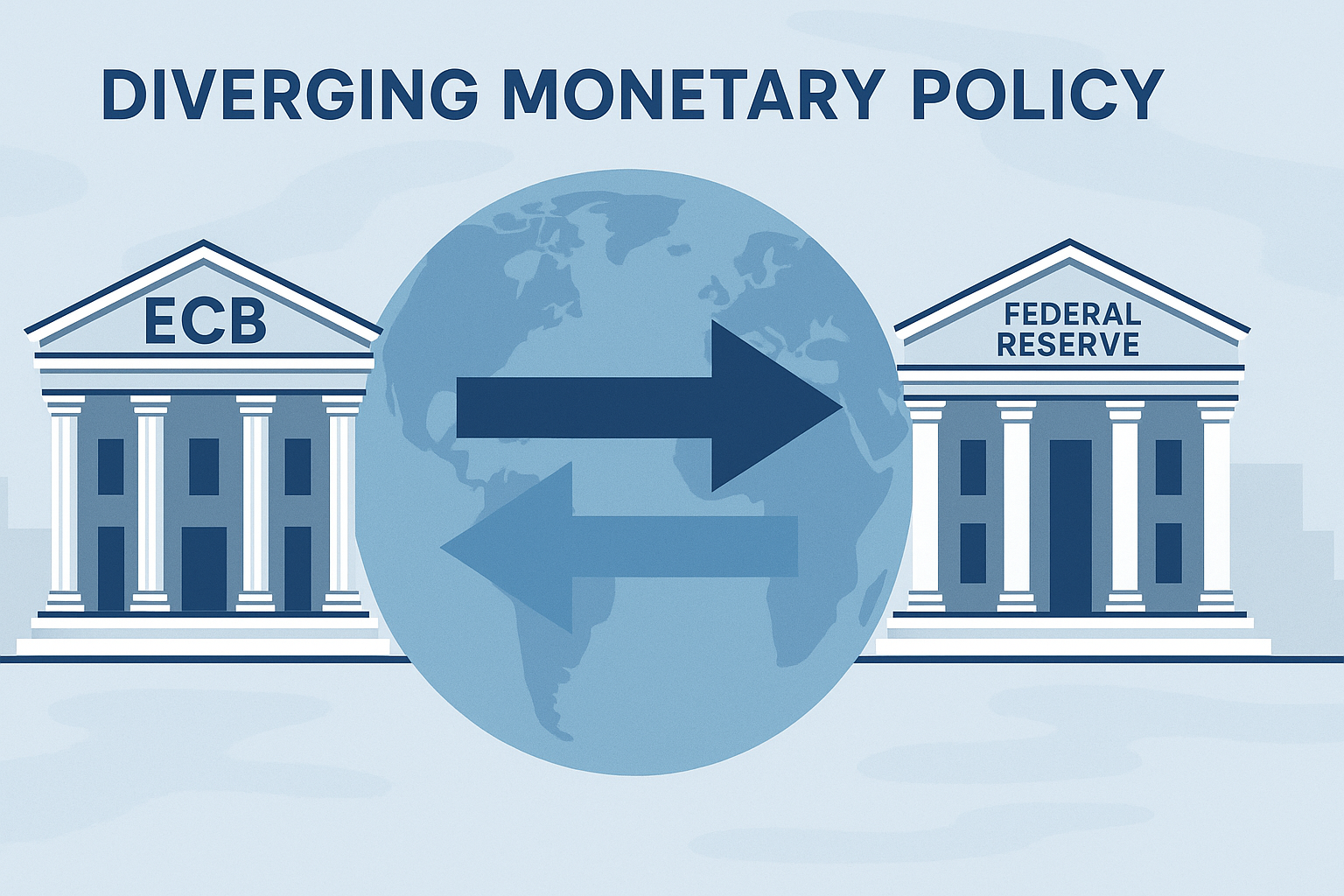
A critical factor ignored by superficial analyses is the widening gap between the US Federal Reserve and its European counterparts. The US is a net energy exporter, meaning high oil prices provide a partial hedge to its economy through increased domestic production and investment. The Eurozone and the UK are net importers.
When the ECB and BoE warn of rate rises while the Fed considers a pause, it creates downward pressure on the Euro and Sterling. A weaker currency makes imports—which are priced in dollars—even more expensive. This "imported inflation" via the exchange rate forces the ECB and BoE to stay hawkish simply to protect the value of their currencies. If they cut rates while the Fed stays high, the resulting currency depreciation would negate any benefit of lower interest rates by driving up the cost of every barrel of oil they buy.
Operational Limitations of Monetary Policy
It is essential to recognize that interest rates are a blunt instrument for supply-side shocks. A higher Bank Rate cannot produce more oil, nor can it clear the Suez Canal. The ECB and BoE are using "forward guidance" as a psychological tool. By warning of rate rises, they are attempting to:
- Cool Credit Demand: Discourage firms from taking on new debt to fund price increases.
- Suppress Consumption: Signal to households that their borrowing costs will remain high, thereby reducing discretionary spending and offsetting the inflationary pressure of energy.
- Stabilize Bonds: Keep long-term bond yields high to prevent a "re-coupling" of the economy to cheap credit.
The Strategic Pivot for Fixed Income and Equity Markets
For institutional investors and corporate strategists, the signaling from the ECB and BoE suggests a move away from the "transitory" mindset. The era of low-interest-rate volatility is over.
The immediate strategic priority for capital allocators is to stress-test portfolios against a "Scenario 110"—a sustained period of Brent Crude at $110 per barrel combined with terminal rates staying above 4% in Europe and 5% in the UK through the next fiscal year. Companies with high leverage and low pricing power are the primary casualties of this environment. Conversely, firms with "fortress balance sheets" and the ability to pass on energy costs to consumers will dominate.
The BoE and ECB are effectively telling the market that the "Fed Put" (the idea that central banks will bail out markets at the first sign of trouble) does not exist in an era of geopolitical supply shocks. They are now in the business of managing scarcity, not just managing demand.
Strategic positioning must now account for the reality that central banks have shifted their primary objective from "growth support" to "inflationary containment," even at the risk of a controlled recession. The margin for error has evaporated. The next phase of the cycle will be defined by which economies can decouple their growth from energy-intensive inputs fast enough to survive a high-interest-rate environment.