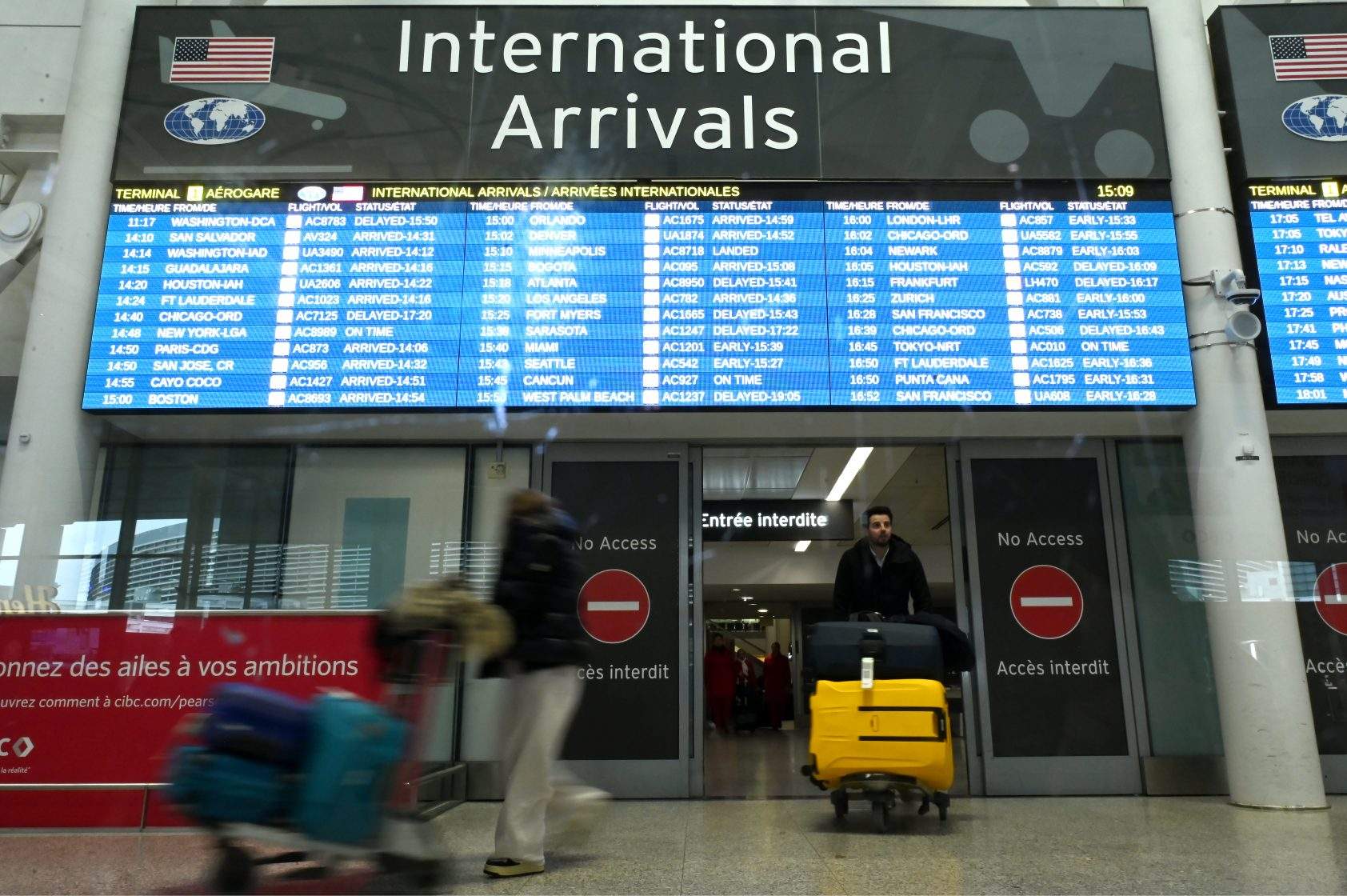
The financial press loves a mindless hockey-stick graph.
When the latest cross-border data dropped showing the first uptick in Canadian travel to the United States since January 2025, mainstream analysts immediately trotted out the predictable narrative. They called it a "rebound." They talked about "renewed consumer confidence." They implied that the Canadian traveler, battered by inflation and a bruised Loonie, had suddenly found their financial second wind and decided to splurge on Florida beaches and New York shopping sprees.
It is a comforting story. It is also completely wrong.
What the spreadsheets are actually tracking isn't a triumphant return of discretionary leisure travel. If you look past the raw, aggregate numbers and analyze the underlying mechanics of cross-border movement, you find something far more cynical. The "surge" is a mirage. It is driven by cross-border arbitrage, unavoidable business obligations, and a desperate search for cheaper baseline goods—not a sudden desire to vacation in the States.
The mainstream media is celebrating a statistical blip while completely misreading the economic reality on the ground.
The Myth of the Rebounding Leisure Traveler
Let’s dismantle the premise of the "rebound" entirely. To understand why a minor spike in border crossings does not equal a healthy travel market, we have to look at what Statistics Canada and the U.S. Office of Travel and Tourism Industries (OTTI) actually count.
When a customs agent scans a passport at the Peace Bridge or Vancouver International Airport, that data point enters the system as a "Canadian visitor." The system does not care if that person is spending $5,000 on an all-inclusive resort or $50 on a tank of cheaper American gasoline and a bulk run to Trader Joe's.
I have watched travel brands burn millions of dollars marketing high-end vacation packages based on these exact kinds of superficial data spikes. They see a 3% bump in cross-border volume and assume the spigot of discretionary spending has been turned back on. Then they launch costly regional ad campaigns, fill hotel inventories, and wonder why their conversion rates hit rock bottom.
They fail because they treat all travel data as equal.
+---------------------------+-----------------------------------+
| What Analysts See         | The Cold Reality                  |
+---------------------------+-----------------------------------+
| Increased U.S. Crossings  | Cross-border grocery & fuel runs  |
| Higher Airport Volumes    | Forced corporate restructuring    |
| "Consumer Confidence"     | Necessity-driven arbitrage        |
+---------------------------+-----------------------------------+
The reality is that discretionary leisure travel—the kind that actually sustains hotels, resorts, and theme parks—remains deeply suppressed. The Canadian dollar has spent months fluctuating at levels that make a family trip to Disney World an exercise in financial self-sabotage. When you factor in the exchange rate, local resort fees, and the cost of dining out in U.S. dollars, a Canadian family pays nearly a 40% premium the moment they cross the border.
People do not suddenly become highly confident consumers when their purchasing power is decimated. They change their behavior to survive.
The Cross-Border Arbitrage Engine
If Canadians aren't flocking to U.S. beaches, who is filling those cars and planes?
Look at the micro-data of short-term visits. The sharpest increases aren't found in week-long stays in Orlando or Las Vegas; they are concentrated in same-day and single-night stays in border states like Washington, New York, and Michigan.
This isn't tourism. It is arbitrage.
The cost of living crisis in Canada has outpaced even the sticky inflation seen in the U.S. From dairy products to fuel and basic consumer goods, the price differential between Canadian cities and their immediate U.S. neighbors has widened significantly. For a family living in Surrey, British Columbia, or Windsor, Ontario, a drive across the border isn't a vacation. It is a tactical shopping run to offset domestic grocery inflation.
Furthermore, the corporate travel sector is distorting the numbers. After eighteen months of stagnant corporate budgets, Canadian firms are facing a massive backlog of mandatory, face-to-face cross-border meetings, compliance audits, and supply chain re-alignments. This is non-discretionary corporate travel. Companies are sending executives and engineers across the border because they have to, not because budgets are flush.
When you strip out the corporate mandates and the border-town grocery runs, the true leisure travel segment looks completely flat.
Dismantling the Flawed Travel Premises
The travel industry regularly asks the wrong questions, leading to broken strategies. Here is how the conventional wisdom falls apart when challenged with actual market logic.
People Also Ask: "Is it cheaper for Canadians to travel to the U.S. now?"
The lazy answer circulating online is that stabilizing inflation makes U.S. travel viable again. The brutal truth is no, it is objectively more expensive. Inflation stabilization only means prices have stopped skyrocketing at a catastrophic rate; it does not mean prices have come down. Coupled with a weak Canadian dollar, the real cost of a U.S. vacation for a Canadian resident is near an all-time high. Pretending otherwise is marketing malpractice.
People Also Ask: "Why are flights between Canada and the U.S. so full?"
Analysts look at airline capacity and assume high demand for tourism. They ignore the structural shifts in aviation. Airlines have consolidated routes and reduced flight frequencies over the past two years to protect their margins. Planes are full because there are fewer planes flying, not because a wave of Canadian tourists suddenly bought tickets. High load factors are a sign of restricted supply, not roaring consumer demand.
How to Actually Play This Market
If you are a travel marketer, hotel operator, or destination representative, relying on the "U.S. travel is back" narrative will break your business. You cannot market to a ghost consumer.
Stop running generic, aspirational lifestyle ads targeted at Canadian metros. They do not work when the exchange rate is an immediate deterrent.
Instead, pivot your strategy toward the hard realities of the current economic environment.
- Offer Exchange-Rate Mitigation: If you want actual Canadian leisure travelers, you have to actively remove the sting of the weak currency. Brands that offer "At-Par" promotions or specific Canadian-resident discounts are the only ones capturing real market share right now. If you don't bake the currency gap into your pricing model, you are invisible to the Canadian consumer.
- Target the Mandatory Traveler: Focus your B2B marketing on utility, proximity, and friction-free logistics. Hotel groups near major corporate hubs and transit corridors should be optimizing for short-stay, high-frequency business travelers rather than trying to book week-long vacationers.
- Market Function Over Luxury: For regional properties near the border, stop selling "escapism." Sell convenience, premium shopping access, and cost-efficiency.
This contrarian approach has an obvious downside: it compresses your margins. Offering discounts to offset a weak foreign currency hurts the bottom line per key. But in a market driven by necessity and arbitrage, a lower-margin booking is infinitely better than an empty room justified by a misleading headline on a financial news site.
Stop looking at aggregated, superficial traffic bumps and celebrating a recovery that hasn't happened. The Canadian consumer is smart, squeezed, and highly transactional. If you build your business strategy on the belief that they are suddenly ready to spend lavishly in American dollars, your Q3 reports will show you exactly how wrong you are.