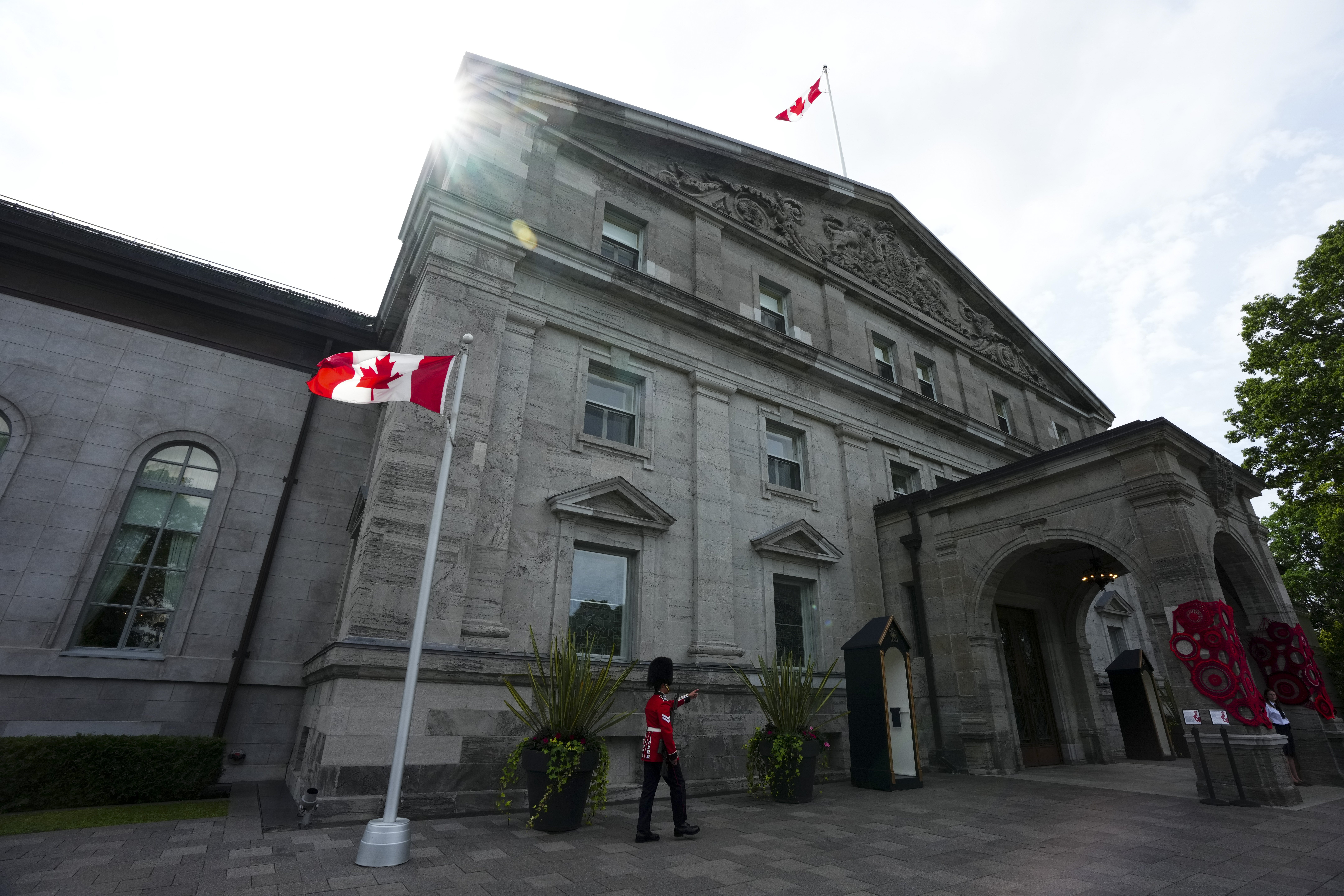
Most people think the Governor General is just a fancy figurehead who cuts ribbons and wears medals. They're wrong. While the role is mostly symbolic, it’s the ultimate "break glass in case of emergency" office for our democracy. If a Prime Minister loses the support of Parliament but refuses to quit, or if an election ends in a complete mess, it's the Governor General who steps in to keep the lights on.
It’s not just about the pomp at Rideau Hall. It’s about constitutional insurance. Today, Prime Minister Mark Carney announced that Louise Arbour, a former Supreme Court Justice, will become Canada’s 31st Governor General. She’s taking over from Mary Simon, who made history as the first Indigenous person in the role. This handoff reminds us that while the face of the office changes, the list of those who’ve held it tells the story of Canada itself. In related updates, we also covered: The Stripes That Never Repeat.
The people who shaped the office
We haven't always picked Canadians for this job. For the first 85 years after Confederation, the "Viceroy" was always a British aristocrat. It wasn't until 1952 that we finally decided we were grown up enough to appoint one of our own.
The British Era (1867 to 1952)
In the beginning, these guys were basically British diplomats. They were sent here to keep an eye on the colony for the King or Queen. USA Today has provided coverage on this critical topic in great detail.
- Viscount Monck (1867–1868): The first one. He literally saw the country born.
- Lord Stanley (1888–1893): Yes, the guy who gave us the Stanley Cup. He probably didn't know it would become a national obsession, but we're grateful anyway.
- Earl Grey (1904–1911): Another sports fan. He donated the Grey Cup for football. He also tried to make the office more "Canadian" before it was cool.
- Lord Byng (1921–1926): Famous for the "King-Byng Affair." He refused the Prime Minister's request to dissolve Parliament, sparking a massive constitutional fight. It changed the rules of the game forever.
The Canadian Era (1952 to Present)
Once Vincent Massey took the job in 1952, there was no going back. We started picking people who actually lived here. This is when the office started to look like Canada.
- Georges Vanier (1959–1967): A war hero and the first French-Canadian to hold the post. He’s still one of the most respected figures in our history.
- Jeanne Sauvé (1984–1990): The first woman. She broke a massive glass ceiling and proved the role wasn't just an old boys' club.
- Adrienne Clarkson (1999–2005): A former journalist who turned the office into a platform for culture and national identity. She didn't just sit in Ottawa; she went everywhere.
- Mary Simon (2021–2026): Her appointment was a huge moment for reconciliation. As an Inuk leader, she brought a perspective that had been ignored for over a century.
The full list of Governors General since Confederation
If you're looking for the names and dates, here’s the chronological breakdown. It’s a long list of Lords, Earls, and Right Honourables.
- Viscount Monck (1867–1868)
- Lord Lisgar (1869–1872)
- Earl of Dufferin (1872–1878)
- Marquess of Lorne (1878–1883)
- Marquess of Lansdowne (1883–1888)
- Lord Stanley of Preston (1888–1893)
- Earl of Aberdeen (1893–1898)
- Earl of Minto (1898–1904)
- Earl Grey (1904–1911)
- Duke of Connaught (1911–1916)
- Duke of Devonshire (1916–1921)
- Lord Byng of Vimy (1921–1926)
- Viscount Willingdon (1926–1931)
- Earl of Bessborough (1931–1935)
- Lord Tweedsmuir (1935–1940)
- Earl of Athlone (1940–1946)
- Viscount Alexander of Tunis (1946–1952)
- Vincent Massey (1952–1959)
- Georges Vanier (1959–1967)
- Roland Michener (1967–1974)
- Jules Léger (1974–1979)
- Edward Schreyer (1979–1984)
- Jeanne Sauvé (1984–1990)
- Ramon Hnatyshyn (1990–1995)
- Roméo LeBlanc (1995–1999)
- Adrienne Clarkson (1999–2005)
- Michaëlle Jean (2005–2010)
- David Johnston (2010–2017)
- Julie Payette (2017–2021)
- Mary Simon (2021–2026)
- Louise Arbour (Appointed May 2026)
Why we still have this job anyway
You’ll often hear people complain about the cost of Rideau Hall or why we’re still connected to the Monarchy. It’s a fair debate. But the "Reserve Powers" are the real reason the job exists.
The Governor General has the power to appoint the Prime Minister. Normally, they just pick the leader of the party with the most seats. But what if there’s a tie? Or what if a coalition forms? The GG has to make the call. They also give "Royal Assent" to bills. Without their signature, a law isn't a law.
I've seen critics call it an expensive rubber stamp. Honestly, it usually is. But you don't buy a fire extinguisher because you plan on having a fire today; you buy it because you might need it eventually. Louise Arbour, with her background as a world-renowned judge and UN prosecutor, is exactly the kind of person you want holding that extinguisher. She knows the law inside and out.
If you want to understand how our government actually functions, stop looking at the partisan shouting matches in the House of Commons for a second. Look at the person sitting in Rideau Hall. They’re the ones holding the constitutional glue together.
Stay informed on the transition by checking the official Governor General's website for the upcoming installation ceremony date. Understanding the past list of leaders helps you see where the country is headed next.