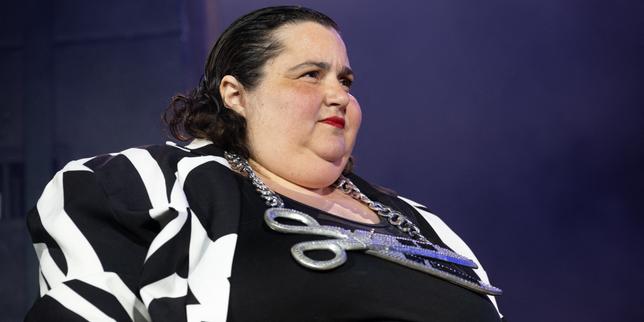
The French DJ and LGBTQ+ activist Barbara Butch became the center of an international firestorm following her appearance in the opening ceremony of the Paris 2024 Olympic Games. What began as a highly stylized artistic performance quickly transformed into a coordinated wave of online harassment, legal battles, and organized boycott threats. The swift escalation highlights how quickly cultural performances can be weaponized in the modern geopolitical arena. While initial media coverage framed the backlash as a standard social media controversy, a closer look reveals a highly organized effort to deplatform the artist, exposing the changing mechanics of public outrage.
From Center Stage to the Crosshairs
The opening ceremony segment, titled "Festivité," featured drag queens, dancers, and Butch herself behind a turntable wearing a halo-like headdress. Critics immediately drew parallels to Leonardo da Vinci’s The Last Supper, sparking intense condemnation from religious groups, conservative politicians, and commentators worldwide. The International Olympic Committee later clarified that the scene was actually intended to depict a pagan feast linked to the gods of Olympus, with the central figure representing Dionysus.
By then, the nuance was entirely lost in the noise.
The backlash moved rapidly from online criticism to direct, targeted hostility. Butch received thousands of death threats, insults, and antisemitic messages, prompting her to file formal legal complaints for cyberharassment and public insults. The legal escalation marked a shift. The controversy was no longer just about artistic interpretation; it had transformed into a real-world security issue for the performer, forcing a debate over where public criticism ends and targeted intimidation begins.
The Anatomy of the Boycott Campaign
Boycott campaigns against public figures rarely happen organically. They require infrastructure, amplification, and a specific narrative framework to gain traction across different borders.
In the case of Barbara Butch, the calls for a boycott targeted her professional engagements, music venues, and festival appearances. This strategy aims to create financial and reputational liabilities for anyone associated with the artist. For venue owners and promoters, the risk of booking a controversial figure often outweighs the benefits, leading to quiet cancellations under the guise of scheduling conflicts or security concerns.
The Role of Algorithmic Amplification
Social media algorithms are built to prioritize engagement, and nothing drives engagement quite like outrage. When public figures or political commentators with large followings shared clips of the ceremony, their audiences reacted instantly. This created a feedback loop. The more vitriol the topic generated, the more prominently it was displayed on user feeds, drawing in international observers who had no previous knowledge of Butch or her work.
The Global Copy-Paste Narrative
The rapid spread of the boycott movement shows how easily localized cultural disputes can be adapted for a global audience. The arguments used against Butch in France were identical to those deployed by commentators in the United States, Italy, and beyond. This uniformity suggests that modern cultural backlashes rely on a shared playbook. Local context is stripped away, leaving only a polarized, easily digestible narrative designed to provoke maximum emotional reaction.
The Cost of the Commercial Defense Mechanism
When an artist faces this level of scrutiny, the pressure shifts heavily onto corporate partners, music festivals, and cultural institutions. Brands frequently choose the path of least resistance.
History shows that institutions faced with organized boycotts generally react in one of two ways. They either issue a swift statement of solidarity, risking further backlash from critics, or they distance themselves entirely to protect their bottom line. For an independent artist, the latter outcome can be devastating. Booking agencies and event organizers operate on thin margins, and the prospect of protests, increased security costs, or negative press is often enough to make an artist temporarily unbookable.
This reality introduces a dangerous precedent for artistic freedom. If the blueprint for deplatforming an artist requires nothing more than a highly coordinated online outrage campaign, the diversity of public cultural programming will inevitably shrink. Programmers will default to safe, uncontroversial choices to avoid financial risk.
Legal Frontiers in the Fight Against Cyberharassment
The legal actions initiated by Butch and her legal counsel highlight the growing gap between current laws and the reality of internet-scale harassment. Tracking down thousands of anonymous accounts across multiple jurisdictions is an logistical nightmare for law enforcement.
French authorities have grown more aggressive in prosecuting online hate speech, but the process remains painfully slow. A legal complaint filed today might take months or even years to result in an investigation, let alone a conviction. For an artist dealing with immediate, active threats, judicial remedies offer little protection in the short term. The burden of security falls squarely on the individual, who must navigate the psychological and financial toll of isolation while trying to maintain their livelihood.
The international nature of the internet further complicates accountability. A user posting threats from one country may face absolutely no legal consequences from laws enforced in another. This cross-border friction leaves a massive vacuum where online mobs can operate with near-total impunity, leaving targeted individuals to defend themselves in a digital Wild West.
The Illusion of Corporate Neutrality
The fallout from the Olympic ceremony exposes the fragility of corporate and institutional commitments to diversity. Major events often celebrate inclusivity when it serves as a valuable marketing tool, yet that support frequently evaporates the moment a true public relations crisis hits.
True solidarity requires enduring financial risk and reputational friction. When organizations retreat or offer watered-down clarifications under pressure, they demonstrate that their commitment to controversial artists is entirely conditional. This leaves performers exposed, bearing the full brunt of a global culture war while the larger institutions that platformed them attempt to manage their corporate reputation.
The campaign against Barbara Butch is a stark reminder that the stage for public performance has expanded far beyond the physical venue. Every performance is now subject to global, real-time scrutiny, where context is optional and outrage is a currency. Artists, organizers, and audiences are forced to operate within this volatile framework, knowing that a single moment can be repurposed into a international crisis at a moment's notice. The future of public art depends heavily on whether institutions will find the backbone to withstand these calculated storms, or if they will continue to let individual creators stand entirely alone in the face of the mob.