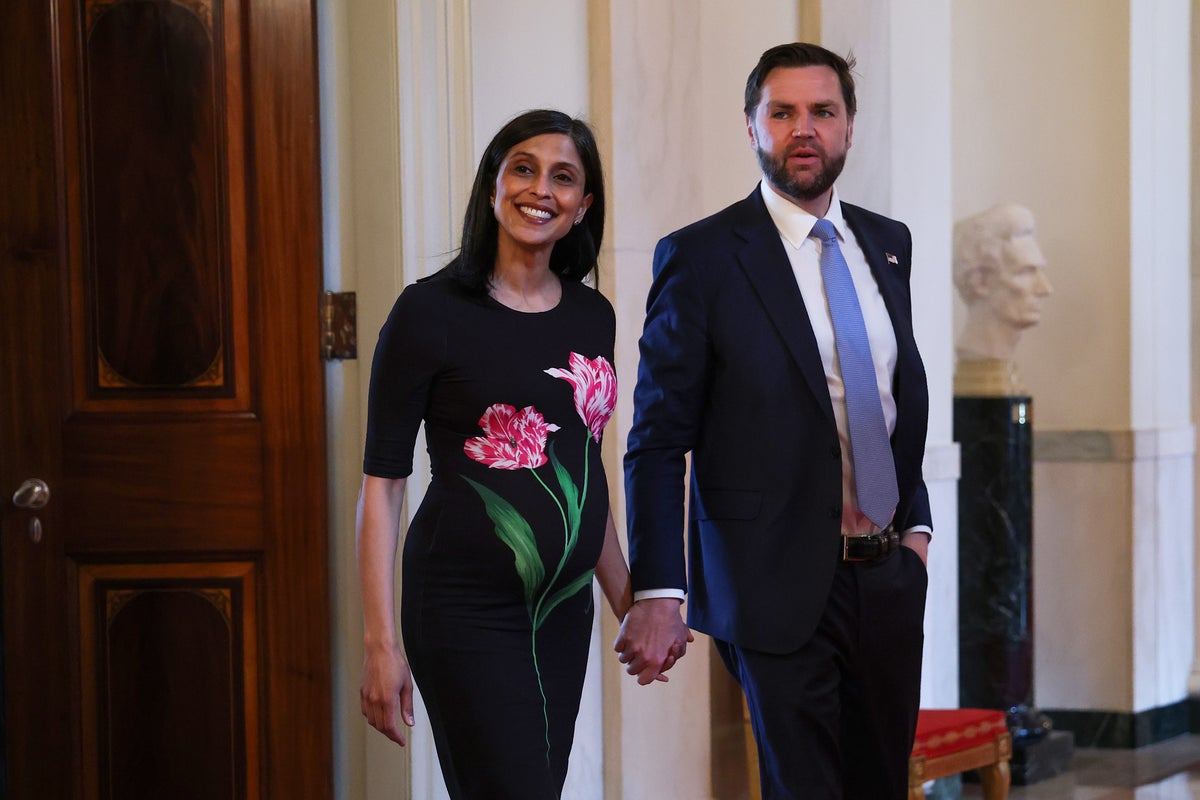
The political machinery for the next presidential cycle is already turning, and at the center of the frame sits JD Vance. While pundits dissect every public utterance for signs of a definitive 2028 declaration, the Vice President and his wife, Usha Vance, have made one thing clear to those within their inner circle. They will not even consider a formal run for the White House until the current administration delivers on its core economic and legislative promises. This is not mere political modesty. It is a calculated strategy rooted in the understanding that any future political capital depends entirely on measurable, tangible governance over the next four years.
To understand the trajectory of the Vance political brand, one must look past the standard campaign trail rhetoric. The next presidential primary will not be won simply by inheriting a legacy. It will require a record of execution. For the Vances, the decision to seek the highest office is tethered to a strict prerequisite, the stabilization of domestic industrial policy and a demonstrated shift in the economic fortunes of the working-class base that propelled them to Washington. Meanwhile, you can find related developments here: The 60 Day Iran Peace Deal Delusion Why Diplomacy Is Just Advanced War Gaming.
The Price of Admission
Political ambition often blinds figures to the immediate horizon. JD Vance, however, has operated with a distinct sense of sequencing. Sources close to the Vice President indicate that the discussion around 2028 is currently treated as an unnecessary distraction inside his policy shop. The rationale is straightforward. If the administration fails to secure its promised tariff structures, border enforcement mechanisms, and manufacturing revitalization, any subsequent campaign will be dead on arrival.
This pragmatic approach reflects Usha Vance’s influence on the operation. With a background rooted in corporate litigation and clerkships at the highest levels of the American judiciary, her assessment of political risk is notoriously analytical. She views the political landscape through the lens of institutional viability. For her, a 2028 campaign is a massive organizational and personal liability unless the groundwork is mathematically sound. The family's position is that a failed administration cannot produce a successful successor. Therefore, the singular focus remains on the immediate legislative agenda. To understand the bigger picture, check out the recent report by TIME.
The stakes are remarkably high. The populist coalition that Vance champions is notoriously fickle, built on a foundation of deep skepticism toward Washington institutions. If this voting bloc senses a lack of delivery, the enthusiasm that marked the previous election cycle will evaporate. Vance knows this. His entire political identity is staked on the idea that he is a dealmaker who understands the grievances of the American heartland. If he cannot point to reopened factories or stabilized regional economies by 2027, his pitch to the electorate loses its foundational logic.
The Shadow of the Legacy
Inheriting a political movement is significantly harder than starting one. Historically, vice presidents who attempt to succeed their bosses face a delicate balancing act. They must claim credit for administration victories while establishing a distinct personal identity that satisfies the hunger for something new.
Vice Presidential Successor Dynamics:
┌───────────────────────────┐     ┌───────────────────────────┐
│     Absolute Loyalty      │     │    Distinct Identity      │
│  - Defend existing policy │ <-- │  - Propose future reforms │
│  - Court the loyal base   │  ?  │  - Appeal to moderates    │
└───────────────────────────┘     └───────────────────────────┘
                              \ /
                               v
                     The Succession Trap
This dynamic creates an immediate structural challenge for Vance. The base demands absolute loyalty to the foundational tenets of the movement. Yet, the broader American electorate frequently experiences fatigue after eight years of any single political alignment. Vance must position himself as both the continuity candidate and the reform candidate.
This tension explains the deliberate pace of his current maneuvering. By tying his future ambitions strictly to policy execution, Vance avoids the trap of looking like an opportunistic climber. He creates a narrative of duty. The message to donors and activists is clear: help us pass the agenda now, and the future will take care of itself. This strategy also provides a convenient shield against premature attacks from potential primary rivals. When asked about his plans, he can simply point to the stack of pending legislation on Capitol Hill and state that he is doing his job.
The Unspoken Hurdles
Beyond the legislative checklist, several unquantifiable factors will dictate whether the Vances greenlight a run. The personal toll of national campaigns is immense, and Usha Vance has repeatedly demonstrated a desire to protect her family’s privacy from the more invasive aspects of modern political journalism. The transition from the relative obscurity of a corporate legal career to the intense scrutiny of the second family was jarring. A presidential run amplifies that scrutiny by an order of magnitude.
Furthermore, the donor class remains an uncertain variable. While Vance has built strong bridges to the Silicon Valley tech-populist elite, the traditional financial engines of the party are still wary of his economic nationalism. His skepticism of free-trade agreements and his occasional alignment with pro-labor rhetoric make Wall Street nervous. To mount a viable national campaign, Vance will need to either convert these traditional financial networks or prove that his tech-heavy, anti-establishment funding model can scale to meet the demands of a multi-billion-dollar presidential race.
There is also the question of geopolitical volatility. An unexpected foreign crisis or a protracted global conflict could instantly shift the focus of the American electorate away from domestic economic revival and toward international stability. In such a scenario, Vance’s relatively brief foreign policy resume would be tested. He would no longer be judged on his ability to speak to the economic anxieties of Ohio or Pennsylvania, but on his capacity to command the global stage.
The Reality of the Populist Blueprint
The ultimate test for Vance will be the implementation of the industrial blueprint he has championed for years. This involves a fundamental restructuring of American supply chains, a task that cannot be completed via executive order alone. It requires sustained cooperation from a fractured Congress and the cooperation of a bureaucratic apparatus that is often resistant to rapid change.
If the administration manages to clear these hurdles, Vance’s path to the nomination becomes remarkably clear. He will be the undisputed heir to a proven governing philosophy. If the efforts stall in committee rooms or get bogged down in legal challenges, his political currency will devalue rapidly. The next two years are not a prelude to a campaign. They are the campaign itself. Every vote whipped, every tariff implemented, and every factory groundbreaking is a brick in the foundation of a potential future administration. The Vances are acutely aware that looking past the immediate construction project is the fastest way to ensure the house never gets built.