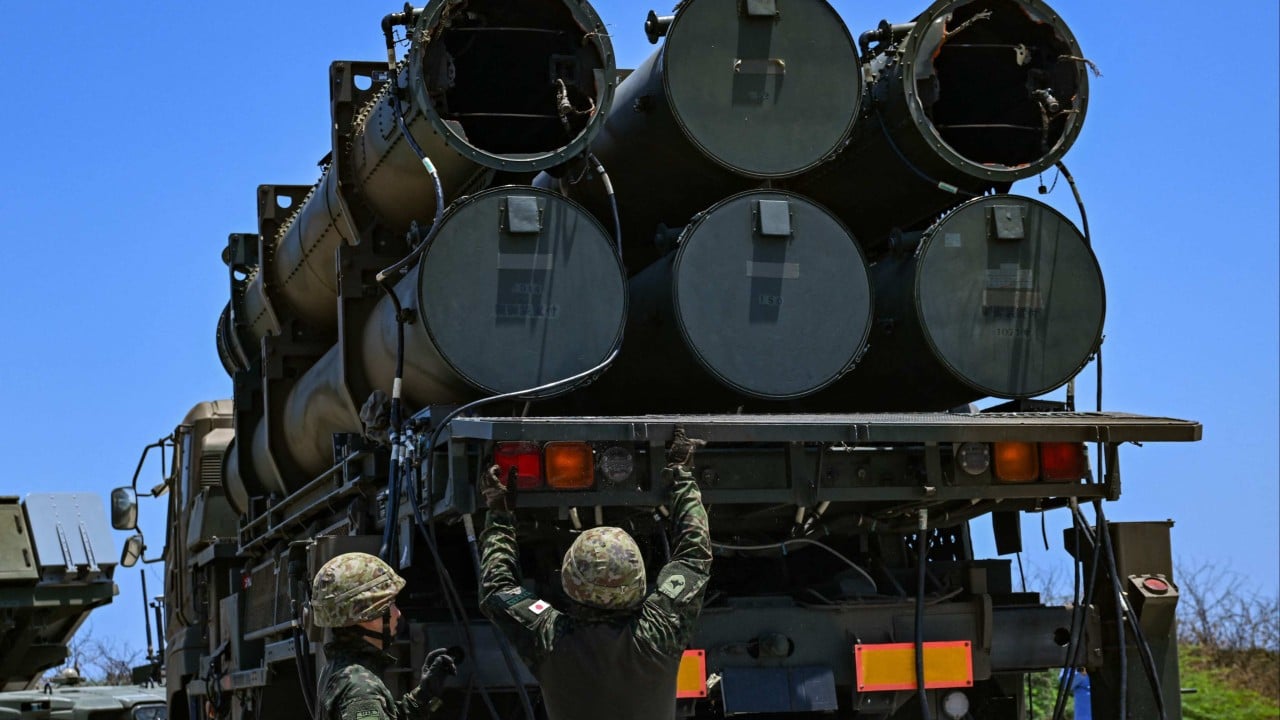
Mainstream defense analysts are suffering from a severe case of historical amnesia and shiny-object syndrome. Following the Balikatan 2026 military exercises in the sand dunes of Ilocos Norte, the media echo chamber has erupted with praise for the potential transfer of Japan’s retired Type 88 surface-to-ship missiles to the Armed Forces of the Philippines.
The narrative is seductive: Japan gets to offload its Cold War inventory while bypassing domestic pacifist constraints, and Manila gets a cheap, turnkey solution to plug the gaps in its coastal defense network against a rising regional superpower. On paper, sinking an 89-year-old decommissioned target ship at a distance of 75 kilometers looks like a masterclass in security cooperation.
In reality, it is a logistical and tactical trap.
I have spent years analyzing regional force structures and procurement strategies. I have watched cash-strapped militaries blow millions on hand-me-down defense hardware under the illusion of "rapid capability building," only to find themselves stuck with systems that cost more to maintain than they are worth on the modern battlefield.
Accepting or purchasing Japan's aging Type 88 inventory is not the strategic masterstroke the defense establishment claims it to be. It is an expensive distraction from what the Philippines actually needs: modern, highly survivable, and technologically viable deterrence.
The Mirage of Cheap Coastal Defense
The core argument of the lazy consensus is that a missile is a missile, and a high-subsonic 225-kilogram high-explosive warhead with a 180-kilometer range is better than an empty coastline. This line of reasoning completely ignores how modern maritime warfare operates.
The Type 88 is a system designed in the mid-to-late 1980s by Mitsubishi Heavy Industries. It belongs to an era when electronic counter-countermeasures (ECCM) were primitive compared to today's standards.
When a Type 88 launcher fires, the missile relies on an inertial guidance system to get close to the target area before switching on an active radar seeker for terminal homing. In 1988, that seeker was effective. In 2026, against a modern peer adversary equipped with state-of-the-art electronic warfare suites, active shipboard jamming, and advanced point-defense systems, a high-subsonic missile traveling at Mach 0.93 with an outdated radar signature is little more than target practice for an enemy fleet.
Furthermore, the physical footprint of the Type 88 system undermines its survivability. It is not just a single missile launcher; it is an entire caravan. A functional Type 88 battery requires:
- Heavy 6x6 launcher vehicles
- Radar vehicles for target acquisition
- Fire control stations
- A complex web of communications links
In the narrow, jungle-fringed roads of northern Luzon or the archipelagic terrain of Palawan, moving this massive, heavy Cold War infrastructure is a logistical nightmare. Modern satellite and drone reconnaissance will spot these lumbering convoys almost instantly. In a real conflict, a missile system that cannot hide is a system that gets destroyed before it even fires its first shot.
The Logistical Black Hole of Retired Hardware
Defense journalists love talking about acquisition costs, but they rarely calculate the total cost of ownership. Japan is moving toward the modern Type 12 missile system for a reason: the Ground Self-Defense Force no longer wants to carry the supply chain burden of a 40-year-old platform.
When a country adopts a weapon system that is being actively retired by its sole manufacturer, it inherits a ticking clock.
Where will the Philippines source spare parts when a component in the fire control radar fails? Who manufactures the specific electronic components for a missile guidance system designed before the advent of the modern internet?
The answer is simple: the buyer ends up cannibalizing its own inventory to keep a handful of launchers operational. What looks like a cost-effective shortcut quickly morphs into a black hole that sucks up maintenance budgets that should be spent on modern procurement.
Compare this to the Philippines' actual prized acquisition: the BrahMos supersonic cruise missile system procured from India. The BrahMos flies at Mach 3, utilizes modern radar and tracking, and possesses a kinetic energy profile that makes it immensely difficult to intercept.
More importantly, it is an active, evolving ecosystem with an established supply chain. Introducing a completely different, obsolete Japanese system into the Armed Forces of the Philippines creates a fragmented logistical structure.
Imagine a scenario where a single coastal defense unit has to maintain training pipelines, supply parts, and manage fuel and transport protocols for two entirely distinct missile architectures—one cutting-edge and supersonic, the other an ancient, subsonic Japanese leftover. It paralyzes operational efficiency.
The Wrong Focus for Archipelago Defense
The "People Also Ask" columns and defense forums are filled with variations of the same question: Can the Type 88 seal the Luzon Strait and the Bashi Channel? The brutal, honest answer is no. A 180-kilometer-range subsonic missile cannot reliably close a critical, highly contested maritime chokepoint against a first-rate navy utilizing dense electronic jamming and layered missile defense.
By focusing on acquiring bulk quantities of older, land-based heavy systems, the Philippines is preparing for yesterday’s war. The strategic problem for an island nation is not just having a big missile on a beach; it is the entire target acquisition loop.
To hit a hostile ship 150 kilometers away, you have to know exactly where that ship is in real-time. A land-based Type 88 radar vehicle cannot see past the radar horizon due to the curvature of the earth. It requires over-the-horizon radar, airborne spotters, or complex data-linking from naval assets—capabilities the Philippine military is still working hard to mature.
Buying older missiles without the accompanying satellite architecture, long-range drones, and airborne early warning platforms is like buying ammunition for a gun when you are blindfolded.
Shift the Paradigm to Distributed Lethality
Instead of accepting Tokyo’s hand-me-downs under the guise of security assistance, Manila needs to reject the Type 88 proposal entirely and demand assets that fit a modern asymmetrical defense strategy.
If Japan wants to prove its commitment to the newly revised transfer guidelines on lethal equipment, it should not use the Philippines as a graveyard for its retired inventory. The Philippines should leverage its strategic position to negotiate for assets that actually move the needle: modern Type 12 variants, advanced surveillance drones, or maritime patrol aircraft that can feed targeting data to the superior BrahMos batteries already on the ground.
The era of relying on heavy, slow, Cold War-era coastal artillery variants is over. The true defense of an archipelago relies on distributed lethality—small, highly mobile, low-signature units equipped with modern, fast-moving precision weapons that can integrate into a wider coalition network.
Sinking a defenseless World War II-era relic in a highly choreographed, peacetime live-fire drill is great for public relations. It creates fantastic video footage for evening news broadcasts and makes politicians look decisive. But the South China Sea is not a controlled testing range, and a peer adversary will not behave like a stationary minesweeper.
The Philippines cannot afford to waste its limited institutional energy, trained manpower, and maintenance funds on a system whose shelf life expired before the turn of the century. Stop buying Japan’s past. Start funding the future.