The United States government just dropped forty more files of declassified records detailing encounters with unidentified anomalous phenomena, but the real story is not what these documents reveal about the sky. It is what they expose about the systematic breakdown of American airspace security and the calculated weaponization of official transparency. Released on July 10, 2026, as part of the fourth consecutive document dump mandated by executive order, this latest batch of files from the Department of War contains a mix of military sensor logs, FBI eyewitness interviews, and chilling accounts of intrusions over sensitive nuclear sites.
For decades, the intelligence community treated the topic of unidentified flying objects with outright mockery or ironclad silence. That wall has crumbled, replaced instead by a carefully managed stream of redacted memos and grainy infrared videos designed to satisfy the public appetite while keeping the core operational secrets firmly under lock and key. This is the new reality of Washington disclosure. It is an exercise in managed transparency where the state gives away just enough data to appear open, while masking the deeper institutional panic regarding foreign surveillance leaps and unidentifiable technological incursions. Don't miss our earlier article on this related article.
The Pantex Incursion and the Nuclear Security Failure
Among the newly released dossiers, the most alarming historical record details an uninvited guest at the Pantex Plant near Amarillo, Texas. This facility is the primary site for the assembly and disassembly of the atomic arsenal of the United States. Security there is designed to be absolute.
According to the declassified Energy Department logs from September 2015, two heavily armed security officers spotted an unidentified object violating the restricted airspace directly above the nuclear weapons facility. The plant immediately went into a total lockdown. The officers attempted to pursue the object in a ground vehicle, tracking it as it drifted over the secure perimeter. If you want more about the context here, The New York Times provides an informative summary.
When the officers stopped their vehicle and stepped outside to evaluate the threat with binoculars, they encountered something that defied standard aviation mechanics. The object made absolutely no sound. It possessed no visible wings, no rotors, and no identifiable propulsion system of any kind. For two minutes, the object hovered silently over one of the most sensitive locations on Earth before drifting away toward the north.
This was not a weather balloon. It was an unanswered security breach at a facility holding enough fissile material to flatten a continent. The fact that the federal government is only now letting the public see the heavily sanitized paperwork from an eleven-year-old nuclear security failure points to a deeper crisis of accountability. The system did not catch the object, it could not identify it, and it had no way to stop it.
The Indo Pacific Flank and the Six Pointed Star
While the historical documents show past vulnerabilities, the recent files from 2025 demonstrate that the problem has only intensified along the geopolitical fault lines of the Pacific. These files originate from the United States Indo-Pacific Command, a military theater currently locked in a quiet, technological arms race with China.
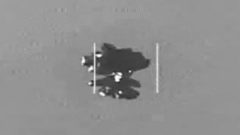
In one highly redacted video sequence from mid-2025, an advanced military sensor tracks an area of intense contrast moving across the Yellow Sea. The official log describes the object as resembling a six-pointed star. It moved with a level of precision that eliminated the possibility of atmospheric drift or avian interference. Another file from the same batch details a separate tracking sequence over the East China Sea that lasted for several minutes before the target vanished from active arrays.
The military likes to use neutral terminology like anomalous detection to describe these events. It sounds clinical. It avoids the sensationalism of science fiction while obscuring a harsher military reality. The waters off the coast of China are teeming with electronic warfare platforms, experimental drones, and high-altitude surveillance mechanisms. By dropping these specific files into the public domain without a definitive explanation, the Pentagon is sending a subtle, coded message to its global adversaries. We are watching you watch us, and we are documenting the limits of your low-observable platforms.
From Military Radars to the FBI Archive
What separates this specific release from previous disclosures is the sudden inclusion of civilian and domestic law enforcement data collected by the FBI. Previous dumps focused almost exclusively on Navy pilots and high-end military hardware like the forward-looking infrared cameras on fighter jets. The July 2026 data shows that the domestic intelligence apparatus has been quietly collecting civilian reports for years.
One file details an incident from October 2024 in the northeastern United States, cataloged under the title Orbs Over the Pond. An eyewitness used an iPhone to capture a luminous, plasma-like sphere hovering roughly 2,700 feet away over a body of water. The object remained almost perfectly stationary for 45 minutes. According to the FBI investigation logs, the primary light source periodically separated into smaller luminous points, with one orb hovering just inches above the water's surface before the entire formation vanished.
Less than a year later, in July 2025, another sighting occurred within 25 miles of that exact location. This time, five federal law enforcement agents witnessed a cluster of glowing orbs moving along the horizon in perfect, smooth coordination. One agent recounted turning to his partner and asking a simple question. Are you seeing this?
The agents watched as the red lights instantly accelerated, changing from a loose cluster into a precise horizontal formation without making a sound. The FBI even went so far as to create digital renderings and artistic interpretations of these objects based on the debriefings of their own personnel. When federal agents with sidearms and high-level security clearances start documenting shapes that resemble translucent, opalescent potatoes or shifting plasma spheres, the phenomenon can no longer be laughed off as the domain of conspiracy theorists.
The Mathematical Horizon of Unresolved Data
The All-domain Anomaly Resolution Office handles the incoming tide of these reports with a very specific bureaucratic filter. They categorize everything they can resolve into mundane explanations like birds, commercial balloons, and airborne clutter. Their official briefings state that a vast majority of cases show unremarkable characteristics.
They use data-driven frameworks to dismiss the noise. That makes sense. The skies are crowded with Mylar balloons, weather instruments, and private drones that lack transponders. But the true investigative interest lies not in the ninety-five percent of files that turn out to be Canadian geese or stray weather equipment. It lies in the stubborn remaining percentage that cannot be explained away by sensor calibration errors or optical illusions.
When an experienced military aviator with twenty-eight years of active service states on the record that an object was unlike anything he had seen in his entire career, a simple brush-off from a public relations desk will not suffice. The sensors are not lying. The radar tracks are corroborated by thermal imaging, and those thermal tracks are corroborated by eyewitness testimony from trained observers who know the difference between a commercial airliner and an anomalous platform.
The Strategy of Information Drowning
The sudden urge for transparency from the executive branch is not born out of a pure philosophical desire to inform the electorate. It is a classic counter-intelligence strategy known as information drowning. By releasing thousands of pages of historical documents, hours of grainy video, and hundreds of audio files on a rolling basis, the government satisfies congressional mandates while entirely controlling the narrative pace.
Journalists and researchers spend weeks parsing through a single 1.2-gigabyte data release, arguing over the flight path of a maroonish object from 2020 or the exact dimensions of a hollow disc with rotating lights seen over a testing range. Meanwhile, the current, active black-budget programs remain completely shielded from view. The state gives you the historical crumbs so you stop looking at the active kitchen.
This strategy protects the core secrets of both domestic black projects and foreign intelligence penetrations. If an adversary has developed a drone capable of hovering over a nuclear facility for two minutes without a visible propulsion system, admitting that the object is truly unidentified is far safer than admitting that the American air defense network has a massive, unpatched vulnerability. Defeat is reclassified as a mystery.
The Security Blindspot We Refuse to Name
We are looking at a fundamental failure of air sovereignty that the Pentagon prefers to dress up as an anomalous phenomenon. The bureaucratic machine has realized that calling something a UFO or a UAP defuses the immediate political fallout. If a foreign adversary flew a conventional, marked surveillance plane over the Pantex nuclear facility, heads would roll at the highest levels of the defense establishment. There would be congressional hearings, defense budget overhauls, and international crises.
But if that same facility is breached by an unidentifiable, silent object that leaves no thermal trace and moves against the wind, it gets shunted into the anomaly bucket. It becomes an item for a rolling declassification website rather than a national security emergency. This linguistic trick allows the national security state to hide its operational failures in plain sight.
The rolling disclosures of 2026 will undoubtedly continue. More videos of blurry shapes over the Atlantic will be uploaded to government servers. More heavily redacted memos from the Central Intelligence Agency and the National Aeronautics and Space Administration will be parsed by eager online communities. But the hard truth of the matter sits right in front of us, buried beneath the mountain of declassified files. The sky above our heads is far more porous than the military wants to admit, and the bureaucratic theater of disclosure is just a way to keep us looking at the lights instead of the structural holes in the ceiling.