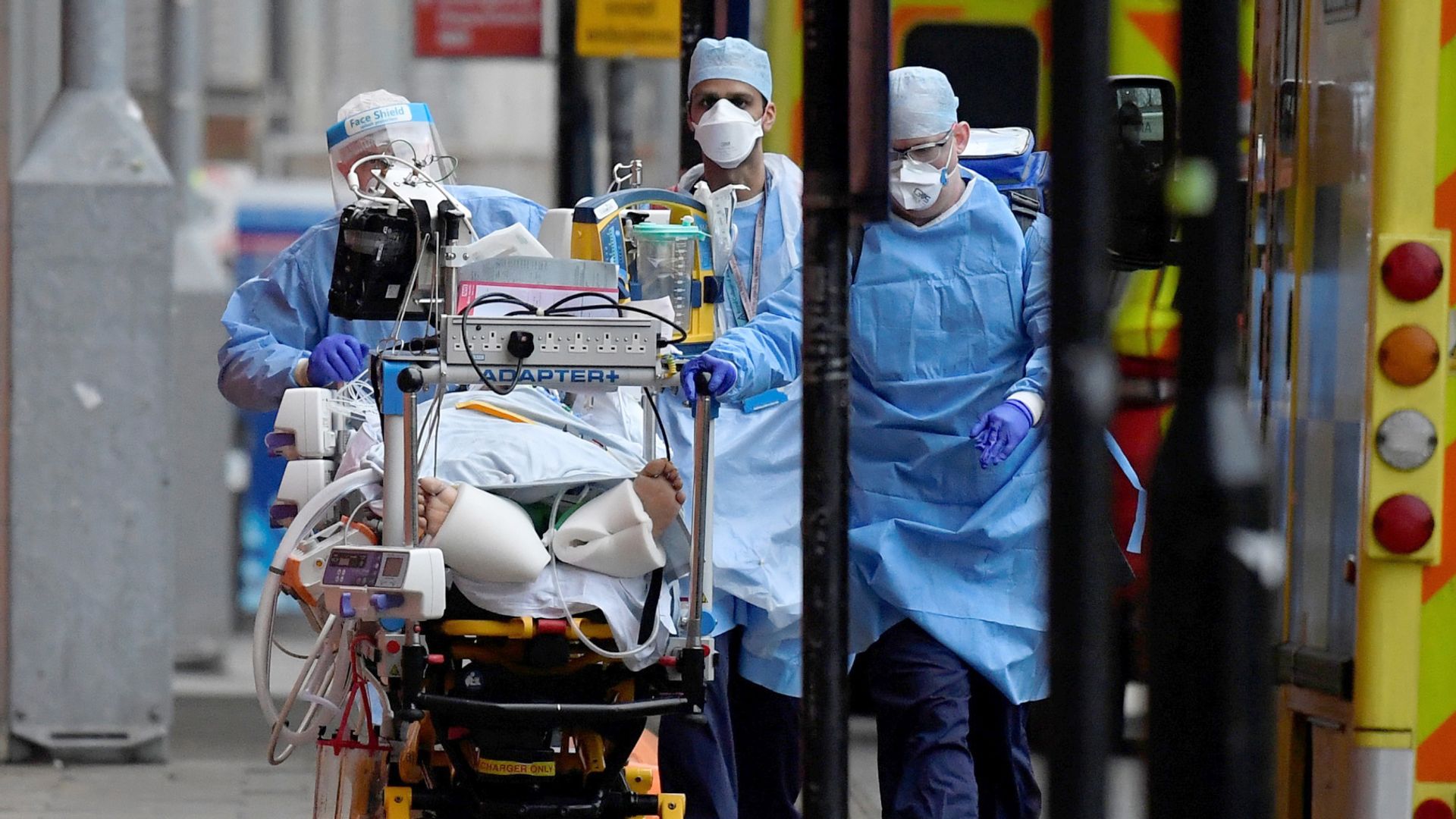
The UK Covid-19 Inquiry’s Module 3 report, released today, March 19, 2026, confirms what front-line medical staff have whispered in trauma therapy for years: the healthcare system did not just struggle, it suffered a total structural failure. While previous reports focused on the political soap opera of Downing Street, this document exposes the visceral, mechanical breakdown of patient care. It describes intensive care units where patients were "raining from the sky" and a supply chain so broken that hospitals literally ran out of shroud material for the dead. The primary reason for this catastrophe was not just the virus, but a decade of "efficiency" that left the NHS with 40,000 fewer nurses than required before the first patient even arrived.
The ICU Meat Grinder
Witness testimony from senior clinicians describes a transition from clinical medicine to something resembling battlefield triage. Professor Kevin Fong, a former national clinical adviser, provided the Inquiry with accounts of hospitals that were "close to collapse." In standard practice, a critical care nurse handles one patient. During the height of the waves, that ratio was forced to one nurse for every six patients.
When you dilute expert care by 600%, the result is not just "pressure." It is a statistical certainty of increased mortality. The report highlights that this was not a localized issue but a systemic mandate. Nurses who were trained for general wards were thrust into intensive care environments, managing complex ventilators and drug infusions they were never qualified to handle. This desperation led to a "hellish" environment where the sheer volume of the deceased outpaced the hospital's ability to process them with dignity.
The Body Bag Deficit
Perhaps the most haunting revelation in the 2026 report is the granular detail on the failure of the "last offices"—the care of the deceased. In several Trusts, the surge in mortality triggered a shortage of body bags. This was not a fluke of geography. It was a failure of the national procurement strategy which had focused on "just-in-time" logistics for years.
Hospitals were forced to use makeshift solutions, including plastic sheeting, to wrap the dead. This specific failure points to a deeper malaise in pandemic planning. The government had planned for a "flu-like" event with a lower mortality rate and a faster recovery time. They had not modeled a sustained, multi-wave assault that would overwhelm the very infrastructure of death.
The Myth of Preparedness
For years leading up to 2020, the UK claimed to be a world leader in pandemic readiness. The Module 3 findings dismantle this. The Department of Health and Social Care (DHSC) is criticized for providing "misleading assurances" to the government about its ability to scale up.
- Staffing Gaps: The NHS entered the crisis with a chronic vacancy rate that made "surge capacity" a mathematical impossibility.
- Infrastructure: Many hospitals lacked the oxygen piping infrastructure to support the number of ventilators required.
- Social Care: The disconnect between hospitals and care homes turned the latter into "minder-traps" where the virus could circulate unchecked.
The Inquiry notes that while the vaccine rollout (detailed in the upcoming Module 4 report) was a triumph of science and logistics, it arrived too late to save the thousands who died because of these foundational cracks.
The Long Tail of Clinical Trauma
We are now in 2026, and the "hero" narrative of the early pandemic has vanished, replaced by a recruitment and retention crisis that threatens the very existence of the NHS. The report highlights that the moral injury inflicted on staff—forcing them to choose who lived based on resource availability rather than clinical need—has led to a permanent exodus of senior talent.
The Inquiry recommends an immediate, legally binding overhaul of the UK’s resilience architecture. This includes a move away from "lean" management in healthcare. You cannot run a hospital like a car factory; a car factory does not need 20% spare capacity for a "once-in-a-century" event, but a healthcare system does.
A Legacy of Neglect
The harrowing scenes described today were preventable. They were the result of a political choice to prioritize short-term fiscal targets over long-term biological security. The 19 recommendations laid out by Baroness Hallett demand that the four nations of the UK synchronize their emergency responses and, crucially, fund them.
If the government treats this report as a historical curiosity rather than a blueprint for survival, the "hellish" scenes of 2020 will become the baseline for the next inevitable outbreak. The data is clear: the cost of preparedness is a fraction of the cost of collapse.
Tell me if you want me to break down the specific regional failures in Scotland and Wales highlighted in the cross-border coordination section of the report.