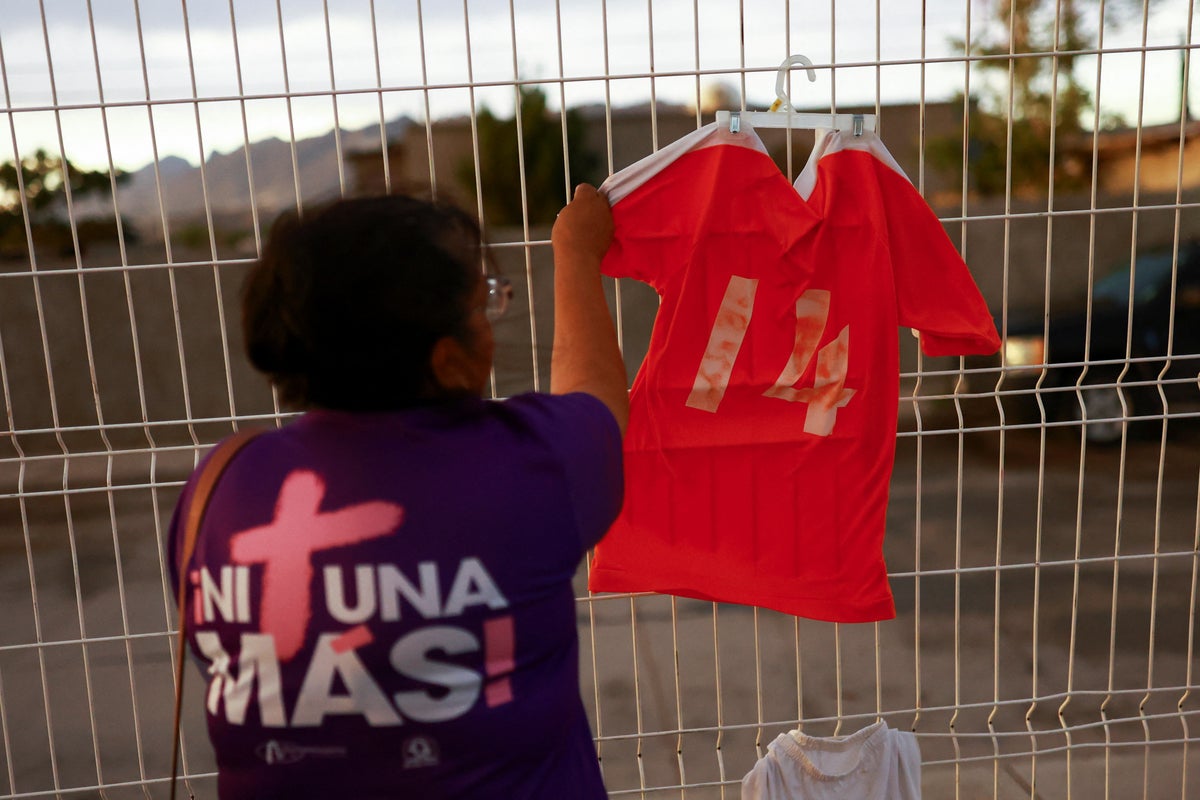
More than 135,000 people are officially registered as missing in Mexico, a staggering humanitarian crisis that deepens daily. As the country prepares to co-host the FIFA World Cup, the contrast between multi-million-dollar sporting spectacles and the agony of thousands of searching families is reaching a boiling point. The international football tournament acts as a massive megaphone, forcing a hidden domestic tragedy onto the global stage. Yet, behind the international headlines lies a complex machinery of state complicity, cartel dominance, and a forensic system that has collapsed entirely under the weight of its own failures.
The crisis is not a modern anomaly. It is an entrenched status quo.
The Economy of Absence
To view Mexico’s disappearance epidemic solely as a byproduct of cartel turf wars is to miss the structural blueprint. Disappearances function as a highly effective tool of social and territorial control. When a person vanishes without a trace, it creates a unique form of terror. It paralyzes communities. Unlike a homicide, which leaves a body and triggers a specific, albeit frequently flawed, legal protocol, a disappearance leaves an open wound. Families spend years frozen in bureaucratic limbo, unable to claim inheritance, access bank accounts, or achieve psychological closure.
Organized crime groups utilize forced disappearances for several distinct operational purposes.
- Forced Recruitment: Cartels routinely abduct young men to serve as foot soldiers, lookouts, or forced labor in clandestine drug laboratories.
- Human Trafficking: Women and girls are disproportionately targeted for sexual exploitation, vanishing into underground networks that cross state lines.
- Territorial Purging: When a criminal syndicate seizes control of a new municipality, local leaders, journalists, and resistant community members are systematically erased to eliminate opposition.
This is not done in the shadows. It happens in broad daylight, frequently along major transit corridors. For instance, the highway between Monterrey and Nuevo Laredo has earned the grim moniker of "the disappearance highway" due to the sheer volume of travelers who vanish while driving its asphalt.
The Apparent Complicity of the State
The numbers provided by the National Registry of Missing and Disappeared Persons tell only part of the story. The official figure of over 135,000 represents a severe undercount, driven by a phenomenon known as the cifra negra—the unregistered crime rate. Families routinely refuse to report disappearances to local prosecutors. They are afraid. In many municipalities, the line between municipal police forces and cartels does not exist.
The Mechanism of Impunity
When a family member goes missing, the first 48 hours are critical. If evidence is not gathered immediately, geolocation data is lost, security footage is overwritten, and witnesses disappear. Yet, Mexican authorities regularly implement a policy of deliberate delay. Families are told to wait, instructed that their loved ones "probably ran off with a partner" or "were up to no good."
This victim-blaming serves a dual purpose. It protects the authorities from having to open a complex investigation, and it insulates local politicians from rising crime statistics. The conviction rate for the crime of forced disappearance in Mexico hovers around an abysmal 1 to 2 percent. Without accountability, the risk calculation for perpetrators remains zero.
The Forensic Crisis
Beneath the failure to investigate lies an even more grim reality: the forensic collapse. Mexico’s morgues and mass graves hold over 50,000 unidentified bodies. The country lacks the infrastructure, the funding, and the political will to process the backlog of genetic material.
Forensic Infrastructure Gap:
[Identified Bodies] -> Processed by standard state mechanisms
[50,000+ Unidentified Bodies] -> Languishing in overstuffed morgues / osteological repositories
[135,000+ Missing Persons] -> Families searching independently with zero state support
State laboratories are chronically understaffed. Genetic databases are fragmented, with individual states frequently refusing to share DNA profiles with federal authorities due to political rivalries or bureaucratic inertia. Consequently, a body recovered in Jalisco may never be matched with a searching mother in Veracruz, even if her DNA is on file nationally.
Mothers with Shovels
In the absence of functional government institutions, the burden of investigation has fallen entirely on civilians. Specifically, it has fallen on women. Across Mexico, hundreds of independent search collectives, known as colectivos, have formed. These are networks of mothers, sisters, and daughters who have transformed themselves into amateur forensic investigators, criminologists, and human rights lawyers.
Armed with nothing more than iron rods, shovels, and industrial industrial masks, these women walk through desert terrains, agricultural fields, and abandoned ranches. They push the metal rods deep into the earth, pull them out, and sniff the tip. The smell of decomposition indicates a hidden grave.
The Lethal Cost of Searching
Taking over the state's job is an incredibly hazardous undertaking. Buscadoras (searchers) face direct, violent retaliation from the very groups that hid the bodies. Cartels do not want their burial grounds discovered.
Since 2020, multiple prominent search leaders have been assassinated in broad daylight. They are targeted outside their homes, at their workplaces, or even during active searches. The state offers them little to no protection. Federal protection mechanisms are bogged down in paperwork, offering panic buttons that fail to connect in rural areas with poor cellular service. The message sent by these assassinations is clear: stop digging.
The World Cup Narrative Versus the Dirt
The upcoming FIFA World Cup represents a massive branding exercise for the Mexican government. Millions of dollars are being poured into stadium renovations, tourism infrastructure, and international marketing campaigns designed to present a image of a modern, vibrant, and safe country.
This corporate sanitization creates a profound friction. While international fans gather in pristine stadiums, just miles away, families will be sifting through the dirt for bone fragments.
Using the Pitch for Protest
Activists and search collectives have no intention of letting the tournament proceed quietly. Plans are already underway to leverage the global media presence. Strategies include:
- Targeted Visibility: Deploying billboards and digital campaigns around key match venues displaying the faces of the missing.
- Direct Action: Organizing peaceful marches outside hotels housing international soccer federations and media hubs.
- Digital Interventions: Utilizing tournament-specific hashtags to flood social media feeds with data regarding the crisis, bypassing traditional domestic media censorship.
This tactic has historical precedent. Major sporting events, from the 1968 Mexico City Olympics to the 1978 World Cup in Argentina, have long been flashpoints where domestic human rights crises collided with international PR campaigns. The objective is not to disrupt the sport itself, but to hijack the attention economy. If the world is going to look at Mexico, it must look at all of it.
The Illusion of Legislative Solutions
On paper, Mexico possesses robust legislation designed to combat this issue. The General Law on Disappearances, enacted in 2017, established specialized prosecutorial offices, search commissions, and a national search system. It was hailed as a milestone.
The reality on the ground is a masterclass in institutional abandonment. These specialized offices are systematically starved of resources. A single investigator in states like Tamaulipas or Guerrero might be assigned upwards of 500 active disappearance cases. It is mathematically impossible to investigate under those conditions.
Furthermore, political leadership has actively sought to minimize the crisis. Recent efforts to "re-census" the missing registry resulted in widespread public outrage, as families discovered their missing loved ones had been scrubbed from official lists without explanation or verification. This statistical manipulation attempts to solve the crisis on a spreadsheet rather than on the ground.
International pressure remains one of the few levers capable of forcing domestic accountability. The UN Committee on Enforced Disappearances has repeatedly issued damning reports demanding structural overhauls, the protection of searchers, and an end to military-led public security strategies. These recommendations are typically met with diplomatic platitudes, then quietly shelved.
The infrastructure required to fix this requires an independent, heavily funded National Forensic Institute completely separated from political cycles, alongside a sweeping purge of municipal police forces. Until the cost of making a human being vanish outweighs the benefits of terror and control, the soil of Mexico will continue to yield more bones than answers. The whistle will blow, the crowds will cheer, and beneath the stadium lights, the digging will continue.