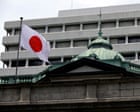
The Bank of Japan lifted its benchmark interest rate to 1 percent on Tuesday, marking a 31-year high that signals a dramatic end to decades of ultra-loose monetary policy. While a headline figure of 1 percent might look trivial to Western investors accustomed to much higher borrowing costs, this shift represents a fundamental rewriting of Japan's economic playbook. Tokyo is not executing a routine policy tweak. It is reacting to structural inflation, imported energy shocks from the Middle East, and a currency that has stubbornly refused to cooperate with traditional interventions.
The policy shift, decided by a 7-1 vote under the temporary chairmanship of Deputy Governor Ryozo Himino while Governor Kazuo Ueda remains hospitalized, increases the uncollateralized overnight call rate from 0.75 percent. This is the highest borrowing cost the nation has seen since 1995, back when the central bank was desperately cutting rates to mitigate the fallout from the bursting of its late-1980s asset bubble.
The Illusion of a Trivial One Percent
For decades, international macroeconomics treated Japan as a laboratory for permanent monetary accommodation. Negative interest rates and aggressive yield curve control were designed to shock an aging, risk-averse population out of a multi-decade deflationary mindset.
That era is over. The 1 percent threshold is a psychological and structural watershed for several critical reasons.
- Corporate Debt Vulnerability: Thousands of Japanese companies, often referred to as "zombie firms," have survived entirely on near-zero borrowing costs. Even a fractional increase in debt-servicing costs threatens their viability.
- The Sovereign Debt Burden: Japan's public debt-to-GDP ratio sits comfortably above 250 percent. Every tick upward in the benchmark rate increases the cost of servicing government bonds, squeezing national fiscal policy.
- Consumer Psychology Shift: Generations of consumers have never experienced rising mortgage rates or meaningful returns on savings accounts.
The central bank is walking a thin line. It must cool accelerating inflation without triggering a wave of corporate bankruptcies or destabilizing the government's balance sheet.
The Import Inflation Trap
The primary catalyst for this rate hike is not an booming domestic market driven by soaring consumer demand. Instead, it is a defensive maneuver against imported inflation.
Following recent conflicts in the Middle East, crude oil prices have surged. Japan imports virtually all of its oil and gas, making its economy extraordinarily sensitive to energy shocks. Wholesale prices jumped 6.3 percent in May compared to the previous year, marking the sharpest increase in over three years.
Japan Wholesale Inflation Acceleration (May)
[=================== 6.3% ] Highest in 3 years
Companies are passing these escalating costs through the supply chain at a rapid pace. While annual core consumer inflation hovered at a four-year low of 1.4 percent in April due to heavy government fuel subsidies, the underlying business-to-business price pressures have become too intense to ignore. The central bank explicitly warned that these wholesale spikes are broadening, threatening to push consumer prices well past its stable 2 percent target once government interventions taper off.
The Weak Yen Paradox
Traditional economic theory dictates that raising interest rates should strengthen a nation's currency by attracting foreign capital. In Japan's case, the reality is far more complicated.
Despite aggressive currency market interventions by Japanese financial authorities through late April and early May, the yen has remained stuck around the 160 mark against the U.S. dollar. Speculative short positions on the currency have continued to accumulate in international futures markets.
The fundamental issue is the massive, persistent interest rate gap between Japan and Western central banks.
The Reality Contract: Even at 1 percent, Japan’s policy rate remains vastly lower than the benchmark rates of the U.S. Federal Reserve or the European Central Bank.
International capital will continue to favor higher-yielding assets abroad, leaving the yen vulnerable. The Bank of Japan's move to 1 percent was already fully priced in by international markets. It prevents a further collapse of the currency rather than sparking a major rally.
Market Reactions and Bond Volatility
Equity markets responded with a burst of relief. The Nikkei 225 stock average surged briefly past the historic 70,000 mark on Tuesday following the announcement before trimming gains. Investors welcomed the clarity, choosing to interpret the rate hike as a sign of underlying economic resilience rather than a threat to growth.
The Bond Market Stabilization Plan
A less noticed but equally critical component of Tuesday's announcement was the central bank's decision regarding its massive Japanese Government Bond (JGB) purchase program. In July 2024, policymakers initiated a tapering plan to reduce monthly bond buying, letting market forces exert more influence over long-term yields.
With 10-year JGB yields hitting multi-decade highs of 2.8 percent in recent weeks, the bank chose to blink on further aggressive tapering.
| Fiscal Period | Bond Purchase Strategy | Monthly Target |
|---|---|---|
| Current Fiscal Year | Continued quarterly reduction of ¥200 billion | ~¥2.1 trillion per month |
| April 2027 Onward | Pause tapering entirely | Stabilize at ~¥2.0 trillion per month |
By committing to maintain a baseline purchase of ¥2 trillion per month from April 2027 onward, the central bank is signaling that it will not allow long-term borrowing costs to spiral out of control. This dual approach reveals the underlying anxiety within the policy board. They are raising short-term rates to battle inflation while keeping an emergency floor under the bond market to prevent fiscal instability.
Internal Dissent and the Path Ahead
The policy decision was not unanimous, highlighting the deep division within Japanese economic circles. Toichiro Asada, a recent addition to the policy board and an advocate for aggressive monetary easing, cast the lone dissenting vote. Asada argued that geopolitical uncertainties present a far greater threat to domestic manufacturing, jobs, and overall production than the potential upside risks to consumer prices.
The absence of Governor Ueda due to his hospitalization added an extra layer of drama to the proceedings, but Deputy Governor Shinichi Uchida made the bank's long-term trajectory clear during his post-meeting press conference. Uchida emphasized that even at 1 percent, monetary conditions in Japan remain highly accommodative.
The bank is moving toward a pattern of incremental adjustments, potentially hiking by another quarter percentage point before the year ends if wage growth holds up and energy costs remain elevated. This transition is no longer a theoretical exercise. Corporate Japan must now learn to operate in an environment where capital has a real, tangible cost.