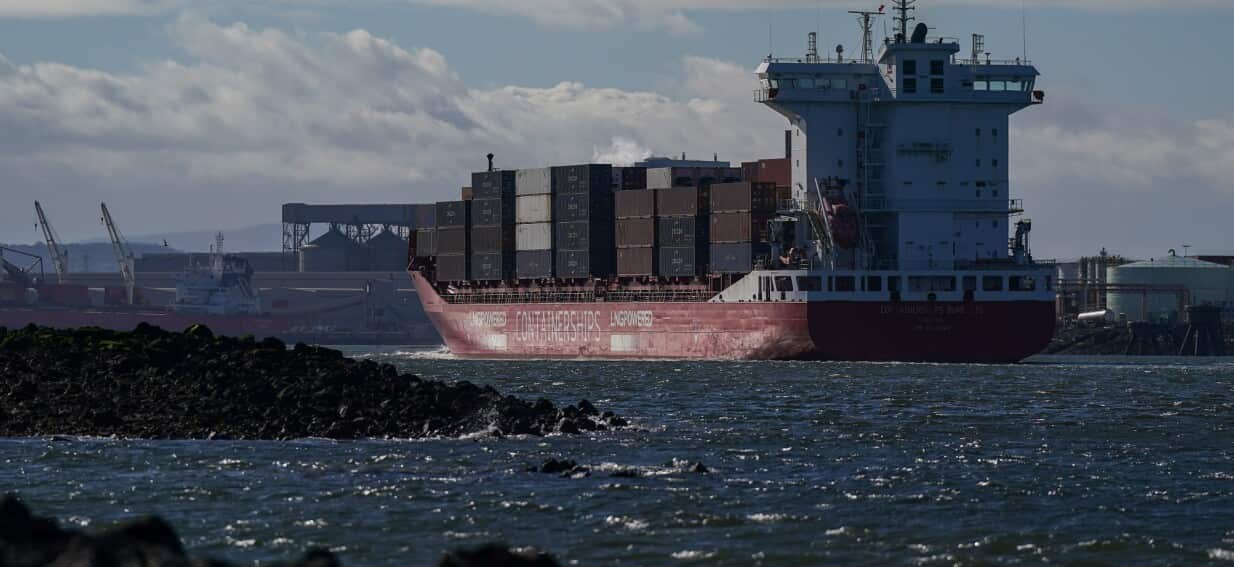
The maritime artery of the world is bleeding, and the bandage being offered by Washington is soaked in gasoline. While President Donald Trump insists that Tehran is privately begging for a way out of the current conflict, the reality on the water tells a far more jagged story. Iran has not only dismissed claims of a pending ceasefire as a fabrication, but it has also effectively shuttered the Strait of Hormuz, daring the West to find an alternative that does not exist.
Global energy markets are reacting with predictable panic. Crude oil prices have surged 40% in a matter of weeks, a direct consequence of the 20% of global oil and gas supply that usually flows through this narrow passage now being held hostage by Iranian mines and drone swarms. Trump’s assertion to NBC News that Iran "wants to make a deal" but the "terms aren’t good enough yet" suggests a standard real estate negotiation. Iranian Foreign Minister Abbas Araghchi, however, countered on Face the Nation with a chilling finality. He stated clearly that Tehran has never requested a ceasefire and sees no reason to speak with a nation that is currently bombing its infrastructure.
This is not a diplomatic stalemate. It is a calculated high-stakes siege where the primary weapon is not a missile, but the global cost of living.
The Kharg Island Gambit
The physical destruction in Iran is undeniable. U.S. and Israeli air campaigns have systematically dismantled Iranian air defenses and targeted the sprawling oil export hub at Kharg Island. Trump’s rhetoric has shifted from clinical military objectives to a more erratic tone, even suggesting further strikes on the island "just for fun." While the Pentagon claims to have hit over 15,000 targets, the strategic "victory" remains elusive.
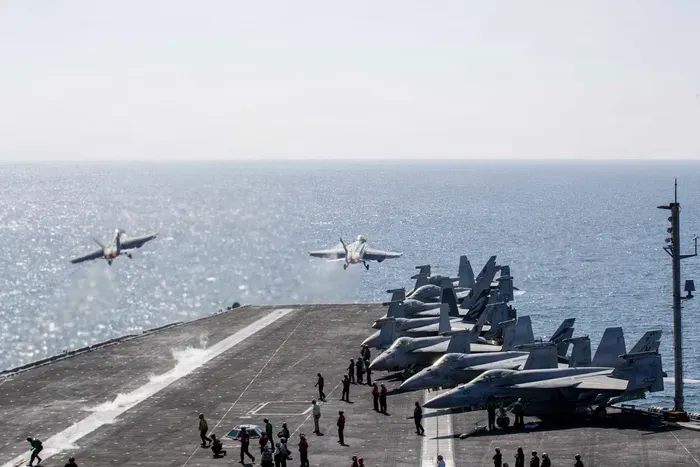
Destroying a pier is easy. Controlling a waterway that is only 21 miles wide at its narrowest point is a different beast entirely. Iran’s Revolutionary Guard has transitioned from conventional naval defense to a decentralized insurgency at sea. They are using "smart" naval mines and suicide boats that are difficult to track with traditional carrier strike group sensors. Even if Kharg Island is "demolished," as the President claims, the Iranian ability to prevent anyone else from using the Gulf remains intact.
The U.S. has called upon a coalition of nations—including the UK, France, Japan, and China—to send warships to escort tankers. The response has been a deafening silence. Japan has noted that the legal threshold for such a deployment is "extremely high," while the UK remains "non-committal." These nations understand what Washington is slow to admit: an escort mission in these waters is an invitation to a wider, more permanent war that no one has the budget or the public support to sustain.
The Ghost of the Supreme Leader
Adding a layer of psychological warfare to the kinetic strikes is the mystery surrounding Iran’s leadership. Following the strikes that killed the previous Supreme Leader, his son, Mojtaba Khamenei, has reportedly taken the mantle. Yet, he hasn't been seen. Trump has openly questioned if the new leader is even alive, a move designed to destabilize the Iranian chain of command.
Tehran’s response has been to double down on regional threats. They have warned neighboring Arab states—specifically the UAE and Kuwait—that providing bases for American jets makes them legitimate targets. This isn't empty posturing. Recent drone strikes near Dubai International Airport and interceptions over Bahrain prove that the "theater of war" has already expanded beyond Iranian borders.
The Iranian strategy is to make the "security umbrella" provided by the U.S. feel more like a lightning rod. By targeting the infrastructure of Gulf allies, Tehran is forcing these nations to choose between their security partnership with the U.S. and their physical survival. It is a brutal, effective wedge.
The Failure of Modern Deterrence
The current crisis exposes a flaw in modern military doctrine. The U.S. and Israel possess overwhelming technological superiority. They can strike any coordinate in Iran with $display$ \text{CEP} $ (circular error probable) measured in centimeters. Yet, this precision has failed to produce the desired political outcome.
Iran is operating on a different set of metrics:
- Economic Attrition: Every day the Strait is closed, the global economy loses billions.
- Regional Pressure: By making the Gulf unlivable for shipping, they force neighbors to lobby Washington for a retreat.
- Domestic Resilience: The Iranian leadership is banking on the fact that their population is more accustomed to hardship than the American voter is to $5-per-gallon gasoline.
The White House predicts the war will end "within weeks," but this assumes the opponent follows a Western logic of surrender once the cost exceeds the benefit. For the IRGC, the cost is irrelevant if the benefit is the permanent removal of U.S. influence from the region.
The Logistics of a Deadlock
Opening the Strait of Hormuz by force is a task that would require a massive, sustained minesweeping operation under constant fire. The U.S. Navy’s minesweeping fleet is small and aging. Replacing it with unmanned systems is the long-term goal, but in the immediate term, there is no "seamless" way to guarantee the safety of a 300,000-ton supertanker in a channel infested with modern ordnance.
Furthermore, the diplomatic track is currently a ghost town. China has sent an envoy, but Beijing is likely content to watch the U.S. deplete its political and military capital in another Middle Eastern quagmire while they secure "safe passage" for their own vessels through back-channel deals with Tehran. Araghchi hinted at this, noting that Iran has provided safe passage to certain unnamed countries that "requested it."
This suggests a fragmented maritime order where the "freedom of navigation" is no longer a universal right enforced by a superpower, but a subscription service managed by a regional insurgent state.
The conflict has moved past the stage where a simple "ceasefire" can restore the old world order. Reparations, a permanent end to strikes, and a restructuring of regional security are now the baseline Iranian demands. Until Washington recognizes that a "deal" cannot be dictated from the deck of a carrier, the global economy will continue to pay the price for this miscalculation. The Strait remains closed, the missiles are still on the rails, and the "fun" the President speaks of is rapidly becoming a global tragedy.
Would you like me to analyze the specific economic impact on East Asian energy importers like Japan and South Korea?